
Sarcosoma
Sarcosoma
Description
Symptoms
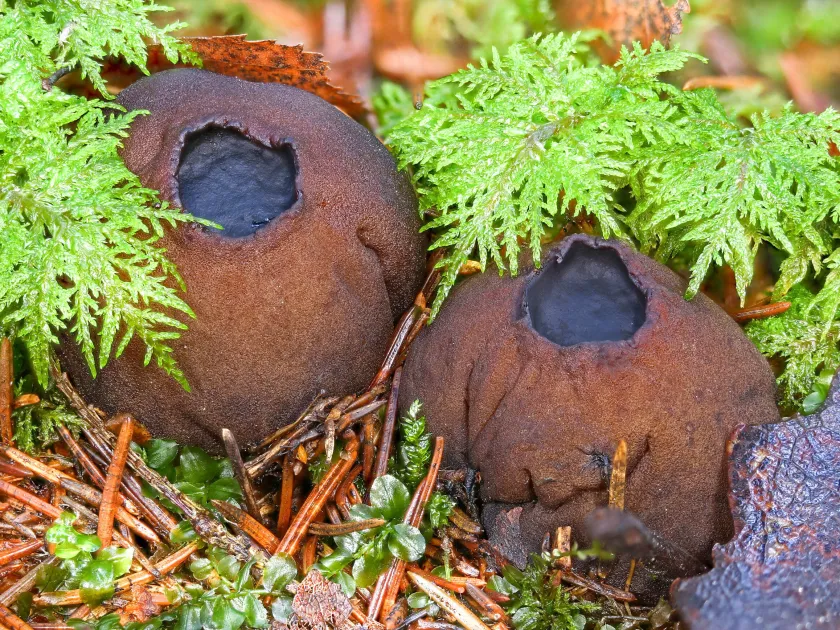
The fruit bodies are barrel-shaped or globe-shaped, often reaching a diameter of 10–12 centimeters.
The outer surface is typically dark brown or nearly black, characterized by a wrinkled, velvety, or sometimes gelatinous texture.
Inside, the fungus contains a distinctive, clear, jelly-like substance that serves as a reservoir for moisture during early spring.
The top of the fruiting body features a concave disk that flattens out as the spores mature and the fungus reaches its full size.
They are usually found partially buried in moss or deep needle litter, appearing shortly after the snow melts in early spring.
Pathogen
Sarcosoma is a genus of fungi belonging to the Sarcosomataceae family. It is essential to clarify that it is not a plant pathogen or a cause of crop disease.
The most prominent member is Sarcosoma globosum, a rare saprotrophic fungus primarily found in old-growth coniferous forests.
Many mistaken reports label it as a disease due to its unusual, almost alien-like morphology, but it does not infect living plant tissues.
In biological terms, it acts as a decomposer, breaking down organic matter and contributing to the health of the forest floor ecosystem.
The scientific community views Sarcosoma as an indicator of environmental quality and forest age, rather than an agricultural nuisance.
Conditions for development
Sarcosoma requires highly specific environmental conditions, primarily old-growth spruce forests with a thick layer of undisturbed litter.
High soil and air humidity are critical, especially during the spring season when the fungus produces its fruit bodies.
It thrives in cool, moist temperatures, which allows it to appear early in the year compared to other fungal species.
Disturbances such as forest clearing, soil compaction, or drainage lead to the rapid decline of its habitat and population.
The presence of dense needle cover is necessary to provide the consistent moisture levels and organic nutrients it requires to survive.
Why it matters
From an agronomic perspective, Sarcosoma causes absolutely no harm to agricultural crops, orchards, or vegetable gardens.
It lacks the enzymes necessary to attack or infect living plants, meaning it poses zero risk to plant health or yields.
It is not a parasite, and there is no evidence of it causing any form of plant stress, tissue necrosis, or physiological damage.
Its existence is limited to the forest environment, where it performs beneficial ecological functions as a saprotroph.
Labeling this species as a disease is purely a result of misidentification and confusion regarding its unique, non-parasitic morphology.
Protection
No protection or control measures are necessary, as the fungus is entirely harmless to the agricultural sector.
In many regions, Sarcosoma globosum is protected by law as a rare or endangered species, prohibiting its collection or habitat destruction.
Preventive efforts should focus on conserving the natural habitat of the fungus rather than attempting to eradicate it.
Chemical intervention is not only unnecessary but also ecologically harmful, as it would destroy the sensitive ecosystem that the fungus relies on.
- Maintain forest habitat integrity.
- Avoid chemical runoff in protected forest zones.
- Promote public awareness regarding its ecological value.
Discussion
No discussions yet — be the first.