
Sarcoscyphaceae
Sarcoscyphaceae
Description
Symptoms
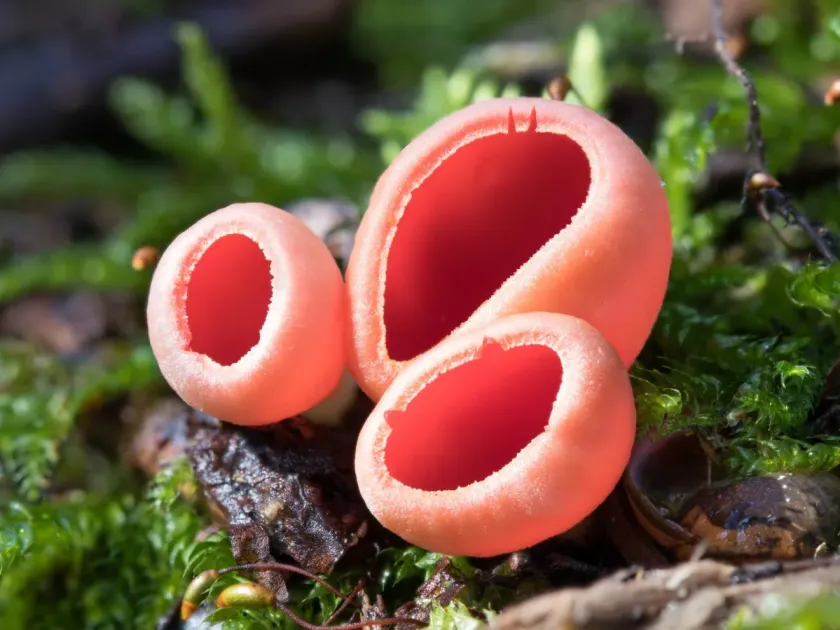
The most distinctive sign of Sarcoscyphaceae is the presence of bright red or orange cup-shaped fruiting bodies appearing in early spring.
These fruiting bodies range from 1 to 5 centimeters in diameter and are often found growing in clusters on dead wood or fallen twigs.
The inner surface of the cup, known as the hymenium, is typically smooth and brightly colored, while the exterior is paler and finely tomentose.
The decaying wood upon which they grow often becomes soft and brittle, exhibiting signs of advanced decomposition caused by the mycelial network.
In forest or garden environments, these fungi appear soon after the snow melts, highlighting the onset of the active biological season.
Pathogen
The Sarcoscyphaceae are a family of fungi within the order Pezizales. It is crucial to note that these fungi are not plant pathogens and do not cause plant diseases.
Biologically, these organisms are categorized as saprotrophs. They obtain their nutrients from decomposing organic matter, primarily dead wood in humid environments.
The mycelium of the fungus penetrates the decaying woody substrate, secreting enzymes that break down lignin and cellulose fibers.
Their life cycle consists of a vegetative stage within the wood and the production of conspicuous cup-shaped fruiting bodies during the reproductive phase.
In agronomy, these fungi are not considered pests but are instead viewed as beneficial participants in the natural process of organic matter recycling.
Conditions for development
The development of Sarcoscyphaceae is strictly dependent on high moisture levels and the availability of suitable woody substrates.
They thrive in environments where decaying branches are partially embedded in damp soil or covered by a thick layer of leaf litter.
Optimal growth conditions occur in early spring when air and soil temperatures range from +5 to +15 degrees Celsius.
High relative humidity and shaded conditions are essential to prevent the delicate cup-like structures from desiccating before spore release.
The presence of broad-leaved forest debris provides the perfect nutritional environment for these specialized fungi to proliferate.
Why it matters
Sarcoscyphaceae do not pose any threat to living plants. They lack the biological mechanism to attack healthy tree tissues or agricultural crops.
They do not produce toxins that affect plant physiology, nor do they act as vectors for any known agricultural bacterial or viral diseases.
Their presence on a property does not necessitate alarm, as they contribute to soil health by accelerating the decomposition of debris.
There are no documented cases of economic damage to orchards or fields caused by these fungi, and they remain ecologically neutral to crops.
They serve as indicators of a moist environment and healthy decomposition processes occurring within the soil and forest ecosystem.
Protection
Since Sarcoscyphaceae are not pathogenic, no chemical intervention, fungicides, or special protective measures are required or recommended.
General orchard sanitation practices are sufficient to manage their presence if one desires to remove the fruiting bodies from the site.
- Remove fallen deadwood and twigs from the garden or orchard floors.
- Perform regular pruning waste clearance to reduce available substrates.
- Improve soil drainage to manage excessive moisture in the growing area.
- Maintain adequate ventilation by clearing excessive leaf litter near tree bases.
Ultimately, removing the decaying wood material effectively eliminates the habitat for these fungi without requiring additional maintenance effort.
Discussion
No discussions yet — be the first.