
Sarcosomataceae fungi
Sarcosomataceae
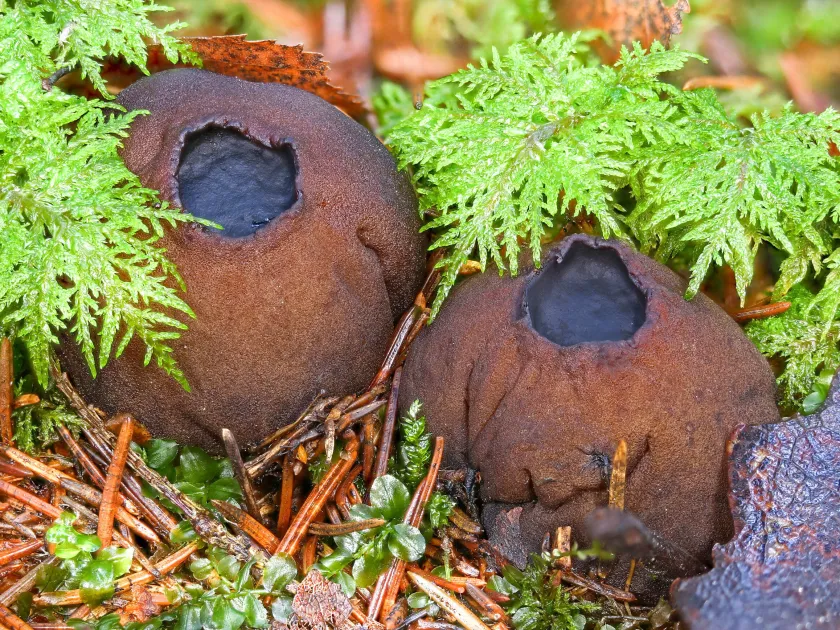
Description
Symptoms
The presence of barrel-shaped or cup-shaped fruit bodies emerging from the moss or forest floor is the most visible sign of the fungus.
Internal symptoms include the discoloration of wood tissue and the appearance of soft, decayed areas near the trunk base.
Trees affected by the fungus often show early symptoms of crown thinning, chlorosis, and reduced vigor in their annual growth rings.
As the infection progresses, large sections of the bark may loosen or fall off, exposing the underlying rotted woody tissue.
A distinctive, faint earthy or medicinal odor may be detectable near the site of the infection during damp weather conditions.
Pathogen
Sarcosomataceae is a family of fungi within the order Pezizales, known for its distinct, often fleshy or leathery fruit bodies.
The fungus functions primarily as a saprotroph, but under certain conditions, it can act as a pathogen affecting tree health.
The primary pathogen cycle involves the development of apothecia, which appear on the ground or decaying wood during early spring.
These fungi reproduce through the dispersal of ascospores, which are launched into the air when conditions are sufficiently moist.
The vegetative mycelium spreads through the soil and forest litter, gradually colonizing the root systems or stem bases of host trees.
Conditions for development
High moisture levels in the forest floor and moderate spring temperatures are essential for the development of Sarcosomataceae fruit bodies.
The fungus thrives in undisturbed forest ecosystems where the leaf litter remains moist and provides a consistent substrate for mycelial growth.
Poor drainage systems in woodland areas often create the perfect environment for these fungi to establish and persist over several seasons.
Climate factors such as prolonged rainy springs can trigger an explosion in spore dispersal, leading to widespread local infections.
The susceptibility of trees is increased by abiotic stresses, such as prolonged waterlogging or poor soil aeration, which favor fungal invasion.
Why it matters
The primary impact of these fungi is the long-term degradation of wood quality, reducing the timber value of affected forest stands.
The fungus induces root and stem rots that undermine the structural integrity of trees, leading to windthrow and premature death.
By weakening the host's vitality, the fungus creates openings for opportunistic pests and secondary pathogens to colonize the tree.
In forest nurseries, even limited outbreaks can lead to significant seedling mortality, causing economic loss to the forestry industry.
The reduction in the overall health of the tree canopy can negatively impact local biodiversity and the recreational use of forest land.
Protection
Effective management begins with strict sanitation practices, including the removal of infected wood and the cleaning of forest litter.
Improving water drainage in forest areas helps to prevent the moisture accumulation necessary for the fungus to complete its life cycle.
Regular monitoring of forest health, especially in areas with known past infections, is crucial for early detection and mitigation.
In high-value areas, targeted application of silvicultural treatments can promote tree vigor and improve their natural resistance to pathogens.
Encouraging tree species diversity helps to create a more resilient ecosystem that is less prone to rapid disease spread.
Discussion
No discussions yet — be the first.