
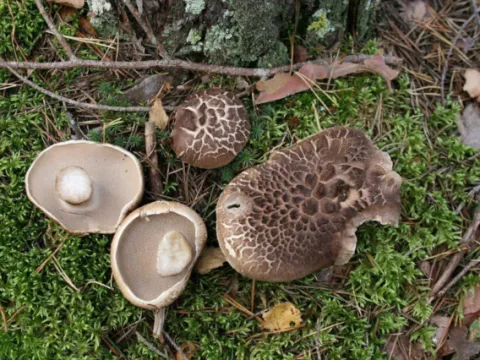
Sarcodon
Sarcodon
The genus Sarcodon is not a plant pathogen and does not cause agricultural diseases. These are mycorrhizal fungi that belong to the family Bankeraceae and maintain symbiotic relationships with coniferous trees.
What the section contains
Sarcodon
The most prominent species, Sarcodon imbricatus, is commonly known as the shingled hedgehog. It is recognized by the distinct spines on the underside of its cap, which release spores.
Unlike harmful fungi that attack crops, Sarcodon species derive nutrients from trees through mutualistic interactions. They provide the tree with water and mineral salts, while receiving carbohydrates in return.
Biologically, these fungi are essential for the health and development of forest ecosystems, particularly in pine and spruce stands.
Agricultural practices do not include control measures for Sarcodon, as it is a beneficial part of the forest habitat rather than a pest or disease agent.
The growth and fruiting of Sarcodon require specific conditions, including a stable moist forest floor covered with pine or spruce needles.
Acidic to neutral soil conditions are preferred for the establishment of the mycelium and the subsequent formation of mycorrhizal networks with tree roots.
Environmental stability, including the absence of severe pollution or excessive agricultural runoff, is necessary to maintain the delicate balance required for these fungi.
The reproductive cycle relies on the dispersal of spores by wind, which eventually germinate in the soil to form new associations with host tree roots.
Optimal seasonal patterns, characterized by mild and rainy late summer and autumn months, significantly promote the development of their fruiting bodies.