
Sarcodon versipelle
Sarcodon versipelle
Description
Symptoms
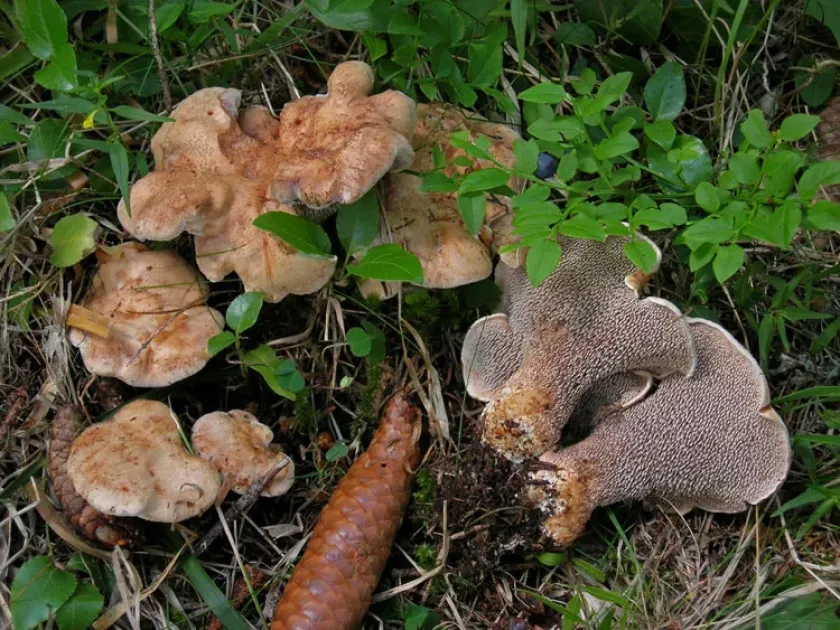
The most visible symptom is the appearance of brown, scaly fruiting bodies on the forest floor, typically in proximity to coniferous hosts.
The underside of the cap is distinguished by dense, spine-like structures, which change color from white to greyish-brown as the fungus matures.
Dense white or yellowish mycelial mats on the roots are a clear indicator of active colonization, often associated with root system stress.
Visible changes in needle coloration and gradual thinning of the canopy are indirect signs that the tree's root system is being impacted by the fungus.
In advanced stages, small peripheral root decay may occur, leading to stunted tree growth in young plantations.
Pathogen
Sarcodon versipelle is a fungus belonging to the Bankeraceae family, primarily recognized for its mycorrhizal association with various coniferous tree species.
It exists as a complex network of mycelium that permeates the soil and colonizes tree root systems, acting as a symbiont that can sometimes become detrimental under stress.
Although typically categorized as a forest-dwelling fungus, its interaction with the host tree can lead to localized disturbances in nutrient absorption processes.
The pathogen spreads through airborne spores, which effectively colonize damp forest environments and accumulate within the organic layer of the soil.
Scientific research highlights its role in forest ecosystems, where its presence is linked to the overall balance of soil microflora and forest health.
Conditions for development
The fungus thrives in environments with high moisture levels and a thick layer of organic debris, particularly in spruce and pine-dominated forests.
Acidic soil conditions with a pH below 6.0 provide an ideal substrate for the fungus to establish and propagate its mycelial network.
Stable temperatures between 15°C and 22°C are essential for the development of fruiting bodies during the late summer and autumn months.
Low light intensity and high humidity are critical environmental factors that promote the survival and spread of the species.
Poorly drained soils or waterlogged areas often see an increase in the population density of this fungal species due to restricted aeration.
Why it matters
The primary concern is the competition for essential nutrients and water between the fungal mycelium and the tree's root system.
In forest nurseries, high levels of colonization can inhibit the growth of seedlings, leading to reduced survival rates and lower overall productivity.
By weakening the root system, the fungus makes trees more susceptible to secondary infections and infestations by wood-boring insects.
The disruption of normal root function can lead to increased vulnerability during drought conditions, causing rapid stress responses in mature trees.
Overall biomass production in affected areas often declines due to the energetic cost to the tree associated with the prolonged fungal association.
Protection
Effective control requires strict sanitation, including the removal of deadwood and excessive litter from the forest floor to disrupt the fungal habitat.
Soil management, particularly adjusting pH levels through liming, creates a less hospitable environment for Sarcodon versipelle to colonize new roots.
Mechanical cultivation or soil tillage can help break up mycelial mats and slow the rate of spread within younger tree stands.
Professional monitoring and the use of targeted fungicides in nursery settings are recommended for mitigating high-density infestations.
- Regular site inspections.
- Improvement of soil drainage systems.
- Selective removal of highly symptomatic trees.
Discussion
No discussions yet — be the first.