
Sarcodon joeides
Sarcodon joeides
Description
Symptoms
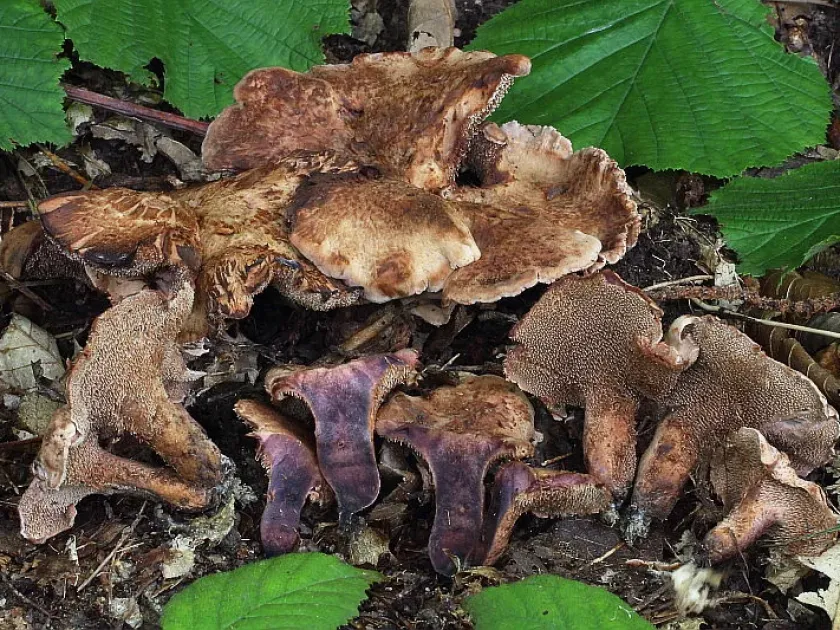
The fruiting body is characterized by a cap that ranges from 5 to 12 cm in diameter, often featuring a depressed or funnel-shaped center.
The color of the cap is typically brownish-grey to dull violet, and the surface may become scaly or fibrous as the specimen matures.
The undersurface is covered with distinctive spines or teeth (eжовики), which are fragile and turn a deep violet color when handled or bruised.
The stem is solid, firm, and usually matches the color of the cap, often tapering slightly towards the base where it enters the soil.
A notable feature is the spicy or floury odor and the characteristic bruising reaction that turns the flesh into a vivid shade of violet.
Pathogen
Sarcodon joeides is a species of fungus in the Bankeraceae family, known primarily for its distinct violet-tinted flesh and spiny hymenophore.
It is crucial to clarify that this fungus is not a plant pathogen; it does not cause diseases in crops, vegetables, or ornamental plants.
The fungus acts as a saprotroph and mycorrhizal partner in forest environments, contributing significantly to the decomposition of organic matter.
Biologically, it is harmless to agriculture, as it lacks the physiological capacity to infect or parasitize living vascular plant tissues.
The confusion regarding its classification as a "disease" usually stems from misidentification with parasitic fungal species in older mycological literature.
Conditions for development
Sarcodon joeides thrives in mature coniferous or mixed forest ecosystems where the leaf and needle litter layer is sufficiently thick.
It requires high soil humidity and moderate temperatures, typically appearing from late summer through the autumn months.
The presence of root systems from host trees is essential for its mycorrhizal activity, which supports its nutrient cycling role.
Areas with stable, undisturbed soil profiles provide the best habitat for the development of its underground mycelial network.
Excessive drought or rapid changes in soil pH can inhibit the formation of fruiting bodies, limiting the visible presence of the fungus.
Why it matters
This fungus poses no risk to horticultural or agricultural productivity, as it has no harmful interaction with cultivated plant species.
It does not cause root rot, leaf spots, or any other physiological disorders in economic crops, making it a non-issue for farmers.
The activities of Sarcodon joeides are strictly beneficial to the ecosystem, as they aid in the breakdown of dead wood and forest debris.
It plays a key role in nutrient turnover, converting organic material into forms that are subsequently available for tree root uptake.
Consequently, there is zero economic loss associated with the occurrence of this species in any agricultural context.
Protection
As Sarcodon joeides is not a plant disease, there are no control measures or prevention strategies required for this species.
Farmers and foresters do not need to apply fungicides or implement sanitary measures against this fungus at any stage of plant production.
Monitoring for this species is unnecessary for the protection of crops, as it does not affect agricultural yield or plant health.
Ecological management of forest areas should focus on maintaining biodiversity rather than eliminating such naturally occurring fungi.
Responsible land management acknowledges the role of beneficial forest fungi as indicators of healthy soil ecosystems.
Discussion
No discussions yet — be the first.