
Sarcodon leucopus
Sarcodon leucopus
Description
Symptoms
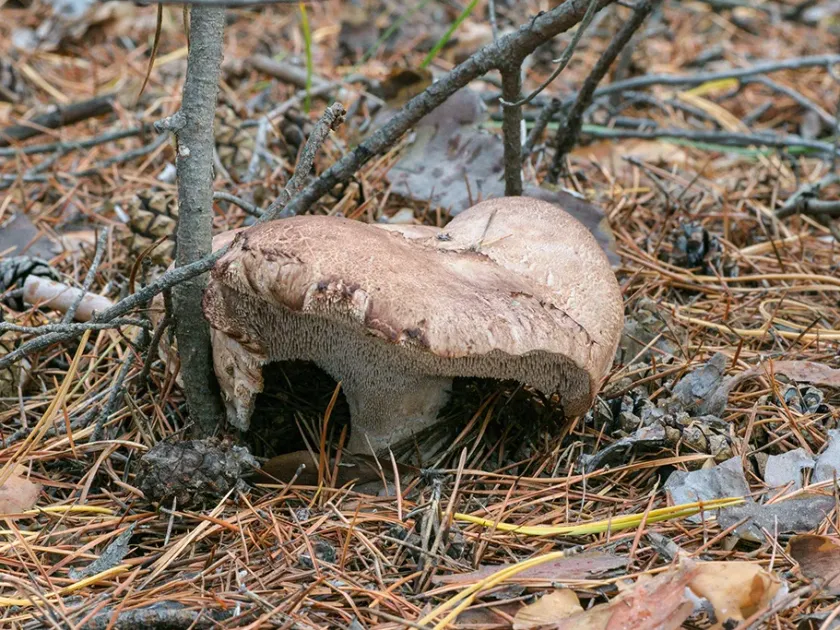
The fruit body features a scaly, brownish cap, which is a distinctive characteristic of the genus. The texture of the cap surface changes significantly during the maturation process.
The hymenium is composed of unique, delicate spines (teeth) instead of gills or pores. These spines release spores when the mushroom reaches maturity, aiding in reproduction.
The stipe, or stem, is light-colored, often white or grayish, providing the primary contrast to the cap. It is typically sturdy and solid in consistency.
When sliced, the flesh remains stable and does not show significant color changes. It possesses a characteristic aroma that distinguishes it from other similar fungal species.
- Scaly brown cap surface
- Spine-covered hymenium (teeth)
- Sturdy white/grayish stipe
- Common in coniferous forests
Pathogen
Sarcodon leucopus is a species of fungus in the Bankeraceae family. It is not a plant pathogen; instead, it plays a vital role as a mycorrhizal fungus that forms symbiotic associations with various tree species.
The mycelium of this fungus integrates with the root systems of coniferous trees, facilitating the exchange of nutrients and water. This mutualistic relationship is essential for forest vitality.
Unlike parasitic fungi that cause plant diseases, Sarcodon leucopus contributes to the overall health of the soil ecosystem. It helps trees survive in nutrient-poor environments by improving mineral absorption.
Its biological cycle is intricately linked to the growth phases of forest trees. The fungus relies on the tree's photosynthesis products for its energy, while the tree benefits from the fungus's foraging capacity.
Monitoring this species provides insights into the biodiversity and environmental health of coniferous forest habitats, serving as a bioindicator of forest stability.
Conditions for development
Optimal development of Sarcodon leucopus fruit bodies requires specific climatic conditions, primarily high soil moisture and mild temperatures during the autumn season.
This fungus typically thrives in acidic, sandy soils common in pine-dominated forest ecosystems. It is highly sensitive to soil compaction and environmental disturbances.
The accumulation of needle litter provides the necessary insulation for the mycelium, protecting it from temperature fluctuations and extreme drying conditions.
Human activities, such as logging or intensive recreational use, can disrupt the delicate mycorrhizal networks, potentially leading to the loss of this fungal species.
During unfavorable weather, the fungus survives in its vegetative mycelial form deep within the soil profile, waiting for the return of suitable humidity levels.
Discussion
No discussions yet — be the first.