
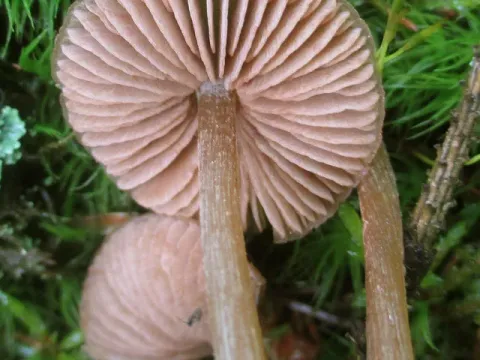
Entoloma
Rhodophyllus
The genus Entoloma (formerly classified as Rhodophyllus) belongs to the class Agaricomycetes. Although most species in this genus are saprotrophs living on soil or decaying organic matter, some members can exhibit parasitic traits, infecting weakened plants or establishing pathogenic relationships with the root systems of various crops.
What the section contains
Entoloma
The pathogen is biologically characterized by pink spore powder, which gave the group its outdated Latin name. The fungal mycelium is capable of penetrating host tissues, using an enzymatic apparatus to break down cell walls, leading to the degradation of plant structures.
Reproduction occurs via spores, which are spread by wind, rain droplets, or insects. In the soil, the fungal mycelium can persist for a long time, awaiting favorable conditions for active vegetation and the initiation of invasion into the plant rhizosphere.
The type of disease caused by these fungi is typically classified as root or stem base rot. The development of the pathogen is closely linked to metabolic imbalances in the host plant, often induced by environmental stress factors.
From an agronomic perspective, it is important to distinguish between obligate parasites and facultative saprotrophs. Entoloma species more frequently attack plants with pre-existing damage, entering through micro-cracks or mechanical injuries at the root collar.
A primary sign of infection is general plant wilting, expressed by leaf chlorosis and stunted growth. Affected specimens appear nutrient-deficient despite regular fertilization efforts.
Inspection of the root collar reveals areas of tissue softening, which eventually turn brown or grey. Under conditions of high humidity, a whitish or pinkish mycelial growth may appear on the surface of the affected areas.
As the disease progresses, the root system gradually dies off. Small feeder roots rot away, and larger roots lose their turgidity, acquiring a characteristic "wet" appearance, often accompanied by a distinct fungal odor.
During the sporulation period, characteristic fungal fruiting bodies may develop around the base of the trunk or on adjacent soil. This is a clear indicator that the tissue destruction process is far advanced.
In the late stages, the plant loses its stability against wind and lodging. Even with minor mechanical pressure, the infected crop can be easily pulled out of the soil due to the total destruction of the root ball.
A key factor for development is excessive soil waterlogging, which blocks oxygen access to the roots. Anaerobic conditions significantly weaken the plant's immune system and create an ideal breeding ground for Entoloma.
High air humidity in the ground-level zone also promotes active mycelial growth. The optimal temperature range for most species is between 15 to 22 degrees Celsius.
The presence of large amounts of uncomposted organic matter in the soil can trigger disease outbreaks. Manure or plant residues that have not fully decomposed serve as a substrate for initial spore proliferation.
Heavy clay soils, prone to forming a dense crust, contribute to moisture accumulation in the root zone. Poor soil aeration is a critical factor predisposing plants to infection.
Poor agronomic practices, such as overwatering or dense planting, create a microclimate with high humidity levels, facilitating the spread of spores within the agroecosystem.
The primary harm lies in the disruption of water and mineral nutrient uptake processes. This leads to the gradual depletion of plant reserves and, ultimately, to the death of the specimen.
Fungal-damaged plants become extremely vulnerable to secondary infections. Bacterioses and other fungal pathogens penetrate tissues more easily through the foci created by Entoloma.
Economic losses manifest in reduced crop yields and the loss of produce quality. In nurseries and berry plantations, infection can lead to mass mortality of seedlings and the need for complete replacement of planting material.
Plantations affected by this disease require significant investment in soil remediation. The contaminated area may become unsuitable for planting sensitive crops for several seasons.
In the long term, the presence of the pathogen in the soil reduces the profitability of the plot. Regular loss of a portion of the harvest requires constant monitoring and the implementation of costly protective measures.
The main method of control is adherence to agronomic practices aimed at preventing soil waterlogging. The installation of drainage systems helps reduce the risk of disease occurrence.
Preventive treatment of planting material and soil with biological fungicides containing Trichoderma strains helps suppress the growth of the pathogenic mycelium.
- Thinning of dense plantings to improve air circulation.
- Removal and destruction of all plant residues after harvest.
- Application of balanced doses of potash fertilizers to strengthen plant cell walls.
- Regular cultivation of the soil to improve root aeration.
If infection foci are detected, it is necessary to immediately isolate the affected plants along with the surrounding root ball soil. Planting holes should be disinfected with specialized products.
Chemical protection includes the use of systemic fungicides approved for use in the specific agro-zone. However, chemicals should be considered a last resort, prioritizing preventive measures.