
Entoloma chalybaeum
Entoloma chalybaeum
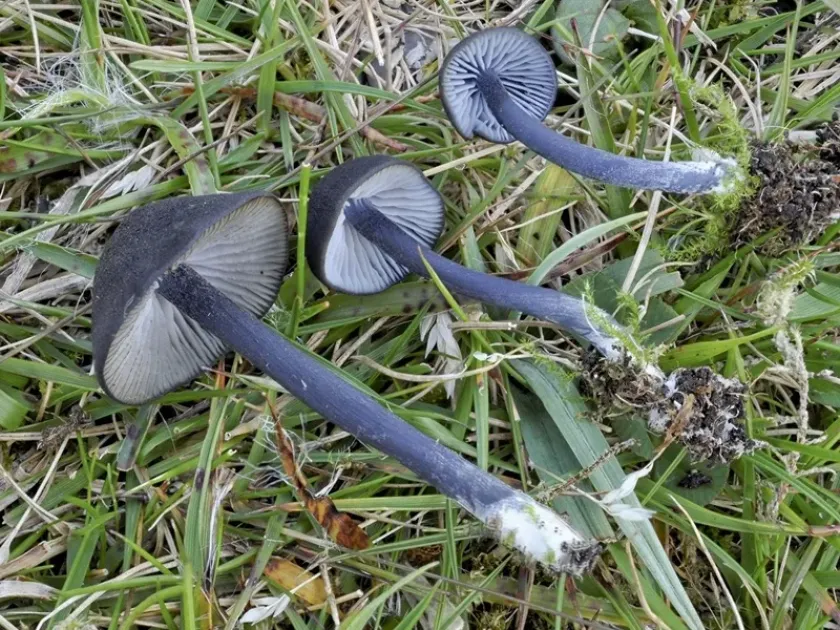
Description
Pathogen
Entoloma chalybaeum, commonly known as the steel pinkgill, is a mushroom belonging to the Entolomataceae family. It is strictly a saprotrophic fungus and not a plant pathogen.
The fungus obtains its nutrients through the decomposition of dead organic matter. It lacks the specialized structures, such as haustoria, required to infect or parasitize the tissues of living crop plants.
Throughout its entire life cycle, this species remains in the soil or leaf litter, interacting with soil organic matter rather than plant hosts. Therefore, it does not threaten agricultural yields.
There are no known symptoms of plant infection caused by this fungus, as it is biologically incapable of initiating a disease process in plants.
From an agronomical perspective, Entoloma chalybaeum should be considered a component of soil biodiversity that contributes to the nutrient cycling process rather than a pest or pathogen.
Conditions for development
This fungus typically develops its fruiting bodies in late summer and autumn, often found in pastures, meadows, and grassy areas where the turf is relatively undisturbed.
Moisture availability is the primary factor driving the development of these fungi. High humidity and moderate temperatures provide the ideal conditions for the mycelium to produce fruiting bodies.
The species prefers well-drained but organic-rich soils. It is rarely found in intensively cultivated fields due to the constant disturbance caused by plowing, which disrupts the fungal network.
Soil chemistry, particularly the presence of sufficient decaying plant matter, is crucial for its survival. It does not require any specific living plant host to complete its lifecycle.
Due to these environmental preferences, the fungus is not typically encountered in commercial greenhouses or standard crop fields where soil structure is heavily modified.
Discussion
No discussions yet — be the first.