
Entoloma majaloides
Entoloma majaloides
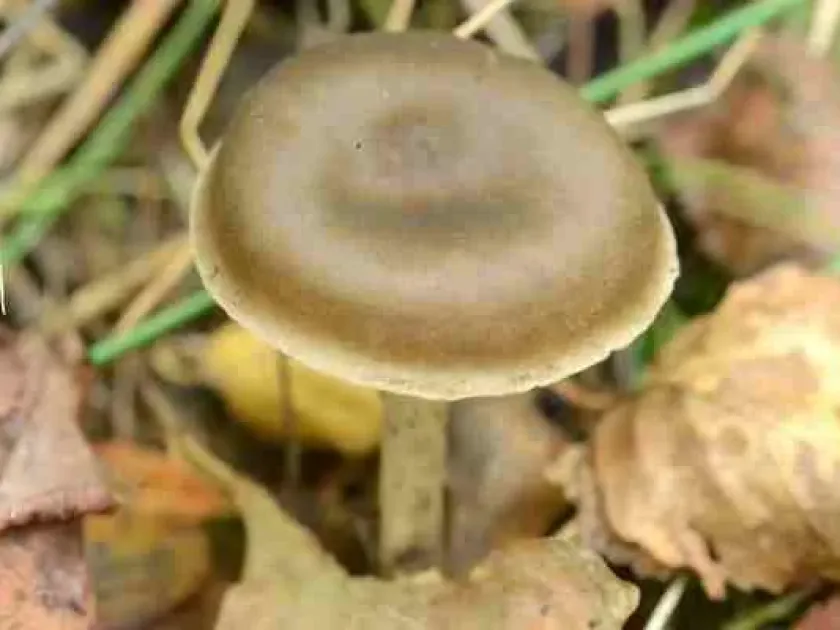
Description
Symptoms
Entoloma majaloides produces fruit bodies that are typical of the genus Entoloma, characterized by their structure and seasonal appearance.
The cap often exhibits a conical to expanded shape with a central bump, usually displaying shades of brown or grey, consistent with its forest habitat.
The gills are a significant diagnostic feature, shifting from white to a distinct pink hue as the spores mature, which is a hallmark of the family Entolomataceae.
The stalk is fibrous and firm, lacking any universal veil remnants such as a ring or volva, making it distinct from many other mushroom groups.
The mycelium network is deeply embedded in the soil or decaying organic matter, contributing to the decomposition cycle in its local environment.
Pathogen
It is crucial to clarify that Entoloma majaloides is not a plant pathogen and does not cause diseases in crops, vegetables, or ornamental plants.
The species operates as a saprotroph, meaning it derives nutrients from non-living organic material rather than invading healthy host tissues.
It lacks the specialized virulence factors and enzymatic pathways required to infect plants, positioning it as a decomposer rather than a parasite.
In ecological terms, it contributes to nutrient cycling by breaking down complex organic compounds into simpler forms available to plants.
Therefore, it should not be categorized as a threat to agricultural productivity or plant health in any standard agronomic context.
Conditions for development
This fungus thrives in environments with high organic content, such as leaf litter, humus-rich soils, and temperate woodland edges.
Moisture is the primary driver of development, with peak activity typically observed during the spring when soil hydration is optimal for sporulation.
It requires moderate temperatures and stable humidity levels to produce fruit bodies, often appearing after rainfall events in May.
The microclimate provided by dense foliage or forest cover protects the delicate mycelium from direct sunlight and excessive drying.
Soil structure and aeration play a minor role in its distribution, as it prefers undisturbed, nutrient-dense substrates where it can easily colonize organic matter.
Why it matters
Entoloma majaloides poses no risk to agricultural yield or plant vitality, as it does not compete for space or resources with cultivated plants.
The only practical concern is accidental consumption by humans, as the genus Entoloma contains species known to be toxic, necessitating caution.
There is no evidence that this species harbors or transmits any soil-borne pathogens that could indirectly harm agricultural crops.
Its presence is generally seen as a sign of a healthy, biologically active soil environment rather than a cause for concern for farmers.
No agricultural economic losses have been attributed to this fungus, confirming its status as a non-harmful member of the soil fungal community.
Protection
No control measures are necessary for this species, as it plays a neutral or beneficial role as a decomposer within the soil ecosystem.
If its growth in specific areas is undesirable for aesthetic reasons, maintaining good soil aeration through tilling or cultivation is usually sufficient.
Improving drainage prevents the waterlogged conditions that favor the rapid growth of many saprotrophic fungi in garden or field settings.
Routine garden sanitation, such as removing excessive piles of rotting organic matter, will naturally limit the habitat available for the fungus.
The use of chemical fungicides is strongly discouraged, as it disrupts the beneficial fungal network of the soil and can have negative long-term impacts on soil fertility.
Discussion
No discussions yet — be the first.