
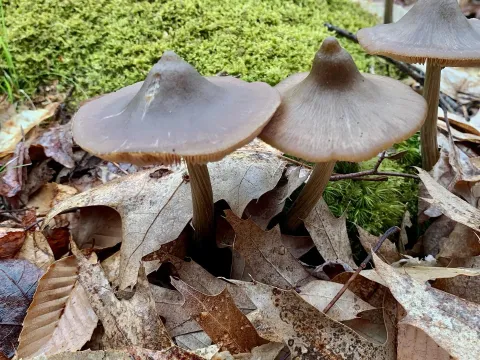
Entoloma excentricum
Entoloma excentricum
Entoloma excentricum is a species of fungus in the Entolomataceae family. In an agronomic context, it acts as an opportunistic pathogen that colonizes the rhizosphere of various plants, often thriving in soil rich in decomposing organic matter.
What the section contains
Entoloma excentricum
The disease is primarily caused by spores entering the plant's root system through physical abrasions or during periods of physiological weakness. While essentially a saprotroph, it can exhibit pathogenic behavior when the host's resistance is compromised.
The mycelium of this fungus is highly persistent in soil, capable of overwintering and surviving adverse conditions within decomposing plant remnants before actively invading live roots.
The disease mechanism involves the degradation of root tissues, which disrupts the vascular transport of nutrients and water from the soil to the upper parts of the plant.
Biology of the fungus involves the production of fruiting bodies during wet weather. These structures release millions of spores, which are then distributed across the field by water movement and mechanical soil cultivation.
The initial symptoms are often subtle, manifesting as a loss of vigor and stunted growth. Infected plants may show signs of yellowing (chlorosis) starting from the lower leaves, resembling nutrient deficiency.
Root system examination typically reveals browning and necrosis of the fine roots. The affected roots become fragile and may exhibit a distinct white fungal coating in high-humidity conditions.
Wilting is a common sign during the day, even if soil moisture levels appear adequate. This suggests that the roots are failing to transport water effectively due to fungal damage.
In advanced cases, the base of the stem near the soil line may show softening or discoloration, which can lead to the plant collapsing entirely under mechanical stress or strong winds.
Patchy distribution is a diagnostic sign of Entoloma excentricum, where clusters of infected plants appear within a field, clearly differentiated from surrounding healthy crops.
High soil moisture is the primary driver for Entoloma excentricum development. Waterlogging, resulting from poor field drainage or excessive irrigation, creates a perfect environment for fungal propagation.
The presence of raw, undecomposed organic material in the soil provides a crucial nutrient bridge, allowing the fungus to build up population density before attacking living crops.
Temperatures ranging from 15°C to 22°C are optimal for the vegetative growth of the mycelium. During these periods, the fungus can colonize root systems at an accelerated rate.
Soil compaction and low aeration levels contribute to root stress, making plants significantly more susceptible to opportunistic fungal infections like those caused by this species.
Fields with a recent history of heavy chemical use that lacks a healthy soil microbiome often struggle to combat the establishment of this pathogen due to the lack of beneficial microbial competition.
The primary economic harm results from significant yield reduction. Infected crops fail to achieve their full growth potential, leading to smaller, lower-quality harvests.
The disease weakens the host's immune system, making it more susceptible to secondary infections by other soil-borne pathogens, leading to cumulative crop loss.
Affected plants often suffer from poor fruit set or grain development, significantly impacting the final market value of the agricultural production.
Increased mortality rates within a field result in gaps in the crop stand, which reduces the overall photosynthetic capacity of the entire field and wastes inputs such as fertilizer and water.
Long-term soil contamination necessitates expensive remediation efforts or changes in land use, which can severely disrupt standard agricultural planning cycles.
Effective control starts with proper sanitation, which includes the thorough removal and destruction of crop residues that could harbor the fungus between growing seasons.
Implementing a diverse crop rotation is essential. Rotating crops with different root structures and nutrient requirements helps break the fungal life cycle and prevents population buildup.
Biological soil treatments containing Trichoderma species or other antagonistic microbes are highly recommended to establish a protective barrier in the rhizosphere.
Improving soil drainage and structure through subsoiling or the addition of organic amendments (like mature compost) can reduce environmental favorability for the pathogen.
If chemical intervention is necessary, the use of registered systemic fungicides applied as a soil drench can help stop the progression of the disease in localized outbreaks.