
Entoloma hirtipes
Entoloma hirtipes
Description
Symptoms
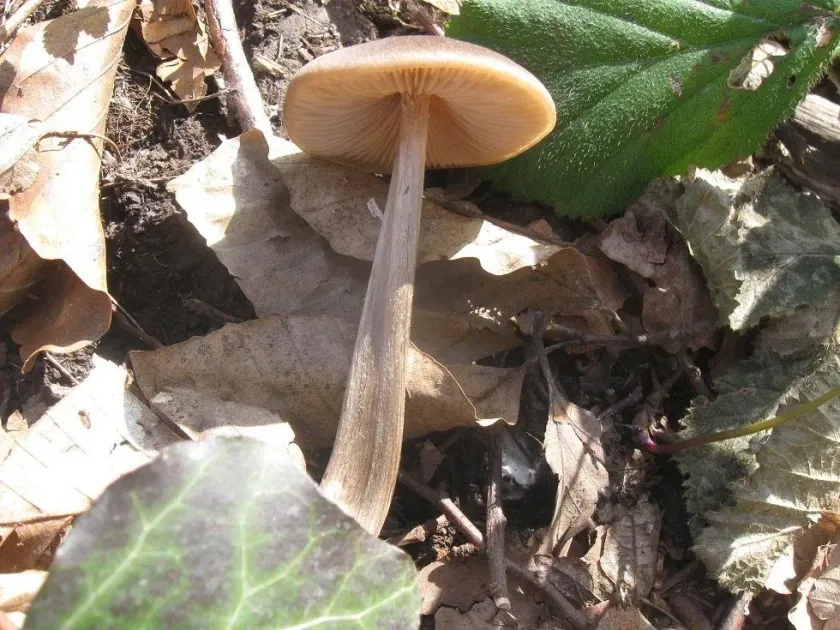
Entoloma hirtipes is characterized by a conical or bell-shaped cap that is dark brown in color, with a fibrous, somewhat radially streaked surface.
The stem of this fungus is also fibrous and brittle, which is a distinguishing feature when examining the specimen in the field.
The gills are attached to the stem and undergo a distinct color change, transitioning from light shades to pinkish as the spores mature.
These mushrooms typically emerge in the spring in damp environments, where soil moisture is high and organic matter is abundant.
Microscopic analysis reveals angular spores, which are a hallmark of the Entolomataceae family and help in accurate species identification.
Pathogen
It is crucial to clarify that Entoloma hirtipes is not a plant pathogen or a disease agent. It is a saprotrophic organism that thrives on decaying matter.
As a saprotroph, this fungus lacks the machinery to infect living plant tissue or penetrate host defense systems to cause disease.
Biologically, it plays a vital role in nutrient cycling by breaking down dead plant material within the soil ecosystem.
In agronomy, it is not classified as a threat to crops, and it does not cause any physiological or structural damage to cultivated plants.
The fungus’s entire life cycle is external to the host plant, focusing on the decomposition of organic debris in the topsoil.
Conditions for development
This species favors habitats with high humidity, such as moist forest floors or damp grassy areas where organic matter is readily available.
The optimal development of the fruiting bodies occurs during the spring, following the thaw when the soil remains cool and damp.
A soil environment rich in humus and organic debris provides the necessary substrate for the fungus to establish its mycelial network.
The presence of this fungus is often an indicator of a healthy, biologically active soil profile rather than an indication of agricultural issues.
Temperature ranges typical of spring, between 10 and 15 degrees Celsius, facilitate the rapid development of the fruiting structures.
Why it matters
Entoloma hirtipes causes no harm to agricultural or horticultural crops, as it does not engage in parasitic interactions with plants.
It does not compete with crops for nutrients or water, as it relies on dead organic material, thus posing zero risk to harvest yields.
There is no impact on crop quality or plant health, making this species entirely benign from an agronomic perspective.
The only potential concern associated with this fungus is accidental consumption by humans, as many Entoloma species are known to be toxic.
Since it does not attack roots, stems, or leaves, farmers do not need to factor this fungus into any crop protection strategy.
Protection
No protective measures are required against Entoloma hirtipes because it is not a plant disease and does not threaten crop viability.
Preventative strategies are unnecessary; the fungus acts as a natural recycler of organic debris, contributing positively to soil health.
If fruiting bodies are aesthetically unwanted on a property, they can be removed manually, which is a safe and effective management method.
If management is desired, improving soil drainage can reduce the humidity levels that favor the growth of these fungi.
Chemical control is strongly discouraged, as the application of fungicides for this species would be ineffective and harmful to beneficial soil organisms.
Discussion
No discussions yet — be the first.