
Soil Sickness
Fungi and
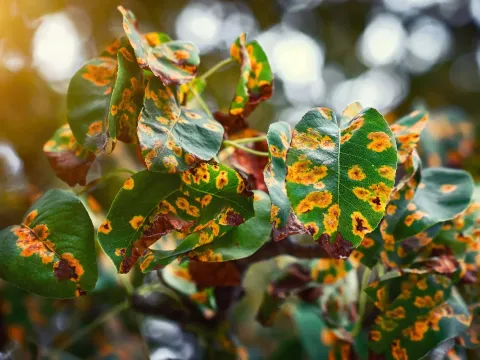
The primary symptom of soil sickness is the sharp inhibition of growth in young saplings planted on the site of old trees of the same species. Plants show poor shoot development, yellowing leaves, and extremely slow root system growth.
What the section contains
Soil Sickness
High seedling mortality is frequently observed in the first years after planting. Even with proper care and fertilization, the trees appear stunted, failing to establish a healthy frame or produce normal fruit buds.
Examination of the root system reveals necrosis of the fine feeder roots, which often darken and die back. These damaged areas cannot effectively absorb water and minerals, leading to chronic plant malnutrition.
Symptoms often mimic nutrient deficiency, but traditional fertilization fails to improve plant vigor. The development of the tree seems to stall at an early stage, leaving the crown underdeveloped even after several years.
In stone fruits, particularly in the common apricot, soil sickness manifests as a complex disturbance of vital functions. Trees become highly susceptible to secondary infections and abiotic environmental stressors.
The disease is caused by a complex of soil-borne pathogens, including fungi of the genera Fusarium, Pythium, Phytophthora, Rhizoctonia, and specific parasitic nematodes. The term often refers to the biological degradation of the rhizosphere.
These microorganisms accumulate in the root zone during long-term cultivation of a single crop. The microbial imbalance leads to the suppression of beneficial soil flora by these pathogenic fungi and bacteria.
Besides pathogens, phytotoxic substances released by plant roots over time play a significant role. In monocultures, these metabolites do not decompose quickly enough and act as toxins for subsequent generations of the same species.
A stable infectious background forms in the soil, which is particularly dangerous for young saplings with immature immune systems. This condition is exacerbated by the depletion of specific soil minerals.
The biological environment under soil sickness is characterized by a lack of natural antagonists to pathogens, allowing harmful organisms to parasitize roots freely. It is essentially an ecological exhaustion of the soil profile.
Conditions for soil sickness are closely tied to monoculture practices, where related fruit species are grown on the same plot for decades. The lack of crop rotation is the main factor leading to toxin accumulation and pathogen buildup.
High planting density and the absence of long fallow periods between uprooting an old orchard and replanting a new one accelerate the disease. Soil requires a rest period to recover its biological equilibrium.
Physical soil properties, such as compaction or poor aeration, are crucial factors. In dense, poorly aerated soils, pathogenic fungi develop much faster than in loose, well-drained substrates.
Lack of organic fertilization combined with sole reliance on mineral fertilizers depletes soil biota. Without regular applications of compost or green manure, natural suppression of soil fungi becomes impossible.
Soil moisture levels are also critical: waterlogging, when coupled with poor drainage, promotes root rots that are integral components of soil sickness. Intense irrigation without soil monitoring accelerates this decay.
The harm caused by soil sickness lies in the near-total loss of economic viability for orchards on infested sites. Seedlings often die at rates of 80-90% within the first three years of planting.
Trees that survive show very low productivity. Yields are significantly below standard, rendering the orchard unprofitable and necessitating either total soil replacement or expensive disinfection treatments.
Stone fruits, such as the common apricot, are especially sensitive to soil sickness. Affected trees exhibit premature aging, wood brittleness, and a poor response to all cultural practices, including pruning and fertilizing.
Soil sickness renders the orchard vulnerable to environmental stressors. Cold hardiness of affected trees drops, leading to increased winter mortality even during mild winters, as trees lack the energy to recover.
The negative impact extends to fruit quality. If the tree does reach maturity, the fruits are often small, lack flavor, and have poor appearance, which significantly decreases their market value.
The most important control measure is strict crop rotation. It is not recommended to plant fruit trees following species of the same family; a fallow period of 5-7 years is required, or rotation with unrelated crops.
Partial or complete replacement of soil in the planting pit is an effective method. When planting an apricot sapling, use fresh soil taken from areas where stone fruits have never been grown.
Applying high doses of organic fertilizers, such as well-rotted manure or compost, helps restore beneficial soil flora. Organic matter creates a competitive environment that suppresses pathogenic fungus development.
The use of biological agents based on Trichoderma fungi allows for the suppression of soil-borne pathogens. Biofungicides should be applied directly to the root zone at planting and in subsequent seasons to support soil health.
Planting green manure crops (mustard, phacelia, oats) for 1-2 years before planting the orchard improves soil structure. These crops release phytocides that cleanse the soil and reduce the infection pressure for the future orchard.