
Solorina crocea
Solorina crocea
Description
Symptoms
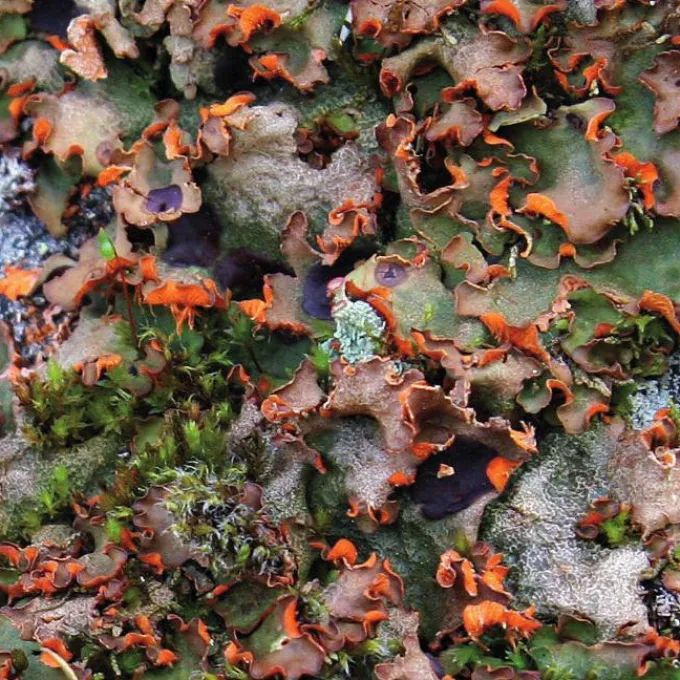
Solorina crocea is a foliose lichen characterized by large, sprawling lobes that can reach several centimeters in diameter.
The upper surface typically displays a brown or reddish-brown color, which helps the lichen absorb thermal energy efficiently in cold climates.
The lower surface of the thallus is bright saffron or orange, providing a distinct visual identification feature for this species.
Small, brown apothecia are often embedded in the thallus, marking the location of the sexual reproductive organs.
It typically grows as individual specimens or small colonies on the surface of mineral soil, often in exposed arctic or alpine areas.
Pathogen
It is crucial to clarify that Solorina crocea is a lichen, not a plant disease or an agricultural pathogen.
The organism is a symbiotic association between a fungus and photosynthetic partners, including green algae and cyanobacteria.
It does not infest, parasitize, or cause any physiological damage to crop plants, vegetables, or trees.
Its biological cycle is focused on survival in harsh, low-temperature environments rather than interacting with domesticated flora.
Scientific studies confirm that it has no invasive capacity and poses no threat to modern agricultural practices.
Conditions for development
Solorina crocea thrives in moisture-rich, light-exposed sites where mineral soil is accessible and competition from vascular plants is low.
Ideal environments include snow-bed habitats, slopes in alpine meadows, and areas with late-melting snow packs.
The species requires clean air and is sensitive to pollutants, making it a reliable indicator of undisturbed ecological conditions.
It prefers acidic to slightly basic substrates that are generally low in organic matter and nutrients.
Extreme temperature fluctuations are well tolerated, provided that there is sufficient humidity to facilitate the lichen's metabolic processes.
Why it matters
This species causes absolutely no harm to agriculture; it is not a pest, nor a disease-causing agent.
Farmers and agronomists do not need to implement any control measures, as this lichen is ecologically neutral or beneficial.
In tundra landscapes, it plays a role in stabilizing soil surfaces and contributing to the nitrogen cycle through its cyanobacterial partners.
There is no economic damage associated with this organism, and it is frequently protected in wild habitats.
It should be treated as a valuable component of biodiversity rather than an object for pest management.
Discussion
No discussions yet — be the first.