
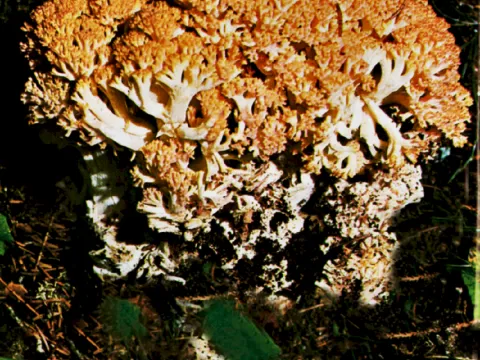
Ramaria rufescens
Ramaria rufescens
Ramaria rufescens, commonly known as the scarlet-tipped coral, is a species of basidiomycete fungus in the family Gomphaceae. It is not a phytopathogen that attacks living tissues but rather a saprotrophic organism.
What the section contains
Ramaria rufescens
The fungus plays a critical role in the decomposition of organic matter, specifically leaf litter and woody debris found in forest floors. Its mycelium secretes enzymes that break down complex lignocellulose structures.
The fruiting bodies are highly branched and coral-like in appearance, starting with pale colors and developing distinct reddish-brown or ochre hues as they mature.
These structures typically emerge during late summer and autumn, often found partially buried under layers of decomposing forest debris.
As a decomposer, it occupies an important ecological niche by recycling nutrients, which facilitates the growth of various forest plants and trees by enriching the soil.
Ramaria rufescens thrives in environments with high humidity and significant soil moisture levels. It is predominantly found in coniferous and mixed forests where organic matter accumulates.
The species prefers acidic, humus-rich soil conditions. A cool and moist microclimate is essential for the formation and maturation of its visible fruiting bodies.
Optimal growth is observed during periods following frequent rainfall, which keeps the leaf litter moist and provides the necessary conditions for mycelial expansion.
It is rarely found in open, dry areas. The shade provided by the forest canopy is crucial for maintaining the environmental stability required for the fungus's life cycle.
Temperature fluctuations play a secondary role, but prolonged drought acts as a limiting factor, causing the fungus to remain dormant within the subterranean substrate.
Ramaria rufescens is not harmful to living plants, agricultural crops, or forestry timber. It does not cause diseases such as wilts, rots, or leaf spots.
The only potential concern in a controlled nursery environment is the displacement of beneficial mycorrhizal fungi. Excessive colonization by this saprotroph might compete for root surface space.
However, such cases are extremely rare and generally do not warrant any chemical or biological control intervention in standard forestry practices.
The fungus is considered a natural component of a healthy ecosystem and is typically left undisturbed unless it interferes with specific sensitive soil experiments.
No protective measures are recommended or necessary for this species, as it represents a vital part of the soil biodiversity in woodland areas.