
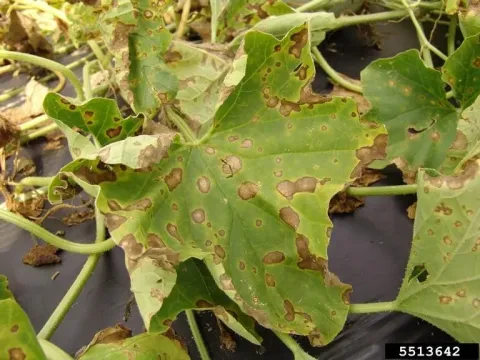
Ramichloridium leaf spot
Ramichloridium cucurbitae
The primary symptom of Ramichloridium leaf spot is the emergence of small, distinct spots on the foliage that gradually expand as the disease progresses.
What the section contains
Ramichloridium leaf spot
These spots initially appear as light brown to dark necrotic lesions, often surrounded by a chlorotic halo, indicating the spread of fungal toxins into the leaf tissue.
Under conditions of high humidity, the undersides of the leaves show a characteristic olive-grey or brownish fungal sporulation within the necrotic areas.
Severe infestations lead to the coalescing of spots, causing entire leaves to wither, curl, and drop prematurely, which significantly reduces the plant's canopy.
While the leaves are the primary site of infection, the disease can also manifest on petioles and stems, resulting in localized necrotic damage that hinders nutrient transport.
The disease is caused by the fungus Ramichloridium cucurbitae, an ascomycete specifically known to infect various species within the Cucurbitaceae family.
The pathogen colonizes plant tissues by penetrating through stomata or directly through the epidermal cells, establishing its mycelium within the intercellular spaces.
Dissemination occurs via conidia, which are produced in large quantities and dispersed by wind, splashing rain, and mechanical contact during agricultural activities.
The fungus is capable of surviving on crop residues in the soil or on infected seeds, serving as the primary inoculum source for the subsequent growing season.
Understanding the life cycle of Ramichloridium cucurbitae is crucial, as the pathogen thrives as a facultative parasite, adapting to both living and dead host tissues.
High relative humidity and moderate temperatures are the most critical environmental conditions that trigger the germination of conidia and successful host colonization.
Dense crop stands with poor air circulation create a microclimate that prevents foliage from drying out, significantly increasing the infection risk for the entire field.
Frequent rainfall, prolonged morning dew, and irrigation methods that wet the leaves create a surface environment ideal for the fungus to establish its hold.
Plants under nutrient stress or those experiencing poor growth conditions are generally more susceptible to attack by this opportunistic fungal pathogen.
Environmental stability, combined with warm temperatures, often results in the rapid escalation of the disease from localized spots to widespread field infection.
The economic impact of this disease is mainly driven by the rapid loss of leaf area, which severely restricts the plant's ability to perform photosynthesis.
As the plant loses its ability to produce energy, fruit development is stunted, leading to significant yield losses and reduced fruit quality at harvest time.
In addition to yield quantity, the physiological stress caused by the disease impacts the storage potential and overall commercial value of the produced vegetables.
The disease accelerates the senescence of the crop, forcing an early end to the harvest season and potentially leading to total crop failure in extreme infection cases.
Secondary issues include increased vulnerability to other pests and opportunistic pathogens, as the plant's natural defense systems are compromised by the infection.
Effective management of Ramichloridium leaf spot requires a balanced approach, incorporating cultural techniques to reduce inoculum and, if necessary, chemical intervention.
- Implementing crop rotation to break the survival cycle of the fungus in the soil.
- Thorough removal and destruction of crop debris post-harvest to minimize overwintering sites.
- Using high-quality, certified seeds to prevent the introduction of the pathogen into the field.
- Ensuring adequate spacing between plants to improve airflow and minimize the leaf-wetting period.
When the disease reaches a threshold that threatens production, the application of appropriate systemic fungicides can effectively mitigate the spread of the fungus.
Early identification of symptoms through consistent field scouting is the most effective way to prevent the development of widespread, damaging epidemics.