
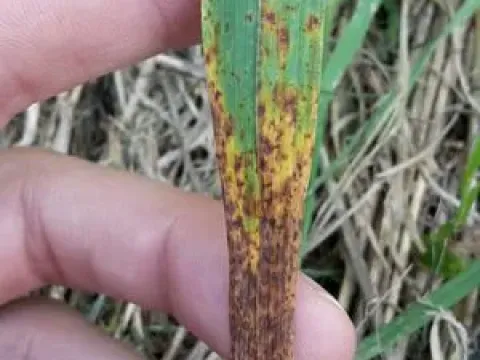
Ramichloridium leaf spot
Ramichloridium
The disease is caused by fungi belonging to the genus Ramichloridium. These organisms are anamorphic ascomycetes that primarily affect the foliage of various host plants.
What the section contains
Ramichloridium leaf spot
The fungus produces conidia, which are asexual spores, on specialized structures. These spores serve as the primary inoculum for the spread of the disease within the crop canopy.
Ramichloridium species are highly adapted to survive on plant debris and in the soil, allowing the pathogen to persist across seasons until environmental conditions become conducive to new infections.
The life cycle of the pathogen is closely tied to the physiological stage of the host plant, often becoming most aggressive during periods of active vegetative growth.
Transmission of the pathogen is mediated by wind and splashing raindrops, which facilitate the movement of spores from infected leaves to healthy parts of the plant.
The primary symptom is the appearance of leaf spots, which typically start as small, discolored lesions on the foliage. These spots eventually expand and may merge.
Lesions often exhibit a distinct border, and in some species, a dark margin is characteristic, helping to distinguish Ramichloridium infection from other leaf spots.
As the infection progresses, the centers of the spots may become necrotic, turning brown or grey as the plant tissue dies due to the fungal colonisation.
Under humid conditions, a fine, often subtle fungal growth consisting of conidiophores may be visible on the undersides of the leaves within the affected spots.
Severe infestations lead to chlorosis and premature senescence of the leaves, which causes significant leaf drop and impacts the overall vitality of the plant.
High relative humidity is the most critical factor for the initiation and progression of the disease, as spores require moisture to germinate and penetrate the leaf epidermis.
The optimal temperature for pathogen development typically ranges between 18 and 25 degrees Celsius, aligning with the growing seasons of many host plants.
Poor air circulation within dense plantings creates a microclimate with elevated humidity, which is highly favorable for the establishment of the infection.
Frequent rainfall or persistent dew encourages the secondary spread of the disease, as moisture facilitates the dispersal of spores from one leaf to another.
Cultural stress, such as poor nutrient management or water deficiency, can further increase the susceptibility of plants to Ramichloridium infection.
The economic impact of the disease is primarily due to the reduction of the leaf surface area, which directly impairs the plant's photosynthetic capacity.
By disrupting essential metabolic processes, the infection limits the accumulation of biomass and reduces the quality and yield of the final crop product.
Plants affected by the disease are often more susceptible to secondary stressors, including opportunistic pests and harsh climatic conditions like frost.
For ornamental plant producers, Ramichloridium represents a significant aesthetic threat that can render nursery stock unsalable.
In cases of severe outbreaks, yield losses can be substantial, leading to decreased profitability for agricultural operations if control measures are not implemented.
Cultural management is the first line of defense, focusing on the removal and deep burial of crop residues that may harbor the fungal pathogen.
Effective crop rotation practices help to break the life cycle of the pathogen by depriving it of its specific host plants for a period of time.
Fungicide applications, when timed correctly during the early stages of disease appearance, are effective in minimizing the spread of the infection within the crop.
- Utilizing resistant cultivars to reduce the risk of outbreaks.
- Managing plant density to promote airflow and reduce canopy humidity.
- Ensuring balanced fertilization to strengthen plant immunity.
Regular field scouting is essential for the early detection of symptoms, allowing growers to initiate management strategies before the disease becomes widespread.