
Ramularia blight of coriander
Ramularia coriandri
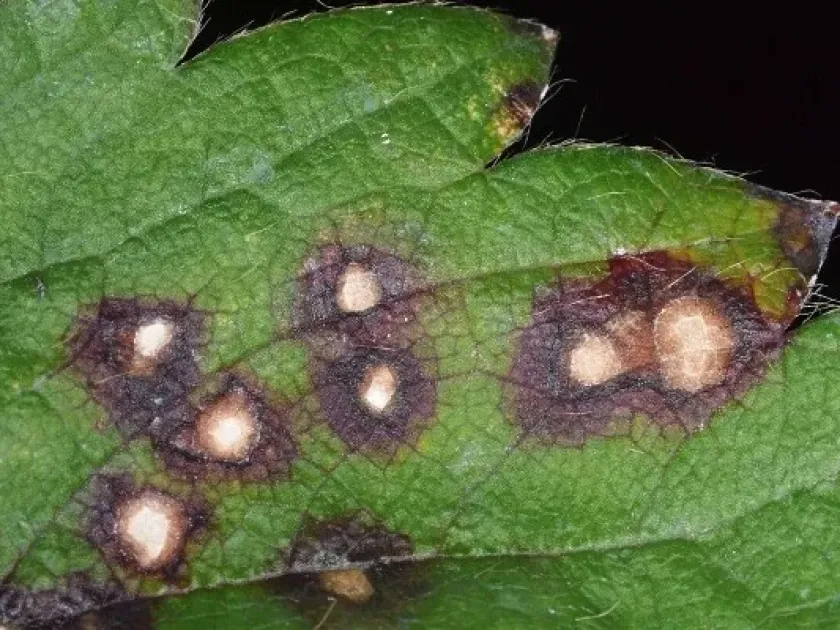
Description
Symptoms
Initial symptoms include small, light-colored spots on the leaves, which gradually darken to brown or dark brown shades as the infection progresses.
These spots often enlarge and coalesce, leading to significant chlorotic areas on the leaves and eventual premature leaf drop.
Under humid conditions, a characteristic greyish or white powdery growth, representing the fungal conidiophores, appears on the underside of the leaves.
When the infection reaches the stems and umbels, it causes structural damage, leading to stunted growth and incomplete development of the seeds.
In severe cases, the entire plant may exhibit signs of wilting and necrosis, resulting in poor development of the flowering parts.
Pathogen
The disease is caused by the fungus Ramularia coriandri, which is a specialized pathogen affecting various species within the Apiaceae family.
The pathogen persists as mycelium and conidia in infected soil and on crop residues, serving as the primary inoculum for the next growing season.
The fungus produces masses of conidia that are easily dispersed by wind, rain splashes, and irrigation water, facilitating the rapid spread of the disease.
As an obligate or specialized parasite, the fungus colonizes plant tissues, drawing nutrients and causing chlorosis and necrosis in the infected areas.
The biological cycle of the fungus is highly adaptive, allowing it to remain dormant in harsh conditions and reappear when host plants are available.
Conditions for development
The development of Ramularia blight is highly dependent on moderate temperatures and high relative humidity during the coriander growing season.
Frequent rainfall and persistent dew provide the necessary moisture for conidia germination and the subsequent invasion of host tissues.
High planting density in fields restricts airflow, creating a humid microclimate that significantly accelerates the spread of fungal spores.
Continuous cropping of coriander on the same land allows for the accumulation of the pathogen in the soil, increasing the risk of disease outbreaks.
Optimal temperatures for the fungus typically range between +15 and +22 degrees Celsius, which are common during the spring and early summer.
Why it matters
The primary economic impact of Ramularia blight is the substantial reduction in seed yield and overall plant biomass.
Infected plants have reduced photosynthetic capacity, which impairs the development of aromatic compounds and essential oils in the seeds.
Seed quality is severely compromised, leading to lower germination rates and the potential for seed-borne transmission to new fields.
Premature leaf senescence and damage to umbels reduce the marketability and value of the harvested coriander crop.
Farmers often incur high costs for fungicide applications to manage the disease, which adds to the overall economic burden of the production.
Protection
Integrated disease management is essential to minimize the impact of Ramularia blight on coriander production.
Crop rotation with non-host species for at least 3–4 years is a fundamental practice to break the disease cycle and reduce soil-borne inoculum.
Deep plowing and proper management of crop debris help to bury the infected plant material, facilitating its decomposition and limiting fungal survival.
- Sourcing certified, disease-free seeds for planting.
- Maintaining optimal plant spacing to promote better airflow and reduce humidity.
- Rigorous weed control to remove alternative hosts that harbor the pathogen.
Fungicide treatments, when applied at the early onset of symptoms, can be effective in protecting the crop and limiting the spread of the fungus.
Discussion
No discussions yet — be the first.