
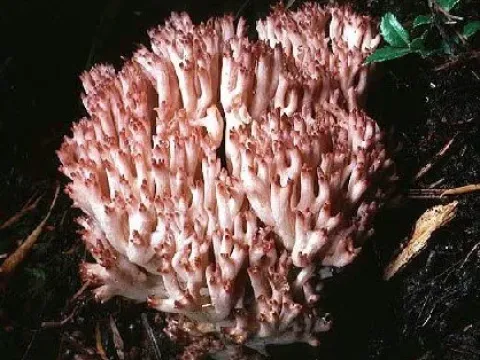
Ramaria botrytis
Ramaria botrytis
Crucial clarification: Ramaria botrytis, commonly known as the cauliflower coral or pink-tipped coral mushroom, is not a plant pathogen. It is a fungus belonging to the Gomphaceae family and is recognized for its edible nature and ecological role.
What the section contains
Ramaria botrytis
The fungus functions as a mycorrhizal partner to various tree species. Rather than attacking or infecting plant tissues as a parasite, it establishes a symbiotic relationship that aids in nutrient and water uptake for the tree.
In certain misguided agricultural records, this species is incorrectly listed as a plant disease due to its unique, branched appearance which some observers mistake for abnormal vegetative growths or galls.
Biologically, the fungus is a saprotroph and mycorrhizal symbiont, processing dead organic matter in the forest floor. It does not cause wilting, necrosis, or structural decay in agricultural or horticultural plants.
Categorizing Ramaria botrytis as a plant disease is a taxonomical error. It is a vital component of healthy forest ecosystems, contributing to soil fertility rather than acting as an agricultural threat.
The fruiting body is distinct, often reaching 15–20 cm in height, appearing as a dense, cauliflower-like structure with numerous branches radiating from a thick, fleshy base.
The coloration is a defining diagnostic feature: the base is generally white or creamy, while the tips of the branches display a vibrant pink, vinaceous, or purplish hue, especially in younger specimens.
The flesh of the mushroom is white, firm, and meaty. As the fruit body ages, it may become yellowish or ochre, which is a natural stage of its life cycle and not a symptom of fungal rot or infection.
The spore print is ochre-yellow. During the peak sporulation period, these spores may settle on the surrounding forest floor, appearing as a light dusting, which should not be confused with fungal mildew pathogens.
The growth pattern is typically clumped. Unlike pathogenic fungi that infect plant vascular systems, this fungus remains localized on the soil surface or within the upper layer of leaf litter.
Ramaria botrytis favors temperate deciduous forests, particularly those with a dominance of beech, oak, or hornbeam. It requires a stable, shaded, and high-humidity environment.
The species thrives in soils rich in organic humic material. It is sensitive to environmental changes and prefers undisturbed areas where the leaf litter layer is thick and well-moistened.
The optimal developmental window for the fruiting bodies is from late summer through autumn, following periods of consistent rainfall which trigger the reproductive cycle of the mycelium.
Soil pH and the presence of specific mycorrhizal host trees are key factors for its establishment. The fungus does not colonize areas with low organic content or excessively disturbed soil.
Propagation is primarily mediated by airborne spores. The mycelium remains dormant in the soil during unfavorable conditions and is capable of surviving for long periods without producing visible fruit bodies.
The species causes no harm to plants. On the contrary, its mycorrhizal association is beneficial to the host tree, improving its resilience to environmental stress and enhancing mineral nutrient absorption.
There is zero economic impact associated with this fungus in agriculture. It does not infect, inhibit, or compromise the health of food crops, ornamental plants, or commercial timber stands.
Misidentifying this fungus as a plant disease could lead to unnecessary and potentially harmful applications of fungicides, which would disrupt the beneficial soil microbiome.
It poses no threat to garden beds or fields. Its presence is an indicator of soil health and environmental stability, reflecting a balanced ecosystem with active biological cycles.
Any concerns regarding its impact on plants are based on misunderstandings of its ecological role. It is effectively a beneficial forest fungus that has no pathogenic interaction with cultivated plants.
No control measures are required. Eradication is entirely unnecessary and ecologically counterproductive, as the fungus is part of the natural balance of the soil environment.
If specimens appear in areas where they are undesirable, manual removal is the only action needed. The use of chemical pesticides or fungicides to target this organism is strongly discouraged.
Prevention is not applicable to a non-pathogenic species. Maintaining good soil structure and proper drainage is sufficient to keep forest-dwelling fungi within their natural habitat.
Integrated pest management protocols do not include Ramaria botrytis. Agronomists should emphasize the identification of this fungus as a non-pathogen to prevent unnecessary chemical usage.
Focusing on soil aeration and limiting excessive use of broad-spectrum biocides will naturally maintain a healthy soil environment without the risk of pathogenic fungal outbreaks.