
Ramaria mairei
Ramaria mairei
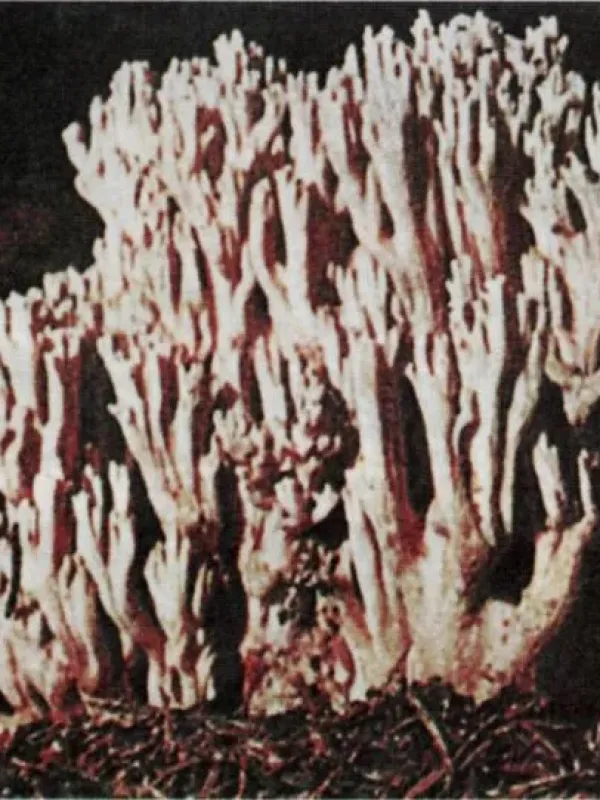
Description
Pathogen
Ramaria mairei is a species of fungi belonging to the Gomphaceae family. It is important to clarify that this fungus is not a plant pathogen and does not cause diseases in agricultural or garden crops.
As a saprotrophic organism, it survives by decomposing dead organic matter such as leaf litter, decaying wood, and forest humus. It lacks the ability to infect living plant tissues.
The fungus plays an essential role in nature as a decomposer. By breaking down complex organic materials, it returns essential nutrients to the soil, making them available for the surrounding plant life.
Its morphology is characterized by branched, coral-like fruiting bodies. These structures appear in clusters and are typically pale yellow or cream-colored, making them distinctive in the forest floor environment.
In scientific literature, Ramaria mairei is documented as a neutral inhabitant of forest ecosystems, contributing to soil health and fertility rather than damaging plant communities.
Conditions for development
The development of this species is tied to moist, shaded environments. It typically thrives in deciduous or mixed forests where organic matter accumulation is high.
Moisture availability is the primary factor for the emergence of fruiting bodies. High humidity and mild temperatures during the autumn season trigger the reproductive cycle.
In managed landscapes, you might observe these fungi in areas where heavy mulch, wood chips, or compost are applied, as these create an ideal saprotrophic habitat.
The fungus requires a stable soil pH and a rich supply of decaying plant material to extend its mycelium effectively through the substrate.
Since Ramaria mairei does not attack living roots, there is no need for environmental control or suppression measures. Its presence is a sign of high soil organic content.
Discussion
No discussions yet — be the first.