
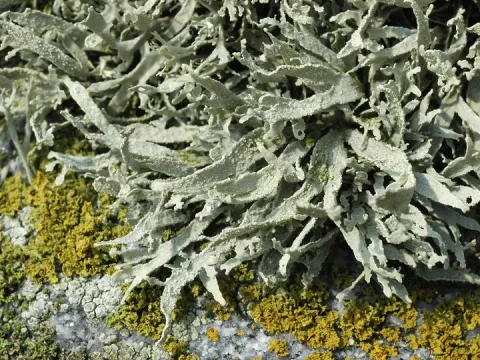
Ramalina polymorpha
Ramalina polymorpha
Ramalina polymorpha is a bush-like lichen species that creates distinct thalli on the surface of tree bark and rock substrates.
What the section contains
Ramalina polymorpha
The organism appears as yellowish-green or greyish-green bushy structures composed of narrow, flattened or wrinkled lobes.
In mature colonies, these lichens form thick, carpet-like layers that significantly alter the surface texture and appearance of the tree trunk.
One of the key visual signs of its presence is the gradual coverage of branches, which can obscure the natural color and health of the bark.
As the colony expands, it can cause the outer bark layers to become brittle, leading to fine cracking and moisture retention under the lichen thallus.
Ramalina polymorpha is a symbiotic organism consisting of a fungal mycobiont and an algal photobiont, functioning as an epiphyte.
In an agronomic context, it is not a direct parasitic pathogen; however, it is frequently associated with trees in decline or poor condition.
The lichen does not extract nutrients or moisture directly from the tree tissues, yet it relies on the tree surface for physical attachment.
Its biological survival is tied to atmospheric moisture and nutrient deposition, which it absorbs through its complex surface structure.
While not a disease-causing agent, its persistent presence is often treated by agronomists as an indicator of an imbalanced local microenvironment.
The development of this lichen is heavily dependent on high atmospheric humidity and a lack of proper airflow within the tree canopy.
Orchards located in low-lying areas with poor ventilation are particularly susceptible to rapid colonization by this and other lichen species.
Trees with rough, aged, or cracked bark provide a more stable surface for the settlement of lichen soredia compared to smooth, young bark.
Neglected orchards, where canopy density has become too high, foster the shade and humidity levels necessary for the lichen to thrive.
Low growth rates of the host tree, often caused by nutrient deficiency or underlying stress, allow the lichen to dominate the bark surface.
The primary concern is that the lichen creates a shelter for overwintering pests, such as scales and mites, which can then harm the tree.
By covering the bark, the lichen inhibits gas exchange and reduces light exposure, which may slow down the vital processes of the bark layer.
Persistent moisture trapped beneath the lichen can lead to the softening of bark tissue, creating risks of secondary fungal infections or rot.
Presence of significant lichen growth is often a symptom of poor orchard vigor, which correlates with reduced overall fruit production.
In extreme cases, the accumulation of lichen on smaller twigs can contribute to the premature dieback of branch tips due to inhibited physiological functions.
Pruning is the most effective cultural practice to increase light penetration and air circulation, creating an environment unsuitable for lichens.
Mechanical removal using brushes or plastic scrapers effectively clears the bark, providing a clean surface that hinders immediate recolonization.
Application of lime wash or iron sulfate solutions during the dormant season is a standard practice to sanitize the bark and inhibit lichen growth.
Improving the tree's health through appropriate fertilization and water management encourages rapid bark renewal, making it harder for lichens to attach.
Regular monitoring of bark condition and early removal of small colonies prevent large-scale spread across the entire orchard canopy.