
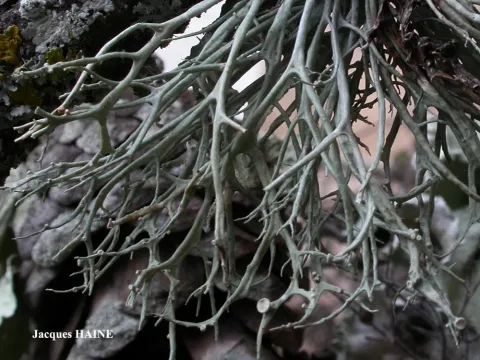
Ramalina implectens
Ramalina implectens
Ramalina implectens is a species of fruticose lichen belonging to the Ramalinaceae family, commonly found on tree bark.
What the section contains
Ramalina implectens
It is important to clarify that this organism is not a plant pathogen; it is a symbiotic association between fungi and algae.
The lichen functions as an epiphyte, utilizing the bark of the tree solely as a physical substrate for anchoring.
It does not penetrate the cambium or extract nutrients from the plant host, unlike parasitic fungi or bacteria.
In the context of agronomy, its presence is often interpreted as an indicator of environmental conditions rather than a disease.
The visual signs of Ramalina implectens include the formation of branched, shrub-like or pendant thalli on trunks and branches.
The color of the lichen typically appears in shades of pale greenish-grey, providing a distinct contrast against the darker bark.
The thallus is characterized by thin, tangled lobes that may spread across the surface in dense, mat-like clusters.
When dry, the structures appear brittle, but they regain flexibility when exposed to high humidity or rainfall.
No necrotic lesions or decay spots are observed beneath the lichen, which differentiates it from true plant diseases.
The development of Ramalina implectens is highly dependent on consistent air humidity and clean environmental conditions.
It favors mature trees with rough, aged bark that provides secure attachment sites for spores to settle.
Lack of proper tree canopy management and poor ventilation contribute to the proliferation of lichen populations in orchards.
The lichen thrives in regions with temperate climates where moderate temperatures are maintained throughout the year.
Overcrowded plantations often create the stagnant air microclimate that encourages the growth of these epiphytic organisms.
While not a direct parasite, the presence of dense lichen cover can impede the normal gaseous exchange of the bark.
The structure of the lichen provides a protective micro-habitat for various pests, insects, and mites to overwinter safely.
The overgrowth of lichen can mask the early symptoms of actual fungal or bacterial diseases, delaying necessary treatment.
Heavy colonization by lichens is often associated with tree stress or old age, reflecting a decline in the tree's vigor.
Aesthetically, large clusters of lichen can reduce the market appeal of nursery trees and ornamental woody plantings.
Effective management focuses on promoting tree vitality through proper pruning to improve light and air circulation.
Mechanical removal using soft brushes or scraping tools during wet weather is a safe way to clean the tree bark.
White-washing tree trunks with lime solution acts as an effective preventive measure against lichen settlement.
Copper-based fungicide sprays applied for routine disease control also help suppress lichen growth on branches.
Improving general horticultural practices ensures the bark remains healthy and less susceptible to the colonization of epiphytes.