
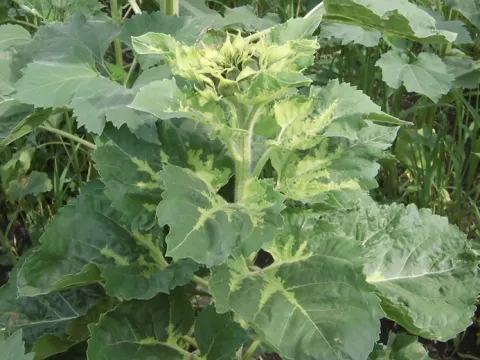
Rajasthan Downy Mildew
Dange
Rajasthan downy mildew is caused by the oomycete Peronosclerospora heteropogoni. As an obligate parasite, this pathogen relies entirely on living host tissues to complete its life cycle and maintain its presence in the field environment.
What the section contains
Rajasthan Downy Mildew
The pathogen survives in soil and crop debris through the formation of oospores, which are highly resilient structures capable of withstanding extreme temperatures and dry conditions. Propagation is facilitated by conidia, which are easily dispersed by wind currents.
The mycelium infects the maize plant by penetrating the root system or via the leaf stomata. Once internal infection is established, the pathogen spreads systemically through the plant's vascular tissues, effectively hijacking the host's nutritional resources.
The biology of P. heteropogoni is uniquely adapted to hot and arid climates, making it a major threat to maize production in such regions. The pathogen's ability to sporulate rapidly in the presence of moisture leads to widespread outbreaks.
This pathogen is highly specialized, primarily affecting members of the Poaceae family. The lack of host rotation allows the inoculum to build up in the soil, leading to an increased risk of infection in subsequent growing seasons.
The first symptoms of the disease appear as chlorotic, yellowish stripes on the leaves of young maize plants. These stripes eventually expand and become more pronounced, giving the foliage a distinct, patchy, and bleached appearance.
Under humid conditions, a characteristic white, downy growth emerges on the underside of the leaves. This layer consists of the pathogen's conidiophores and conidia, serving as a primary diagnostic indicator for the disease.
Infected plants exhibit severe stunting, characterized by shortened internodes and a rigid stem structure. This growth retardation makes diseased plants clearly identifiable among healthy corn rows throughout the vegetation period.
Reproductive organs are significantly deformed during the heading stage. The tassels often transform into leaf-like structures, and cob development is either absent or severely impaired, resulting in total sterility of the crop.
The root system of infected plants is poorly developed, which increases susceptibility to lodging and drought stress. Infected maize appears chlorotic and unthrifty, ultimately failing to contribute to the overall yield.
The development of Rajasthan downy mildew is favored by high temperatures combined with periods of high humidity. Dew, fog, and light rain create the necessary surface moisture for conidia germination and subsequent infection of plant tissues.
High plant density creates a microclimate within the maize field that traps humidity, significantly accelerating the disease cycle. This environment allows the pathogen to move quickly between plants, creating severe infection centers.
Seedlings are most vulnerable during the early stages of development. Warm nights and moist conditions shortly after germination are the most critical factors for systemic colonization, leading to severe outbreaks.
The pathogen's thermal requirements are perfectly aligned with the optimal growing conditions for maize. Even during dry seasons, dormant oospores remain viable in the soil, ready to infect as soon as the right moisture conditions return.
Agricultural practices that promote the accumulation of crop debris allow the pathogen to persist over several years. Without proper field sanitation, the inoculum density remains high, making repeated cultivation of maize on the same plot dangerous.
The primary harm is a dramatic reduction in crop productivity, often resulting in total crop failure in heavily infested fields. Systemically infected plants fail to produce marketable cobs, rendering the harvest useless.
Chlorosis and leaf damage disrupt photosynthesis, leading to reduced biomass and impaired grain filling. Even if cobs are formed, they are frequently infected by secondary fungi, reducing the quality and nutritional value of the grain.
Increased stem brittleness leads to widespread lodging, which complicates mechanical harvesting. Many damaged cobs fall to the ground and are missed by harvesting equipment, further increasing economic losses.
The disease also compromises the plant's overall vigor, making it susceptible to secondary pathogens such as stem and root rots. This complex of diseases often destroys the yield potential of the entire field.
The economic impact involves both direct losses of yield and the high cost of implementing intensive control measures. Controlling this disease is essential for maintaining sustainable maize production in affected areas.
The most effective strategy is the use of resistant or tolerant maize hybrids. Breeders focus on incorporating genetic traits that prevent the pathogen from colonizing the seedling tissues, providing natural protection.
Crop rotation is crucial for breaking the pathogen's life cycle. Planting non-host crops for at least 3–4 years helps to exhaust the soil inoculum and prevents the buildup of dangerous levels of oospores.
Deep plowing and thorough incorporation of crop residue accelerate the breakdown of debris, reducing the initial infection sources. This simple agronomic step is vital for lowering the disease pressure in the next season.
Seed treatment with systemic fungicides is a highly effective prophylactic measure. Applying modern active ingredients protects the plant during its most vulnerable stage of emergence and early growth.
- Implementing spatial isolation of maize fields to minimize airborne conidia transfer.
- Removing and destroying wild grasses that may serve as alternative reservoirs for the pathogen.
- Regular field scouting during early growth stages to identify and manage initial infection hot-spots.