
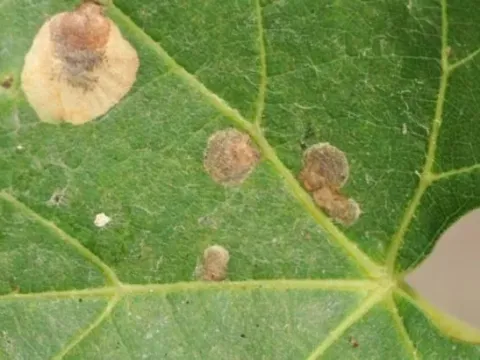
Cercospora leaf spot of grape
Pseudocercospora vitis
The causal agent of this disease is the fungus Pseudocercospora vitis (formerly known as Cercospora vitis), which is a common pathogen in many viticulture regions.
What the section contains
Cercospora leaf spot of grape
The fungus is a member of the Deuteromycetes group and produces conidia on the underside of leaves, which appear as a dark, velvety layer under high humidity conditions.
This pathogen survives the winter in fallen leaves and other plant debris within the vineyard, acting as the primary source of infection for the next season.
The conidia are dispersed by wind, splashing rain, and through physical contact, allowing the fungus to spread rapidly across the vineyard canopy.
Microscopic evaluation reveals conidiophores organized in clusters emerging from the leaf stomata, providing a highly efficient mechanism for fungal reproduction.
Early symptoms typically appear on the older, lower leaves of the grapevine, manifesting as small, olive-brown necrotic spots.
On the upper leaf surface, these spots develop a reddish-brown or dark brown color, often with irregular or poorly defined margins.
During periods of high humidity, a dark olive-colored fungal growth becomes visible on the underside of the affected leaf areas.
As the disease progresses, the lesions expand and coalesce, eventually causing large areas of the leaf to die and turn necrotic.
Severe infestations lead to premature leaf chlorosis and abscission, which can significantly weaken the health and vigor of the entire grapevine.
High humidity, frequent rainfall, and extended periods of fog are the primary drivers that facilitate the germination of Pseudocercospora vitis spores.
The fungus thrives within a temperature range of +20 to +25 degrees Celsius, making late summer and early autumn particularly high-risk periods.
Poorly ventilated vineyards with excessive canopy density create a humid microclimate that significantly accelerates the spread of the infection.
The presence of water films on leaf surfaces, such as dew or rain residue, is essential for the pathogen to successfully colonize plant tissues.
Neglected vineyard maintenance, including the failure to remove leaf litter, significantly increases the pressure of the inoculum for the subsequent growing season.
The disease causes premature defoliation, which severely limits the plant's ability to undergo photosynthesis and store carbohydrates for winter dormancy.
Reduced photosynthetic capacity leads to poorer fruit development, lower sugar accumulation, and a significant decrease in overall grape quality.
Weakened vines are more susceptible to winter injury and freeze damage, as they cannot properly harden their wood before the onset of cold weather.
Long-term impact on vine vitality leads to reduced yields and economic loss for growers, necessitating expensive recovery and protection programs.
If the infection reaches the fruit pedicels, it can lead to shriveling and premature berry drop, which results in direct harvest losses.
Sanitation is the most critical control measure: growers must clear and destroy fallen leaves and plant debris to remove the overwintering inoculum.
Proper canopy management, such as timely pruning, shoot thinning, and leaf removal, is essential to improve airflow and reduce leaf wetness.
Fungicide application, specifically copper-based products or systemic fungicides, is necessary for managing outbreaks and protecting vulnerable vines.
Timing the fungicide spray schedule based on weather forecasts and symptom monitoring is the most effective approach for disease suppression.
- Regular vineyard scouting
- Sanitary disposal of infected plant material
- Appropriate use of systemic fungicides
- Optimizing vine training for airflow