
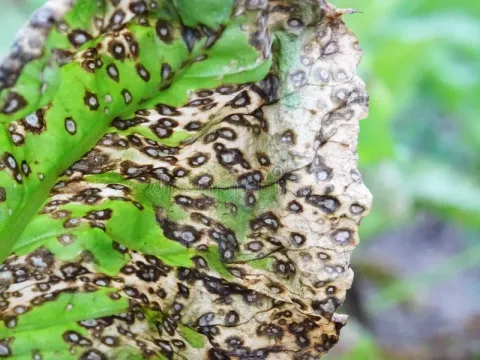
Cercospora leaf spot of gerbera
Cercospora gerberae
The disease is caused by the fungus Cercospora gerberae, an anamorphic pathogen that specializes in infecting the foliage of Gerbera jamesonii and related species.
What the section contains
Cercospora leaf spot of gerbera
The fungus produces conidia, which act as the primary inoculums. These spores are spread through the air or by water splashes during overhead irrigation or rainfall.
Upon landing on a leaf, the spores germinate and the fungal mycelium penetrates the host tissues through stomata, leading to the localized cell necrosis characteristic of the disease.
This pathogen survives between crop cycles in plant debris and infested soil, making it a persistent threat in greenhouse production environments if sanitation is neglected.
Its biological cycle is highly dependent on humidity, as the fungus requires a film of water on the leaf surface for spore germination and infection establishment.
Symptoms typically begin as small, circular, or irregular spots on the leaves. These lesions often appear reddish-brown or purple in the early stages of development.
As the infection progresses, the center of the spot may turn grey or light brown, while the margins often retain a darker, more defined border, giving it a target-like appearance.
Under conditions of high humidity, an olive-grey downy growth appears on the undersides of the leaf spots. This growth consists of masses of fungal spores being released.
In severe cases, the individual lesions coalesce, causing large portions of the leaf to wither and turn necrotic, leading to premature leaf abscission.
- Initial small reddish-brown leaf spots.
- Dark, distinct borders around necrotic lesions.
- Greyish sporulation on the underside of leaves.
- Yellowing and premature death of older leaves.
- Reduced plant vigor and stunted growth.
The primary factor for disease development is high relative humidity, typically exceeding 80%. Poor ventilation in greenhouse environments exacerbates this condition significantly.
Temperatures ranging from 20°C to 28°C create the ideal climate for the rapid growth of the mycelium and the subsequent production of spores by the pathogen.
Overhead irrigation is a major contributor to the spread of the disease, as water droplets physically displace spores to healthy leaves and create the necessary wetness.
Overcrowding of plants limits airflow, preventing leaves from drying out quickly and creating long-lasting moisture pockets where the fungus can thrive undisturbed.
Plants that are stressed due to poor nutrition or improper environmental control are more susceptible to infection and exhibit more severe symptom development.
The primary damage involves a significant reduction in the photosynthetic capacity of the plants, which negatively impacts flower production and plant quality.
Infected leaves become aesthetically unappealing, rendering the flowers unsuitable for the commercial market or as premium ornamental plants.
If not managed, the disease can cause total defoliation of the crop, ultimately weakening the root system and potentially leading to the death of the entire plant.
The rapid secondary spread of spores can lead to an epidemic within a greenhouse, causing extensive financial losses to commercial growers who lose batches of crops.
The need for constant monitoring, leaf removal, and fungicide application increases labor and material costs, significantly impacting the profitability of Gerbera production.
Sanitation is the cornerstone of control. Growers must remove and destroy all infected foliage and debris promptly to reduce the primary inoculum load in the greenhouse.
Transitioning from overhead irrigation to drip irrigation is essential to keep the foliage dry and prevent the dispersal of fungal spores across the crop canopy.
Enhancing greenhouse ventilation and maintaining appropriate spacing between plants help lower the humidity levels, making the environment less favorable for the pathogen.
Chemical control involves the application of appropriate fungicides, such as those containing chlorothalonil, mancozeb, or systemic triazoles, following strict label instructions.
Implementing a comprehensive Integrated Pest Management (IPM) program that includes regular crop scouting and prophylactic treatments is vital for long-term disease management.