
Cercospora leaf spot of lilies
Cercospora gigantea
Description
Symptoms
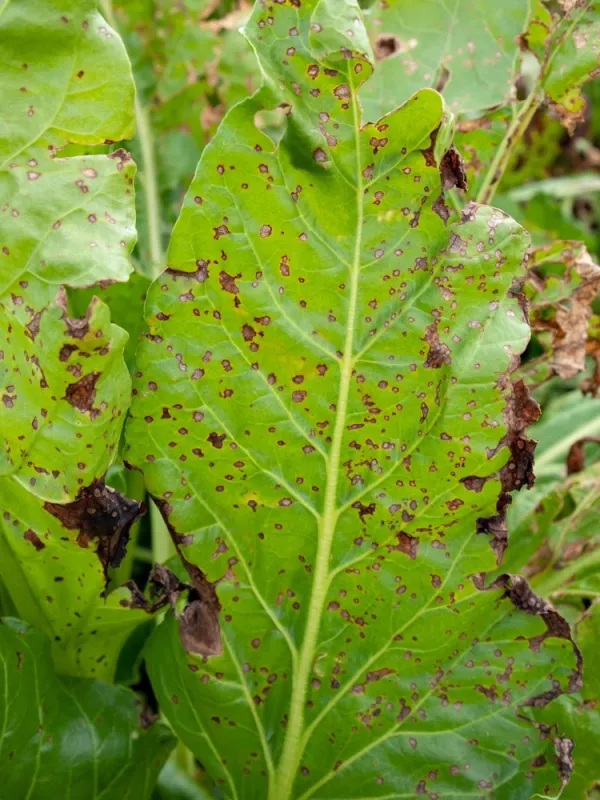
The most prominent symptom is the appearance of distinct, large spots on the leaves. These spots are often circular or elongated along the leaf veins, serving as a key diagnostic feature.
As the disease progresses, a light-colored or necrotic center forms within the spots, which is the result of fungal sporulation. A darker border often surrounds these lesions.
The spots tend to enlarge over time and may coalesce, covering significant portions of the leaf surface. This leads to premature yellowing and eventual desiccation of the affected leaves.
Infection typically manifests on the lower foliage first, where humidity levels are higher, before spreading upward along the main stem of the lily plant.
While various fungi cause leaf spots, the "giant" size of individual lesions is a hallmark of this specific species, distinguishing it from other common leaf-spotting pathogens.
Pathogen
The causal agent of this disease is the fungus Cercospora gigantea, which belongs to the class of deuteromycetes. It is a specialized pathogen that primarily targets plants within the Lilium genus.
The fungus produces conidiophores that emerge through the stomata of infected tissues. Its conidia are elongated and serve as the primary inoculum for spreading the infection throughout the growing season.
The pathogen overwinters in plant debris, fallen leaves, and stems, where it survives as mycelium or stroma. In spring, as temperatures rise, the fungus resumes sporulation to initiate new infections.
Infection occurs when conidia land on leaf surfaces and enter through natural openings or small wounds. Once inside, the fungus colonizes the intercellular spaces of the plant tissue.
The biological cycle of Cercospora gigantea is closely tied to the growth stages of lilies, making the plants most vulnerable during their peak vegetative and flowering periods.
Conditions for development
The development of the disease is favored by high relative humidity and moderately warm temperatures. Prolonged rainfall, fog, or heavy dew provide ideal conditions for conidia germination.
Poor air circulation, often caused by overly dense planting or improper spacing, significantly accelerates the spread of the fungus by maintaining a moist microclimate around the foliage.
Spores are disseminated by wind, rain splashes, or during overhead irrigation. The disease can also be spread through contaminated gardening tools if proper hygiene is not maintained.
The optimal temperature range for the pathogen is between 20–25 degrees Celsius. Under these conditions, the incubation period is shortened, leading to rapid disease development.
The presence of free moisture on the leaf surface for several consecutive hours is critical for the fungus to successfully infect the plant tissue.
Why it matters
The primary impact of Cercospora gigantea is the significant reduction of photosynthetic area, which weakens the bulbs and hinders their ability to store energy for the next season.
Severe infestations cause premature foliage death, preventing the plant from reaching its full potential in flowering and overall development, thus reducing its aesthetic value.
For ornamental plant nurseries, this disease can lead to significant economic losses due to the damage of stock, making plants unsaleable and risky to distribute.
Affected plants are often more susceptible to secondary infections and pest attacks, which can lead to the overall decline and eventual loss of the entire planting area.
The cumulative effect of the pathogen involves increased management costs, including labor for sanitation, fungicide applications, and the loss of quality floral displays.
Protection
The most important control measure is strict sanitation: all infected plant parts should be removed and destroyed at the end of the season to eliminate the overwintering inoculum.
Maintaining proper spacing between plants is essential to ensure adequate airflow, which helps keep the foliage dry and creates an environment less conducive to fungal growth.
Chemical control can be effective using systemic fungicides, such as triazoles, or copper-based protectants applied as soon as the first symptoms are detected on the leaves.
Avoiding overhead irrigation and opting for drip or soil-level watering helps keep leaf surfaces dry, effectively disrupting the disease cycle of the fungus.
The use of disease-free bulbs and adherence to crop rotation practices (waiting 3–4 years before replanting lilies in the same area) are fundamental strategies for prevention.
Discussion
No discussions yet — be the first.