
Cercospora leaf spot of lettuce
Cercospora lactucae-sativae
Description
Symptoms
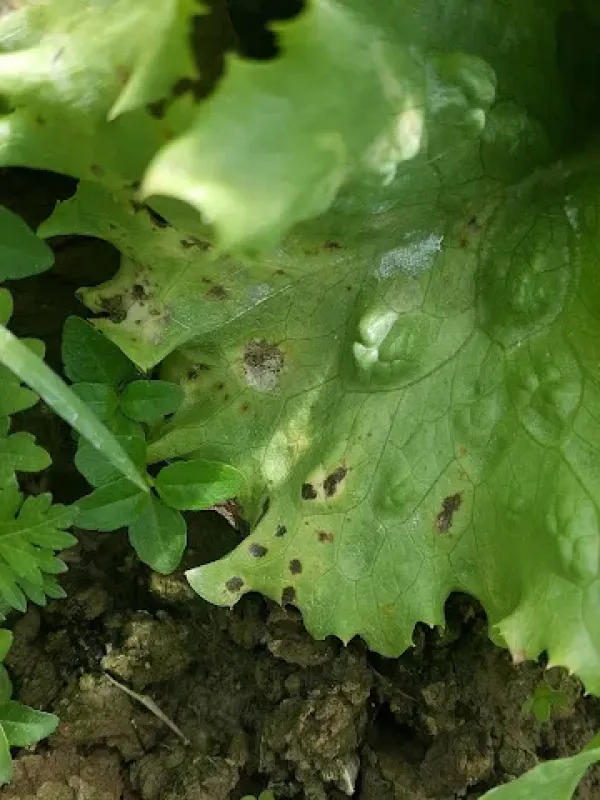
Initial symptoms appear as small, light-colored spots on the older, lower leaves of the lettuce plant. Over time, these spots expand in size.
The lesions are often circular or irregular and may develop a pale, necrotic center surrounded by a dark margin, indicating the progression of fungal activity.
Under high humidity conditions, a sparse, olive-grey velvety growth—consisting of the fungus's conidiophores and conidia—becomes visible on the underside of the lesions.
As the disease progresses, individual spots may coalesce, covering large portions of the leaf blade, which eventually yellows and dies prematurely.
In severe cases, the infected leaves twist and wither, leading to a general loss of plant vigor and a significant reduction in the size of the head.
Pathogen
The disease is caused by the fungus Cercospora lactucae-sativae. It is a specialized pathogen that targets members of the Asteraceae family, specifically cultivated lettuce.
The fungus survives between seasons in infected plant debris left in the soil. It can also be transmitted via contaminated seeds or through windborne dispersal of spores.
The pathogen produces conidia, which are asexual spores, on specialized structures called conidiophores. These spores serve as the primary inoculum for new infections during the growing season.
Upon reaching a leaf surface, the spores germinate under favorable conditions and penetrate the plant tissue through natural openings, such as stomata, to establish a successful infection.
The life cycle of the pathogen is relatively short, allowing for rapid colonization of host tissues and multiple infection cycles within a single growing period.
Conditions for development
The development of Cercospora leaf spot is highly favored by warm temperatures, typically ranging from 20°C to 25°C (68°F to 77°F).
Prolonged periods of high relative humidity or leaf wetness, often caused by heavy dew, fog, or overhead irrigation, are essential for the germination of fungal spores.
Poor ventilation in greenhouse or field settings, caused by dense planting, increases the humidity around the leaves and promotes the spread of the disease.
Warm and moist conditions facilitate the production of spores, which are then easily spread by splashing rain or irrigation water from infected to healthy plants.
Failing to remove infected plant material or failing to rotate crops creates a persistent reservoir of inoculum, leading to recurring outbreaks year after year.
Why it matters
The primary impact of the disease is cosmetic damage, rendering the lettuce heads unmarketable and causing significant economic losses for growers.
The reduction in healthy leaf tissue impairs the plant's ability to photosynthesize, which slows down growth and results in smaller, lower-quality heads.
Infected leaves are prone to rapid wilting and decay, which significantly reduces the post-harvest shelf life of the produce in retail and storage.
Severe infestations weaken the plants, making them more susceptible to opportunistic secondary pathogens, such as bacteria, which cause soft rot.
The cumulative effect of infection is a decrease in yield uniformity, which complicates harvesting and sorting processes for commercial agricultural producers.
Protection
Implementing a rigorous crop rotation strategy is the most effective way to break the disease cycle and reduce the soil-borne inoculum level.
Sanitation practices, such as removing and destroying crop residues immediately after harvest, are crucial for preventing the fungus from over-wintering.
Using certified, disease-free seed and selecting resistant or tolerant lettuce varieties where available can significantly mitigate the risk of severe outbreaks.
When chemical intervention is required, contact or systemic fungicides should be applied according to local agricultural guidelines and safety intervals.
- Use drip irrigation to keep foliage dry.
- Ensure proper spacing to improve air circulation.
- Control weeds that might act as alternative hosts.
- Maintain optimal soil fertility to boost plant health.
Discussion
No discussions yet — be the first.