
Cercospora leaf spot of Liriodendron
Cercospora insulana
Description
Symptoms
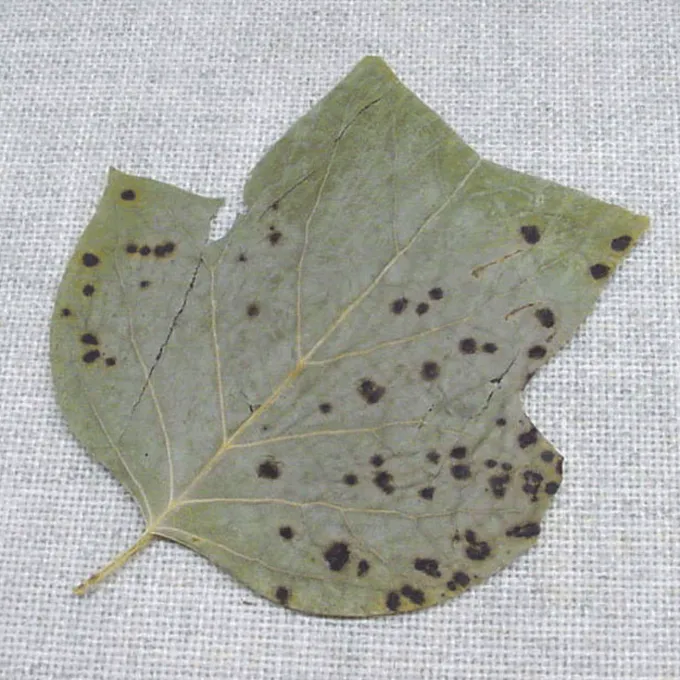
The primary symptoms of Cercospora leaf spot on Liriodendron tulipifera appear as small, scattered spots on the leaves. These spots are initially light brown or tan and may have a dark reddish-brown or purple halo.
As the infection progresses, the spots enlarge and may merge, resulting in irregular patches of dead tissue. Under high humidity, a fuzzy gray or olive-colored fungal growth, consisting of conidiophores and spores, can be seen on the undersides of these lesions.
Severe infestations often cause the leaves to turn yellow or brown and drop prematurely. This premature defoliation is a classic sign of the disease, especially during late summer or early autumn when the environmental conditions favor the fungus.
Lesions can also appear on leaf petioles, causing them to weaken and wither. This disrupts the tree's vascular transport, further exacerbating the decline of the affected foliage.
The overall appearance of the tree becomes sparse and sickly. The necrotic spots reduce the surface area available for photosynthesis, which is critical for the tree's health during the peak growing season.
Pathogen
The disease is caused by the fungal pathogen Cercospora insulana. It is a specialized parasite that targets the foliage of Liriodendron species, feeding on the host's cellular nutrients.
The fungus produces conidia which act as the primary inoculums. These spores are spread throughout the canopy via splashing rain, irrigation water, and wind currents, ensuring rapid infection of healthy leaf tissue.
Cercospora insulana survives the winter as mycelium within fallen leaf debris on the ground. This persistence makes it a recurring problem if sanitation practices are neglected in the garden or nursery.
The pathogen's life cycle is closely tied to the host's foliage development. It waits for the appropriate thermal and moisture signals to resume its infectious activity at the start of each new growing season.
Laboratory analysis confirms that the fungus has a complex reproductive mechanism, allowing it to produce multiple generations of spores during a single season if the conditions remain favorable.
Conditions for development
The development of Cercospora leaf spot is highly dependent on humidity. Extended periods of rainfall, heavy dew, or prolonged fog create the wet leaf surface environment necessary for spore germination.
Warm temperatures, generally ranging from 20 to 28 degrees Celsius, significantly accelerate the growth of the fungus. In these conditions, the incubation period between spore contact and symptom development is quite short.
Poor air circulation within the tree canopy is a major factor that contributes to the spread of the disease. Dense foliage prevents rapid drying after rain, leaving the leaves vulnerable to fungal attack.
Trees planted in shaded or poorly ventilated areas are much more susceptible to the disease. Without sufficient sunlight to dry the leaves, the infection pressure on such trees remains high throughout the year.
Inappropriate irrigation methods, such as overhead watering that wets the canopy, increase the frequency of leaf spotting. Watering the roots directly is highly recommended to keep the foliage dry.
Why it matters
The primary damage from this disease is premature defoliation, which severely stresses the tree. By losing its leaves too early, the Liriodendron cannot produce sufficient carbohydrates for winter storage.
This stress makes the tree more prone to winter damage, as weakened tissues are less capable of surviving freezing temperatures. Over time, this may result in branch dieback and an overall decrease in vigor.
In landscape settings, the aesthetic value of the Liriodendron is severely compromised. The disfigured foliage makes the tree unattractive, necessitating costly maintenance or remedial treatments.
Young trees are particularly susceptible to stunted growth. Persistent leaf spot infections can slow down the development of the root system and reduce the tree's ability to withstand environmental stress.
In commercial nurseries, Cercospora leaf spot can lead to significant economic losses due to the unsaleable quality of the plants. Effective management is essential to maintain high-quality nursery stock.
Protection
Effective sanitation is the first line of defense. Raking and disposing of all fallen leaves during the autumn is crucial, as this removes the primary overwintering site for the fungus.
Pruning to improve air circulation within the canopy is a vital cultural control. Removing crowded or crossing branches allows more sunlight and air to reach the inner leaves, keeping them dry and less prone to infection.
Fungicide applications are recommended when the disease pressure is high. Copper-based sprays or modern systemic fungicides should be applied proactively to protect the foliage from infection.
Maintaining tree vigor through proper fertilization and watering practices strengthens the host's natural defenses. Ensuring the tree is not stressed makes it more capable of resisting the pathogen.
If infections are detected early, a localized pruning of the most severely affected branches can help reduce the spore count. Always sanitize tools after pruning to prevent spreading the fungus to healthy parts of the tree.
Discussion
No discussions yet — be the first.