
Cercospora leaf spot of eggplant
Cercospora melongenae
Description
Symptoms
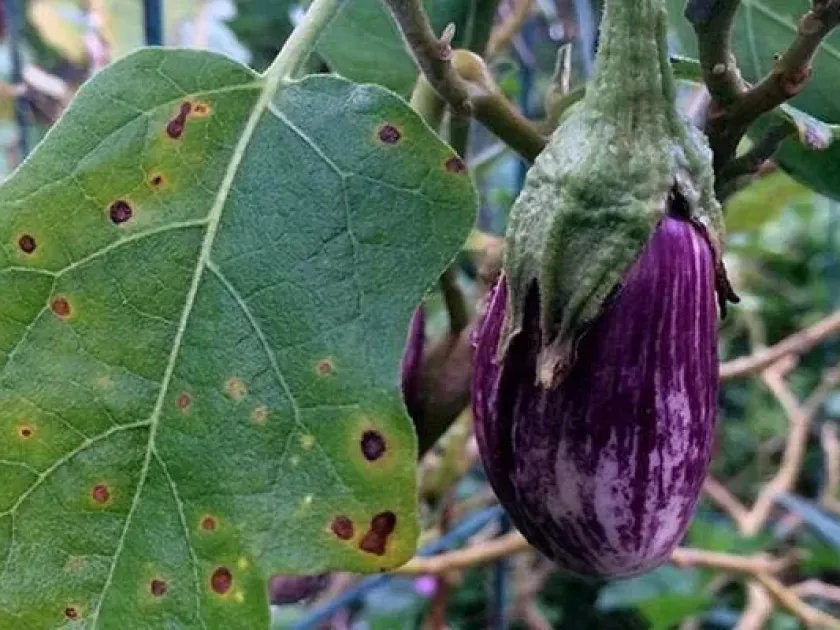
Early symptoms appear on the lower, older leaves as small, circular, grayish-brown to dark brown spots. Over time, these spots become more defined, often developing a darker, prominent margin.
As the infection progresses, these spots enlarge and may coalesce, covering large areas of the leaf blade. This extensive damage leads to yellowing (chlorosis) and eventual necrosis of the foliage.
A distinctive feature of the disease is the presence of a grayish-colored velvety mold on the underside of the leaf, which consists of masses of fungal spores. In dry conditions, the centers of the spots may dry out and tear away.
While the disease is primarily foliar, in severe cases, the lesions can extend to stems and petioles. This weakens the structural integrity of the plant and limits the transport of nutrients to the fruits.
Heavy infestation causes massive defoliation, leaving the plants exposed. This leads to reduced photosynthesis and puts the plant under significant stress, which negatively impacts fruit set and yield.
Pathogen
The disease is caused by the imperfect fungus Cercospora melongenae. This pathogen is a host-specific fungus that primarily attacks plants belonging to the Solanaceae family, with eggplant being a major target.
The fungus survives the off-season on infected plant debris left in the field. Under favorable conditions, it produces conidia that are easily dispersed by wind, rain splashes, and irrigation water to neighboring plants.
The life cycle of the pathogen is highly dependent on environmental moisture. The fungus develops fruiting structures (conidiophores) on the underside of the leaves, which release spores that trigger new infection cycles throughout the season.
Cercospora melongenae is resilient and can persist in the soil for significant periods if crop rotation practices are neglected, making it a constant threat to continuous eggplant cultivation.
The infection process starts with spores germinating in water droplets, followed by penetration into leaf tissue through stomata. Once inside, the fungus colonizes the mesophyll, eventually leading to visible necrotic lesions.
Conditions for development
High relative humidity is the most critical factor for the development of Cercospora leaf spot. Extended periods of rainfall, heavy dew, and high humidity create a perfect environment for the pathogen.
The fungus thrives in warm temperatures, typically between 22 and 28 degrees Celsius. These conditions often coincide with the peak growing season for eggplants, making the crop highly susceptible.
Poor aeration due to high planting density creates a humid microclimate within the canopy. This lack of airflow prevents leaves from drying out after irrigation, significantly increasing the likelihood of infection.
Nutritional imbalance, specifically nitrogen excess, creates lush, succulent growth that is more prone to fungal penetration. A lack of potassium can also weaken the plant's natural resistance to the pathogen.
The presence of solanaceous weeds in the field acts as a reservoir for the fungus. These weeds allow the pathogen to survive and spread to the commercial crop throughout the season.
Why it matters
The primary damage caused by the disease is the significant reduction of the photosynthetic surface. With fewer healthy leaves, the plant cannot synthesize enough carbohydrates to support fruit growth.
Defoliation exposes the developing fruits to direct sunlight, causing sunscald. This drastically reduces the market value of the produce and makes it susceptible to further degradation.
Overall fruit yield is severely compromised in terms of both quantity and size. Early infection can prevent fruits from reaching their full potential, leading to lower harvesting volumes.
Plants weakened by Cercospora leaf spot become secondary targets for other opportunistic pathogens, such as soft rot bacteria, which can destroy the remaining plant tissue in a short timeframe.
Economic losses are compounded by the costs of applying fungicides and the reduction in the shelf life of the harvested eggplants, as the plants struggle to reach physiological maturity.
Protection
The foundation of managing this disease is a strict crop rotation program. Do not plant eggplants or other solanaceous crops in the same field for at least 3–4 years to break the infection cycle.
Field sanitation is vital. All plant debris must be collected and removed from the field after the season ends to destroy the primary source of overwintering inoculum.
Prophylactic applications of copper-based fungicides are effective in preventing initial outbreaks. For active infections, systemic fungicides including triazoles or strobilurins may be required.
- Maintain adequate plant spacing to improve airflow
- Implement drip irrigation to keep foliage dry
- Remove all weeds that belong to the Solanaceae family
- Use certified disease-free seeds or transplants
- Monitor plants closely during humid weather periods
Discussion
No discussions yet — be the first.