
Powdery mildew of cherry
Podosphaera clandestina
The causative agent of this disease is the fungus Podosphaera clandestina, an obligate parasite that thrives on the leaves, young shoots, and fruits of various cherry species.
What the section contains
Powdery mildew of cherry
The fungus develops a superficial mycelium that forms a white, powdery layer on the surface of the plant tissue, anchoring itself via specialized structures called haustoria.
It overwinters in the form of cleistothecia, which are small, dark fruiting bodies that survive on fallen leaves, twigs, or within the bark crevices of the infected trees.
When spring conditions become favorable, these fruiting bodies release ascospores, which act as the primary inoculum for infecting new, susceptible plant growth.
As the season progresses, the fungus produces conidia, which are wind-dispersed asexual spores that facilitate rapid secondary spread throughout the orchard.
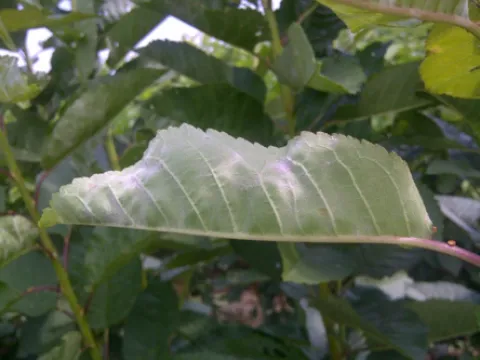
The first symptoms appear as small, white patches of fungal growth on the underside of young leaves, which rapidly expand to cover both surfaces of the foliage.
As the infection intensifies, the powdery appearance becomes more prominent and may eventually turn into a grayish-brown color as the fruiting bodies develop.
Leaves affected by the pathogen often curl, deform into boat-like shapes, become brittle, and may eventually turn yellow and drop prematurely from the tree.
Young shoots exhibit stunted growth, significant curling, and deformation, with terminal growth often drying out and dying off during the peak of the growing season.
If fruits are infected, the characteristic white coating covers the surface, eventually leading to stunted development, cracking, or corky lesions that make the fruit unmarketable.
The development of Podosphaera clandestina is favored by mild to warm temperatures, typically ranging from 18 to 25 degrees Celsius, combined with high humidity.
Periods of frequent rainfall or heavy morning dews provide the necessary moisture for spores to germinate, leading to widespread infection within a short period.
Poor orchard ventilation, resulting from dense planting or lack of proper pruning, creates a localized microclimate with high humidity that is highly conducive to fungal growth.
Excessive use of nitrogen fertilizers promotes vigorous, succulent vegetative growth, which is highly susceptible to infection and provides ideal conditions for the pathogen.
Lack of sanitation, such as failing to remove infected plant debris from the ground, allows the fungal population to build up year after year in the orchard environment.
Powdery mildew severely weakens cherry trees by impairing photosynthesis, leading to reduced vigor and an overall decline in the health and longevity of the trees.
The premature loss of leaves significantly reduces the tree's ability to accumulate reserves for the winter, making it much more susceptible to frost and cold injury.
Direct economic losses occur due to the reduced yield, as heavy infections lead to fruit damage, deformation, and an increased risk of secondary bacterial decay.
Young nursery stock is particularly vulnerable, as the disease can stop terminal growth and weaken the tree structure, potentially leading to total loss of the plant.
The infection disrupts the formation of flower buds for the following season, causing a significant reduction in fruit set and lower commercial viability for the orchard.
Pruning is the primary cultural control, as it opens up the tree canopy, improves air circulation, and reduces the humidity levels that the fungus requires for development.
Orchard sanitation remains crucial, involving the thorough removal and destruction of fallen leaves and infected twigs to eliminate the primary sources of overwintering spores.
Chemical control strategies often include the timely application of fungicides, such as sulfur-based products, triazoles, or strobilurins, during the vegetative stages.
- Apply preventative fungicides before symptoms become widespread.
- Rotate different chemical classes to prevent the development of resistance.
- Monitor the orchard closely during periods of high humidity and warm weather.
Balanced fertilization with phosphorus and potassium strengthens the cellular structure of the leaves and helps trees improve their natural resistance to the pathogen.