
Powdery mildew of crape myrtle
Erysiphe lagerstroemiae
Description
Symptoms
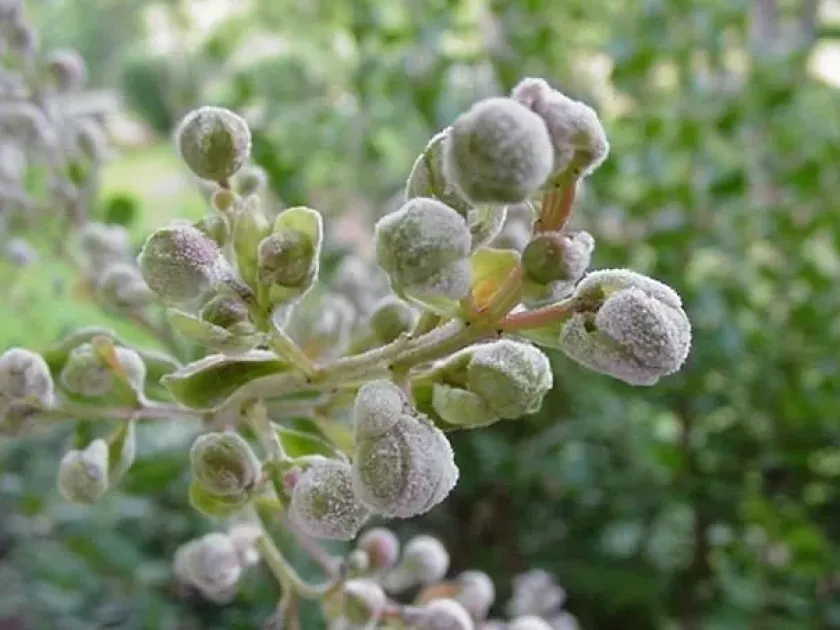
The primary symptom of this infection is the appearance of a dusty, white-to-grayish fungal growth on the leaves, buds, and young tender stems of the Lagerstroemia plant. This coating is easily visible and often covers large areas of the plant's surface.
Infected leaves frequently become distorted, curled, and stunted. As the fungus consumes nutrients from the host tissues, the affected areas may develop chlorotic yellow spots and eventually die, leading to premature leaf drop during the peak of the growing season.
Flower buds are particularly susceptible to the pathogen. When infected, they often fail to open properly or produce deformed, aesthetically unappealing blooms. This significantly impacts the ornamental value of the plant, which is prized for its spectacular flowering.
In advanced stages of the disease, the white mycelium can thicken and take on a felt-like appearance. Tiny black fruiting bodies, known as cleistothecia, may develop within the fungal mat, marking the stage where the pathogen prepares for dormancy.
Stems infected with powdery mildew may show signs of tissue necrosis and cracking. The interruption of normal physiological processes, such as photosynthesis and nutrient transport, leads to a noticeable decline in the overall vigor of the crape myrtle shrub.
Pathogen
The disease is caused by the obligate biotrophic fungus Erysiphe lagerstroemiae. This pathogen is highly specialized and relies entirely on the living tissues of the host plant to complete its life cycle and thrive throughout the growing season.
The fungus reproduces asexually by producing millions of conidia (spores) that are easily dispersed by wind currents. These spores land on healthy plant surfaces, germinate under favorable conditions, and quickly establish new colonies of mycelium.
Erysiphe lagerstroemiae survives the winter as dormant mycelium within the plant buds or as cleistothecia on fallen leaf debris. Once the weather warms up in the spring, the fungus emerges and begins its cycle of infection on new, succulent growth.
The pathogen does not require liquid water to germinate, which sets it apart from many other fungal diseases. It is perfectly adapted to colonize leaf surfaces even under relatively dry conditions, provided the humidity is sufficient for its metabolism.
The high specificity of the pathogen means that it exclusively targets Lagerstroemia species. Because it spreads so efficiently, a single infected plant can quickly become a source of inoculum for an entire garden or nursery landscape.
Conditions for development
Powdery mildew thrives in moderate temperature conditions, typically between 18°C and 25°C (65°F to 77°F). In this range, the mycelium expands rapidly, often covering an entire plant within a few days if conditions are right.
High relative humidity is a critical factor for the widespread development of the disease. While the fungus does not require wet foliage, stagnant air and poor circulation around the plant canopy create a microclimate that strongly favors fungal growth.
Periods of fluctuating temperatures, characterized by warm days and cool, damp nights, promote the infection process. These conditions often lead to minor condensation on the leaf surface, which provides enough moisture for the fungus to establish itself.
Plants subjected to excessive nitrogen fertilization are significantly more vulnerable. The rapid production of soft, succulent growth provides a constant supply of nutrients that the fungus finds easy to penetrate and colonize effectively.
Low light levels, caused by overcrowding or shade from nearby structures, inhibit the plant's natural resilience. In such shaded, low-light environments, the powdery mildew fungus can persist much longer and spread more aggressively than in open, sunny locations.
Why it matters
The aesthetic damage is often the most immediate concern for gardeners, as the white coating destroys the beauty of the crape myrtle. This makes the plant unsuitable for ornamental displays in parks or home landscapes.
Physiologically, the plant suffers from reduced photosynthetic capacity because the fungal layer blocks sunlight from reaching the leaf surface. This loss of energy production leads to weaker growth and less overall vigor for the plant.
Long-term infestation drains the plant's energy reserves, reducing its cold hardiness. Infected plants are much more likely to suffer from winter dieback or complete death when exposed to freezing temperatures during the dormant season.
In nursery settings, powdery mildew is a significant economic threat. Infected stock is often unmarketable, leading to substantial financial losses and the necessity of discarding large portions of the inventory to prevent further spread.
If left uncontrolled, the weakened plant becomes more susceptible to secondary pests and diseases, creating a downward spiral of declining health that may eventually lead to the loss of the specimen entirely.
Protection
The first line of defense is proper cultural management, which starts with choosing a location with full sun and excellent airflow. Providing adequate space between plants helps prevent the humidity buildup that favors the fungus.
Sanitation is crucial for long-term control. Pruning out infected twigs and removing all fallen leaf debris in the autumn significantly reduces the pathogen's overwintering population, lowering the risk of a severe outbreak the following year.
Chemical control involves the application of fungicides at the first sign of symptoms. Systemic products are generally the most effective, as they are absorbed by the plant tissues and provide longer-lasting protection against fungal development.
Rotating fungicides with different modes of action is an essential practice to prevent the fungus from developing resistance. Regularly monitoring the plants, especially during periods of high humidity, allows for early intervention before the infection becomes severe.
- Apply fertilizers that are balanced and not overly high in nitrogen.
- Water at the base of the plant to keep the foliage as dry as possible.
- Select resistant cultivars of Lagerstroemia when planning new landscape plantings.
- Utilize biological control agents as a preventive measure in integrated pest management programs.
Discussion
No discussions yet — be the first.