
Powdery mildew of crape myrtle
Erysiphe australiana
Description
Symptoms
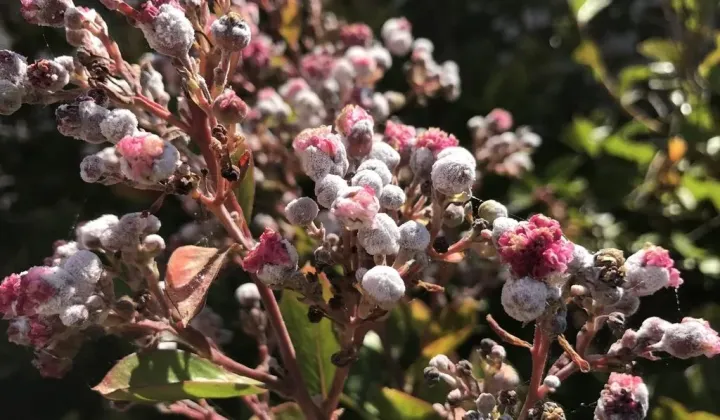
The first sign of the disease is the emergence of white, powdery spots on young leaves, tender shoots, and developing flower buds.
As the infection advances, this white coating covers larger surface areas, becoming denser and often appearing like a fine dusting of flour or gray felt.
The infected foliage typically becomes curled, distorted, and stunted, while young stems may stop growing and exhibit noticeable curling or twisting.
Severe infestations often cause flower buds to fail to open properly or cause them to shrivel and drop prematurely from the plant.
In advanced stages, the white mycelial mat can persist on the plant surfaces, sometimes masking necrotic or chlorotic spots underneath the fungal layer.
Pathogen
The causal agent of this disease is the fungus Erysiphe australiana, an obligate parasite that specifically infects members of the Lythraceae family.
This pathogen obtains its nutrients by inserting specialized structures called haustoria into the epidermal cells of the crape myrtle host plant.
Reproduction occurs primarily through the production of conidia, which are easily detached and dispersed by air currents, facilitating rapid spread throughout a garden.
The fungus survives during unfavorable conditions as mycelium in dormant buds or as cleistothecia in fallen leaf debris, initiating new infections in spring.
Its high level of specialization allows the pathogen to thrive throughout the active growing season whenever environmental conditions favor its development.
Conditions for development
Development of the disease is favored by warm temperatures paired with high humidity, which provides an optimal environment for fungal spore germination.
The most conducive temperature range for the pathogen is between 20°C and 25°C, where the development cycle of the fungus is notably accelerated.
Poor air circulation within crowded plantings or dense shrub canopies leads to moisture stagnation, which acts as a major catalyst for infection outbreaks.
Fluctuating day and night temperatures, often combined with morning dew, create ideal conditions for the rapid production and spread of fungal spores.
Excessive use of nitrogen-rich fertilizers encourages succulent growth that is highly susceptible to the colonization and penetration of the powdery mildew fungus.
Why it matters
The primary impact of powdery mildew is the significant loss of ornamental value, as infected plants become unsightly and lose their vibrant blooms.
Premature leaf drop caused by the disease reduces the plant's ability to photosynthesize, leading to reduced vigor and limited growth during the season.
Chronic infections weaken the crape myrtle, making it more vulnerable to secondary pests and environmental stressors, including cold weather damage.
The distortion of stems and buds prevents the plant from maintaining its natural shape, which often requires significant corrective pruning.
Neglecting the disease can result in a gradual decline of the specimen, especially if the environmental conditions remain favorable for the fungus over time.
Protection
Effective management includes regular applications of fungicides, particularly those containing sulfur or systemic triazoles, to suppress and eliminate fungal colonies.
Good horticultural practices, such as proper pruning for airflow and choosing resistant cultivars, are fundamental in reducing the risk of powdery mildew.
Sanitation is critical; all fallen leaves and infected debris should be carefully gathered and removed from the site to minimize the primary inoculum source.
Rotate the use of fungicides with different modes of action to prevent the development of resistant fungal strains within the landscape.
Maintain plant health through balanced fertilization and proper irrigation practices to help the crape myrtle build natural resistance against pathogenic attack.
Discussion
No discussions yet — be the first.