
Powdery mildew of cucurbits
Podosphaera fuliginea
Description
Symptoms
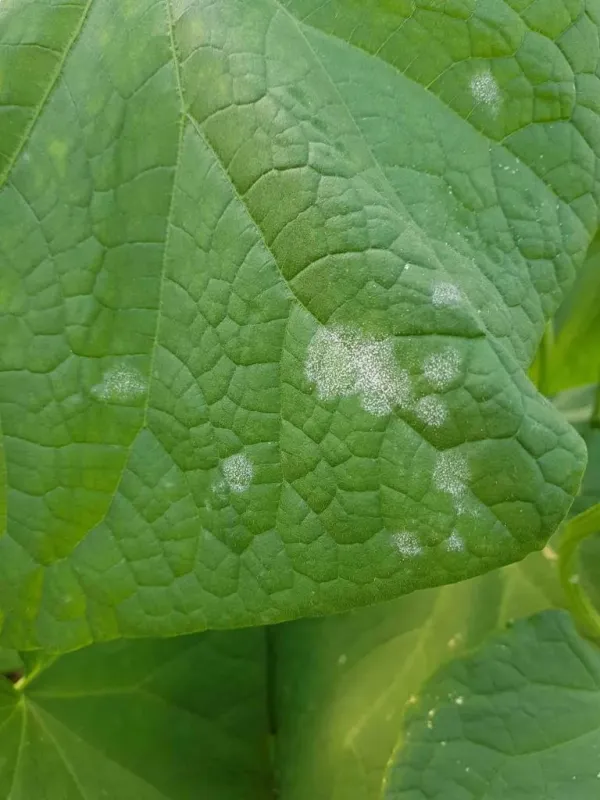
The first symptoms appear as small, circular, white powdery spots on the upper surface of older leaves. These spots eventually merge to cover larger areas.
As the infection progresses, the white, flour-like mycelium spreads to the undersides of the leaves, petioles, and stems, severely impacting the plant's ability to perform photosynthesis.
Severely infected leaves become chlorotic, curl upwards, turn brittle, and eventually dry out and drop off, leading to rapid defoliation of the crop.
In advanced stages, the white fungal growth can be found on stems and fruits. This can cause stunted fruit growth, distortion, and poor quality in harvested produce.
The white powdery appearance is highly characteristic, distinguishing this disease from downy mildew, which typically presents as angular, yellow-brown spots.
Pathogen
The disease is caused by the obligate parasite Podosphaera fuliginea, a fungus belonging to the Ascomycetes class. It specifically targets crops within the Cucurbitaceae family.
The fungus develops superficial mycelium on the surface of the leaves and stems, using haustoria to penetrate the epidermis and extract nutrients from the host plant's cells.
The pathogen overwinters as cleistothecia on plant debris or survives on alternative hosts like weeds within greenhouses. This makes sanitation a critical component of management.
Conidia are the primary source of spread, being easily dispersed by wind currents, irrigation water, and farm equipment or workers moving through the field.
Because it is an obligate parasite, Podosphaera fuliginea requires live plant tissue to survive and reproduce, making its life cycle tightly linked to the growing season of the host crop.
Conditions for development
The development of powdery mildew is favored by high humidity (though not necessarily free moisture) and moderate temperatures, typically between 20°C and 25°C.
Fluctuating temperatures between warm days and cool nights create stress for the plants and provide optimal conditions for the fungus to multiply rapidly.
Poor ventilation in greenhouses or high planting density in fields creates microclimates with stagnant air, which significantly accelerates the rate of infection.
Over-fertilization with nitrogen leads to succulent, lush growth that is highly susceptible to infection, making plants softer and easier for the fungus to penetrate.
Drought stress or inadequate irrigation also lowers the host plant's natural defense mechanisms, making it more vulnerable to the pathogen's attack.
Why it matters
The primary economic harm is caused by a drastic reduction in photosynthetic surface area, which directly limits the plant's ability to fill fruits and maintain yields.
Reduced vigor leads to stunted plants and poor fruit quality. In many cases, cucumbers or melons may develop off-flavors and become commercially unmarketable.
Premature senescence caused by the fungus shortens the harvest period, forcing an end to production much earlier than expected in the season.
The disease significantly lowers the profitability of cucurbit production due to both the loss of yield and the high cost of chemical interventions required to halt the spread.
By weakening the host, the disease creates a gateway for secondary infections by opportunistic pathogens, further complicating the plant health situation.
Protection
- Practice crop rotation by avoiding planting cucurbits in the same soil for at least three consecutive years.
- Remove and destroy all crop residues after harvest to eliminate overwintering sites for the fungus.
- Select and plant cucumber or pumpkin varieties that have been bred for powdery mildew resistance.
- Ensure adequate spacing between plants to improve airflow and reduce humidity levels.
- Apply appropriate fungicides, such as sulfur-based products or systemic triazoles, immediately upon spotting the first symptoms.
Discussion
No discussions yet — be the first.