
Powdery mildew of clover
Erysiphe trifoliorum
Description
Symptoms
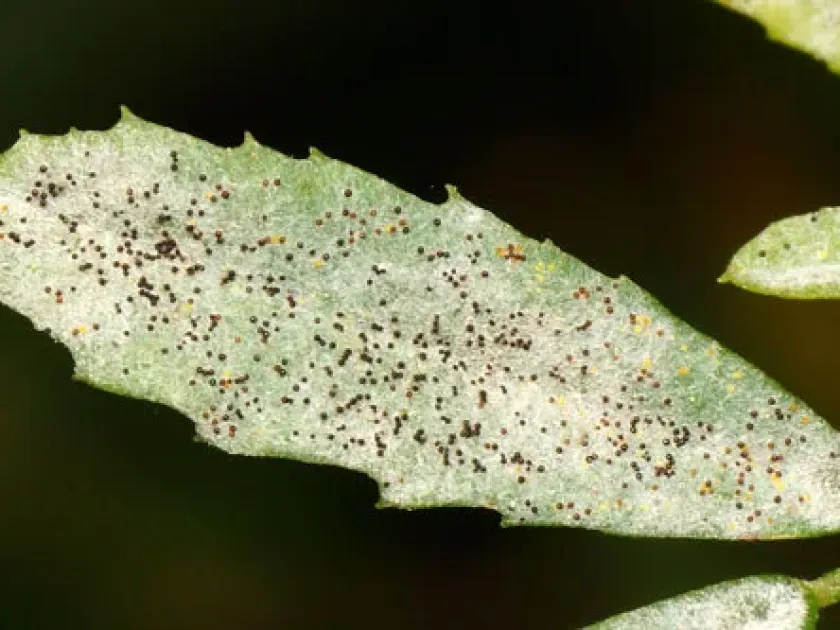
The primary symptom is the emergence of white, powdery, mycelial patches on the leaves. These patches are initially small and circular, but as the disease progresses, they expand to cover large portions of the leaf surface.
As the mycelium matures, the powdery coating becomes denser and may turn grayish or brownish in color. Beneath these patches, the leaf tissue often undergoes chlorosis, losing its green pigment due to the interference with photosynthesis.
In severe cases, the mildew covers stems and petioles, leading to stunted growth and distortion of the plant's architecture. The affected leaves often become brittle and may fall off prematurely before the end of the season.
The presence of tiny black dots embedded within the white mat of mycelium on older leaves indicates the formation of cleistothecia. This diagnostic feature marks the late stage of the fungal lifecycle before dormancy.
- White fungal growth on the upper surface of leaves.
- Increased density and darkening of the mildew layer over time.
- Chlorotic or necrotic spotting under the mildew colonies.
- Premature yellowing and desiccation of the plant foliage.
Pathogen
The causative agent of clover powdery mildew is the obligate parasitic fungus Erysiphe trifoliorum. This pathogen belongs to the Erysiphaceae family and specializes in infecting various Trifolium species, extracting nutrients directly from the host leaf epidermal cells.
The fungus reproduces asexually through conidia, which form white chains on the surface of the plant. These spores are easily disseminated by wind currents, enabling rapid infestation across vast clover fields during the growing season.
Overwintering occurs primarily through cleistothecia, small black fruiting bodies that develop on the surface of infected plant debris. These structures are resistant to freezing temperatures, allowing the fungus to persist in the field environment until spring.
The pathogen's high degree of specialization allows it to integrate effectively into the host's metabolism. Once established, the fungus can produce multiple infection cycles, making it a persistent threat to perennial legume crops.
Biological interactions between the fungus and the host involve the formation of haustoria, which penetrate the plant cell wall to drain cytoplasmic nutrients. This process significantly drains the plant's resources and disrupts normal metabolic functions.
Conditions for development
Powdery mildew development is favored by warm, dry weather conditions. Unlike many other fungal pathogens, Erysiphe trifoliorum does not require free water or high humidity for spore germination, which explains its prevalence in semi-arid conditions.
The optimal temperature range for the rapid spread of the fungus is between 18°C and 25°C. Diurnal temperature fluctuations, often experienced in summer, can stimulate sporulation and accelerate the infection process.
Dense clover stands provide a microclimate that shields the fungus from direct sunlight and environmental stress. This lack of ventilation allows the concentration of spores to increase, leading to severe localized outbreaks.
Nutritional status of the clover plays a vital role in disease susceptibility. Excessive nitrogen application leads to succulent, lush growth that is physically easier for the fungus to penetrate, especially if potassium levels are insufficient.
Drought stress weakens the plant's defense mechanisms, reducing its ability to respond to fungal invasion. Consequently, mid-season heatwaves often coincide with significant increases in powdery mildew severity in field crops.
Why it matters
The economic impact of powdery mildew in clover is primarily manifested as a reduction in total biomass yield. Significant infestations can decrease green forage production by up to 40%, depending on the timing of the outbreak.
The disease reduces the nutritional quality of the hay or silage. The fungal mycelium covers the leaf surfaces, leading to lower protein and carbohydrate content and reducing the overall palatability of the forage for livestock.
Clover plants affected by powdery mildew show impaired winter hardiness. Since photosynthesis is restricted throughout the summer, the plants fail to accumulate sufficient carbohydrate reserves in the root system required for winter survival.
Seed production is negatively affected, as the disease causes seed shriveling and poor germination rates. This results in direct financial losses for seed producers and long-term consequences for stand renewal.
Increased susceptibility to secondary pests and diseases is common in weakened stands. As a result, the lifespan of the clover stand is reduced, necessitating earlier and more frequent field renovation.
Protection
Utilizing resistant or tolerant clover cultivars is the most effective long-term strategy for managing powdery mildew. Breeding programs prioritize resistance traits to minimize the reliance on chemical inputs.
Proper agronomic practices are essential, including optimizing seeding rates to ensure good air circulation within the stand. Timely harvesting of the forage can help remove infected biomass before the fungus spreads further.
Maintaining balanced soil fertility, particularly adequate levels of potassium and phosphorus, strengthens the plant's cuticle and cellular integrity, making it more resistant to penetration by the fungus.
In high-value seed crops, the application of systemic fungicides, such as triazoles or strobilurins, is recommended if symptoms appear early in the season. Proper timing is critical for achieving optimal disease control.
Sanitation practices, including the deep burial of crop residues after harvest, are crucial for limiting the survival of cleistothecia. This reduces the primary inoculum potential in the field for the following season.
Discussion
No discussions yet — be the first.