
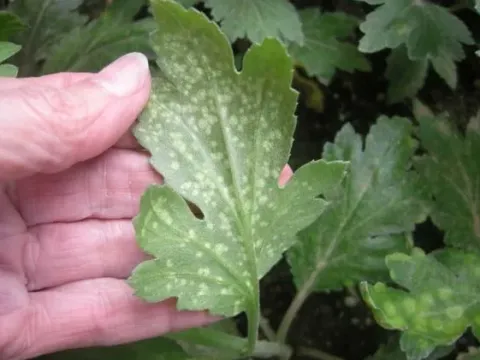
Powdery mildew of chrysanthemum
Oidium chrysanthemi
The disease is caused by the fungus Oidium chrysanthemi, an obligate parasite that specifically targets chrysanthemum plants. It lives on the surface of the leaves, stems, and buds, feeding through specialized structures called haustoria.
What the section contains
Powdery mildew of chrysanthemum
The fungus reproduces through the production of conidia (spores) in massive quantities. These spores are wind-dispersed and can spread rapidly across a greenhouse or field, colonizing new plants within a very short time.
As an obligate parasite, the pathogen requires living plant tissue to complete its life cycle. It does not kill the host immediately but exploits the plant's resources to fuel its own rapid growth and reproduction.
The pathogen can persist as mycelium on surviving plant parts or debris. Its survival strategy allows it to remain dormant under unfavorable conditions and resume infection once the environment becomes conducive again.
Understanding the biology of Oidium chrysanthemi is crucial for integrated pest management, as the rapid generation time of the fungus demands prompt detection and intervention to avoid massive outbreaks.
The hallmark of the infection is the appearance of white, powdery, web-like spots on the foliage. As the disease develops, these spots enlarge and merge, eventually covering the entire surface of the leaves.
The affected foliage often becomes chlorotic, distorted, and stunted. The powdery layer physically blocks sunlight, preventing efficient photosynthesis and leading to the eventual death of the affected tissue.
In severe cases, the infection spreads to the stems and flower buds. This stunts growth and prevents the flowers from opening, resulting in severe aesthetic damage that makes the plants unsellable.
Plants heavily infested with the fungus exhibit signs of premature aging. The leaves become brittle and may drop off, leaving the plant skeletal and weak, which makes it prone to other opportunistic infections.
- White powdery patches on the leaf surface.
- Deformation and curling of young leaves and shoots.
- Yellowing and premature necrosis of the foliage.
- Suppression of bud development and blooming.
- General lack of vigor and stunted plant growth.
The disease thrives in environments with high relative humidity, typically between 70% and 85%. However, unlike many other fungi, it does not require liquid water on the foliage to trigger spore germination.
Temperatures between +18 °C and +25 °C are optimal for the growth of the fungus. In greenhouses, maintaining stable temperatures in this range often coincides with peak disease activity.
Poor air circulation is a primary driver of disease spread. Overcrowded plant spacing prevents the foliage from drying out and creates stagnant microclimates where humidity and spore concentration stay high.
High nitrogen levels stimulate the growth of succulent, tender tissues. These tissues are particularly susceptible to penetration by fungal haustoria, making over-fertilized plants prime targets for infection.
Reduced light intensity, such as during cloudy weather or in poorly lit indoor setups, decreases the plant's metabolic activity. This weakening of the plant's natural defense mechanisms increases susceptibility to Oidium chrysanthemi.
Powdery mildew is a major concern for commercial chrysanthemum growers. The visible presence of the fungal layer destroys the aesthetic value of the crop, rendering it unsuitable for the florist market.
The photosynthetic interference caused by the fungus leads to significant yield losses. Because the plant cannot manufacture enough energy, it fails to produce high-quality blooms or achieve the desired growth rate.
In addition to direct damage, the infection weakens the entire plant, making it more susceptible to environmental stress and secondary pests. This often results in higher mortality rates for the crop.
Management costs are significantly increased due to the need for frequent fungicide applications. If left unchecked, the disease can wipe out an entire collection of chrysanthemums in a matter of weeks.
The cumulative impact of the disease reduces the overall profitability of the operation. Preventing and managing this fungus is therefore essential for sustainable chrysanthemum cultivation.
Good cultural practices are the foundation of management. Providing adequate spacing between plants allows for improved airflow, which is the most effective way to discourage the establishment of the fungus.
Sanitation is critical. All infected plant material must be removed and destroyed immediately to minimize the amount of inoculum present in the environment.
Chemical control options include the use of fungicides. Systemic products containing triazoles or strobilurins are effective, but they should be applied according to the label instructions and rotated to prevent resistance.
Monitoring the moisture levels and avoiding overhead watering can help reduce the chances of rapid disease spread. Drip irrigation systems are preferred for maintaining soil moisture without wetting the foliage.
Selecting disease-resistant cultivars can significantly decrease the need for chemical intervention. Combined with balanced fertilization and proper lighting, these practices help maintain plant health and vigor against powdery mildew.