
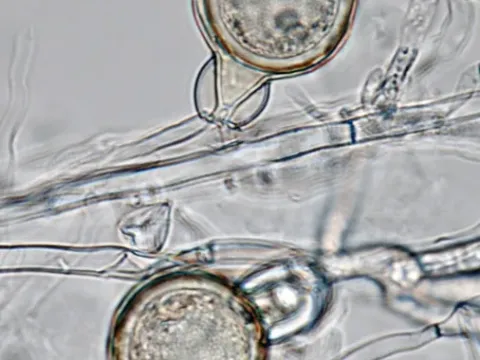
Vigna phytophthora
Phytophthora vignae
The disease is caused by the oomycete Phytophthora vignae, a specialized pathogen that targets cowpea and related species within the Vigna genus.
What the section contains
Vigna phytophthora
The pathogen produces resilient oospores, which can survive in the soil for several years, serving as the primary source of infection in subsequent growing seasons.
In the presence of moisture, these oospores germinate to produce zoospores, which are motile spores capable of swimming through soil water to reach host roots.
Once it reaches the root surface, the pathogen penetrates the host tissue, establishing a parasitic relationship that destroys plant cells and root vasculature.
The biology of Phytophthora vignae is highly adapted to the root environment of legumes, making it a persistent threat in both field and greenhouse cultivation.
The initial symptom often appears as chlorosis (yellowing) of the lower leaves, which eventually progresses to wilting and the death of the entire plant.
Examination of the root system reveals characteristic necrotic lesions, which appear as reddish-brown or dark-colored patches on the primary and lateral roots.
As the disease advances, the base of the stem (the crown area) becomes soft and discolored, often leading to lodging or the snapping of the stem at the soil line.
Under high humidity, a thin, white, cottony mycelial growth may be visible on the surface of infected stem tissues near the soil surface.
Infected plants exhibit stunted growth, reduced pod formation, and overall decline, which clearly distinguishes the affected area from healthy segments of the crop.
The development of the disease is heavily dependent on excessive soil moisture, which is necessary for the movement of zoospores toward the host.
Warm temperatures, generally ranging from 20 to 25 degrees Celsius, facilitate the rapid colonization of root tissues and the proliferation of the oomycete.
Poorly drained soils with heavy texture are particularly susceptible, as they maintain high humidity levels that favor the life cycle of Phytophthora vignae.
Frequent, heavy rainfall or over-irrigation in the early stages of plant growth significantly increases the risk of early-season outbreaks.
The presence of susceptible host debris from previous crops in the soil ensures a ready supply of inoculum to infect newly planted seeds or seedlings.
Vigna phytophthora causes substantial economic losses by significantly reducing stand density and killing seedlings shortly after emergence.
The pathogen disrupts the plant's ability to uptake water and nutrients, resulting in reduced vegetative growth and a significant drop in pod yield.
Quality of the harvested produce is often compromised, as seeds from infected plants may show signs of discoloration or poor developmental quality.
In severe infestation cases, the disease can wipe out entire plots, rendering the field unsuitable for Vigna cultivation for several years.
The systemic nature of the infection makes it difficult to manage once established, leading to increased costs for protective measures and lower overall returns.
Crop rotation is the most critical management practice; planting non-host crops for at least 3-4 years helps reduce the inoculum levels in the soil.
Utilizing resistant or tolerant cultivars is the primary and most sustainable way to minimize damage caused by the pathogen in endemic areas.
- Improve soil drainage to prevent stagnant water in the root zone.
- Ensure field sanitation by removing crop residues after harvest.
- Avoid over-irrigation, especially in clay-heavy soils.
Seed treatment with fungicides effective against oomycetes can provide early-season protection to seedlings, improving establishment success.
Monitoring fields closely during the first few weeks after germination allows for early detection and the potential application of targeted control measures.