
Physciaceae
Physciaceae
Physciaceae is a well-known family of foliose or crustose lichens that grow on various substrates, including the bark of fruit and ornamental trees.
What the section contains
Physciaceae
These organisms are symbiotic associations between a fungus and an alga or cyanobacterium, forming a stable structure on the bark surface.
They are strictly epiphytic, meaning they do not parasitize the tree's vascular system, but rely on the bark solely for mechanical attachment.
In the agricultural context, their presence is often viewed as a sign of environmental health or, conversely, of an aging and slow-growing tree.
While they are not considered primary pathogens, their extensive coverage can influence the micro-environment of the host tree's trunk.
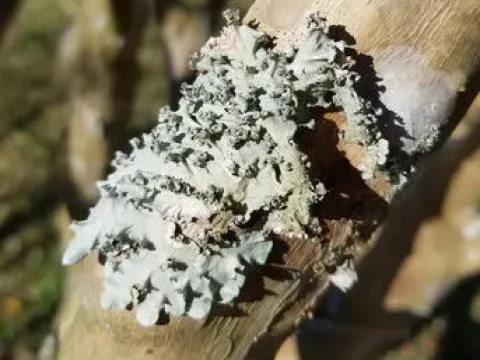
The primary indicators of Physciaceae presence are the formation of rosette-like, flattened leaf-like structures on branches and trunks.
Their color ranges from light grey and white to shades of green, brown, or even dark grey depending on the species and environmental moisture.
The lichen thallus can appear either as tightly adhered patches or as slightly raised lobes that spread over the surface of the bark.
Small, disc-shaped structures known as apothecia are often visible on the surface of the thallus, acting as reproductive organs.
In mature colonies, the bark surface can appear completely obscured by the mosaic-like growth of these lichens, altering the texture of the tree trunk.
Physciaceae thrive in high-humidity environments, especially in orchards where air circulation is restricted by dense canopy foliage.
They prefer sites that receive limited direct sunlight, which makes the inner parts of the canopy or north-facing trunks ideal habitats.
Trees with rough, aged bark provide the necessary crevices and stability for lichen spores to germinate and establish long-term colonies.
Climatic conditions with frequent rainfall or heavy morning dew significantly enhance the growth and spreading rate of these epiphytes.
Because they are sensitive to air pollutants like sulfur dioxide, their presence is often used as a bio-indicator of clean, non-polluted air.
The main agricultural concern with Physciaceae is that they provide refuge for various insect pests, including scales and mites, during their overwintering phase.
The moisture trapped under a thick lichen layer can potentially lead to the softening of bark tissue, creating risks for secondary rot infections.
Dense lichen coverage may slightly restrict the gas exchange process of the tree bark, although this effect is generally minor on healthy specimens.
The presence of large colonies is a symptomatic indication of tree vigor decline, which requires a closer look at the tree's nutritional status.
Beyond biological damage, the aesthetic degradation of the orchard might lead to difficulty in detecting other, more serious bark diseases.
Mechanical removal of lichens using soft wire brushes or scrapers during the dormant season is the most direct and effective control method.
Pruning the tree canopy to increase airflow and light penetration is essential to create conditions unfavorable for lichen development.
Applying iron sulfate (ferrous sulfate) solutions to the trunk and branches during the dormant period is a common practice to suppress lichen growth.
Regular whitewashing of trunks with lime or specialized horticultural paints provides a physical barrier and alkaline environment that discourages lichen colonization.
Improving overall tree health through balanced fertilization and correct watering helps the tree maintain a vigorous bark that is less prone to colonization.