
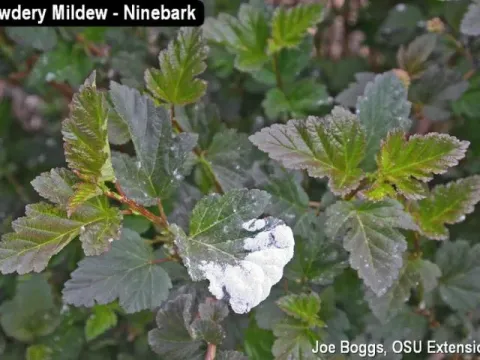
Physocarpus powdery mildew
Podosphaera physocarpi
The causative agent of this disease is the specialized fungus Podosphaera physocarpi. It is an obligate parasite that develops exclusively on living host tissues, using haustoria to absorb nutrients.
What the section contains
Physocarpus powdery mildew
The fungus has both a conidial stage for rapid asexual reproduction during the growing season and a sexual stage that allows for survival in harsh conditions.
The pathogen overwinters as cleistothecia, which are dark fruiting bodies found on fallen leaves, or as mycelium inside dormant buds of the host plant.
Dissemination occurs primarily via wind-borne conidia, which easily spread the infection from diseased plants to healthy ones in gardens and nurseries.
The biology of this fungus is strictly synchronized with the phenology of the Physocarpus host, ensuring that spores are released when young, susceptible tissues are available.
The primary symptom is the appearance of a white, powdery fungal growth on the upper and occasionally lower surfaces of the leaves.
As the disease progresses, the white patches may coalesce and cover entire leaves, stems, and flower buds, creating a dusty appearance.
Infected leaves often curl, become distorted, and exhibit chlorotic spots where the fungal hyphae have penetrated the epidermal cells.
Small, black, dot-like structures known as cleistothecia may develop within the mycelial mat later in the season, marking the completion of the sexual cycle.
- White dusty patches on foliage.
- Stunting and distortion of young shoots.
- Premature leaf drop and discoloration.
Optimal conditions for infection involve warm, moderately humid weather, typically with temperatures ranging from +18 to +25 degrees Celsius.
The presence of high air humidity, dew, or fog provides the necessary moisture for the rapid germination of fungal spores on the plant surface.
Poor air circulation, often caused by overcrowding or dense canopy structure, significantly increases the risk of a powdery mildew outbreak.
Plants experiencing rapid growth due to excessive nitrogen fertilization are often more susceptible to the penetration of fungal hyphae.
Dry periods combined with cool, humid nights create a favorable microclimate for the fungus to spread across the host tissues.
The disease drains the plant of vital nutrients, leading to decreased vigor, reduced growth rates, and a generally unhealthy appearance.
The cosmetic value of the plant is severely diminished, which is a major concern for landscape architects and homeowners alike.
By interfering with photosynthesis, the disease stresses the plant, reducing its ability to store energy for the subsequent growing season.
Severe infestations can lead to the death of young shoots, causing the plant to lose its natural shape and architectural form.
In nursery settings, powdery mildew can render entire batches of plants unmarketable, causing significant economic damage.
Good cultural practices, such as proper spacing to ensure adequate air circulation and regular pruning, are the first line of defense.
Sanitation is critical: all fallen leaves and infected plant debris should be removed and destroyed to reduce the inoculum load for the following season.
Chemical control involving systemic fungicides (such as triazoles or strobilurins) should be applied as soon as the first symptoms are detected.
Rotation of fungicide classes is highly recommended to prevent the development of resistance in the pathogen population.
Biological treatments using beneficial microbes, such as specific strains of Bacillus, can be used as a preventative measure or for early-stage management.