
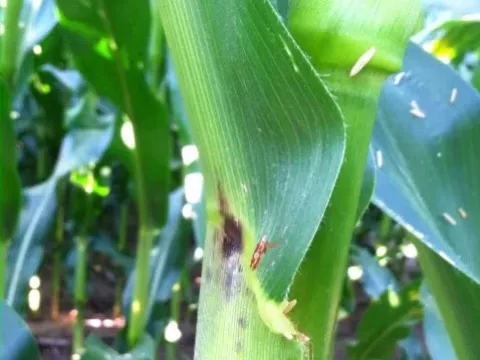
Physoderma brown spot
Physoderma maydis
The causative agent of brown spot in corn is the fungus-like organism Physoderma maydis, belonging to the order Chytridiales. It is an obligate parasite capable of persisting in the soil and crop residues for several years.
What the section contains
Physoderma brown spot
The pathogen completes its life cycle by producing zoospores that require free moisture for mobility. These zoospores are responsible for both primary infection early in the season and secondary spread throughout the field.
The resting spores, or sporangia, are highly resistant to environmental stressors. They remain viable in the soil for long periods, waiting for suitable conditions to germinate and initiate the disease cycle.
Infection typically occurs when water, containing zoospores, collects in the leaf whorl and enters the leaf axils. From these points, the pathogen penetrates the plant tissues and begins its development.
Dissemination across the field is largely facilitated by rain splashes and wind, which transport the zoospores onto healthy leaf surfaces or into the whorls of adjacent plants.
Initial symptoms of Physoderma maydis appear as small, numerous brown or purplish spots on the leaves, usually starting from the lower parts of the plant and moving upwards.
These spots often coalesce into larger, irregular necrotic blotches or bands. A characteristic yellow or chlorotic halo often surrounds the necrotic areas, giving the leaves a variegated appearance.
As the disease progresses, the infected tissue may become brittle and tear, leading to holes in the leaves. In severe cases, the necrosis extends to the leaf sheaths and even the stalks.
Stalk infection causes tissue softening, which weakens the plant's structural integrity. Dark brown to black lesions may appear at the nodes, marking sites of intense sporangia production.
Field-level diagnosis is often based on the overall stunted appearance and the presence of significant leaf blight, which is most noticeable during the rapid growth stages of the corn plant.
High humidity and warm temperatures are critical for the development of brown spot. The pathogen thrives in temperatures ranging from 23 to 30 degrees Celsius, especially during rainy periods.
Free water accumulation in the leaf whorl is the primary environmental prerequisite for the disease. Rainfall patterns that keep the whorls wet for extended periods significantly increase infection rates.
Continuous corn cultivation promotes the buildup of the pathogen in the soil, leading to increased disease pressure in subsequent years if susceptible hybrids are used.
Conservation tillage systems, such as No-till, can create a favorable environment for the survival of the pathogen by leaving infected crop residues on the soil surface.
Prolonged foggy weather and high air humidity during the mid-to-late vegetative stages provide the necessary moisture for rapid secondary spread of the disease.
The economic impact of Physoderma maydis is primarily due to the reduction in photosynthetic leaf area, which decreases the plant's ability to fill the ear with grain.
Stalk weakening caused by the pathogen makes the plants highly susceptible to lodging. Even moderate winds can cause the crop to fall, resulting in major losses during the harvest process.
Infected plants may exhibit delayed development and stunted ears. The resulting poor grain fill reduces both the yield weight and the overall quality of the harvested produce.
Invasion of the nodal tissue disrupts nutrient and water transport within the plant, accelerating senescence and potentially causing plant death before physiological maturity.
While often categorized as a minor disease, severe outbreaks can lead to significant yield reductions in humid regions or under conditions favorable to the pathogen's spread.
Crop rotation is the most effective management tool. Rotating corn with non-host crops for at least two to three years helps reduce the inoculum concentration in the field soil.
Deep plowing or incorporating crop residues into the soil helps accelerate the decomposition of infected material, effectively reducing the number of dormant sporangia.
Selecting and planting resistant or tolerant corn hybrids is the primary strategy for minimizing yield losses, especially in areas where the disease is historically prevalent.
Improving soil drainage and managing plant density can help reduce humidity in the field, making the microclimate less suitable for the rapid spread of the pathogen.
Fungicide application is generally not considered an economically viable control method for this disease; thus, emphasis should remain on integrated agronomic practices.