
Physconia grisea
Physconia grisea
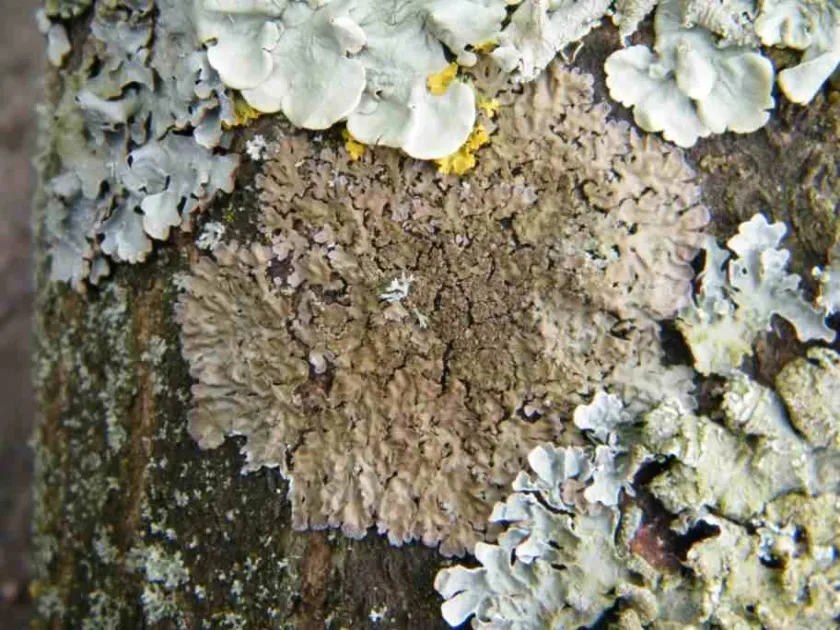
Description
Symptoms
The primary symptom of colonization is the appearance of distinct, flat, circular patches on the trunks or thick branches of woody plants.
The thallus color ranges from pale grey to brownish-grey, often appearing lighter or whitish when dry due to the presence of fine surface granules or pruina.
Colonies expand over time, often merging to cover large areas of the bark, which can give the tree an aged or neglected appearance.
The edges of the lichen lobes are typically raised and exhibit a characteristic granular structure known as soredia, used for vegetative reproduction.
Visual identification is most effective during winter or early spring when trees are dormant, allowing the grey patches to stand out against the darker bark.
Pathogen
Physconia grisea is a species of foliose lichen that grows as an epiphyte on the bark of various tree species.
It is important to clarify that this organism is not a pathogenic fungus or bacterium; it does not consume host tissues or cause active disease symptoms like rot or wilt.
The lichen is a complex symbiosis between a fungus and an alga, using the tree surface primarily as a substrate for attachment and photosynthesis.
Its structure consists of lobed, rosette-forming thalli that are generally greyish-brown to ash-grey in color, often featuring a dusty surface texture.
Dispersal occurs via wind-blown spores or vegetative fragments, which settle on bark surfaces and initiate the growth of new colonies under suitable conditions.
Conditions for development
Physconia grisea thrives on the bark of mature, old, or slow-growing trees that provide a stable, long-term substrate.
High humidity and poor air circulation in densely planted or unpruned orchards are significant drivers for the rapid expansion of lichen colonies.
Shaded environments within the canopy create a microclimate that prevents the bark from drying quickly, which is favorable for lichen establishment.
Physiologically stressed trees with thin or cracking bark, often due to nutrient deficiencies or environmental factors, are more susceptible to colonization.
Healthy, vigorous trees with rapid bark expansion and shedding are less likely to host large lichen colonies as the substrate is frequently renewed.
Why it matters
While not a direct parasite, the presence of dense lichen growth can have negative implications for the host tree's overall vigor.
Large colonies may physically obstruct the lenticels, which are essential for gaseous exchange, potentially slightly affecting the tree's respiratory process.
The structure of the lichen provides an ideal shelter for overwintering pests, including scale insects and mites, which can cause significant damage to the tree later.
Excessive lichen growth is an indicator of low orchard maintenance and poor canopy aeration, which can lead to other fungal diseases.
Over time, the cumulative effect of lichen coverage and poor maintenance leads to the gradual decline and reduced productivity of the affected tree branches.
Protection
The most effective management strategy is manual removal of lichen colonies using wire brushes or specialized scrapers during the dormant season.
Regular whitewashing of trunks and scaffold branches with a lime-based mixture helps to disinfect the bark and creates an alkaline surface unfavorable for lichen.
Early spring spraying with iron sulfate solutions is a standard horticultural practice to effectively eliminate moss and lichen growth on dormant trees.
Improving airflow and light penetration through proper pruning is essential to prevent re-colonization and create an environment hostile to lichen development.
Maintaining tree health through proper fertilization and irrigation promotes active bark growth, which naturally discourages the establishment of persistent epiphytes.
Discussion
No discussions yet — be the first.