
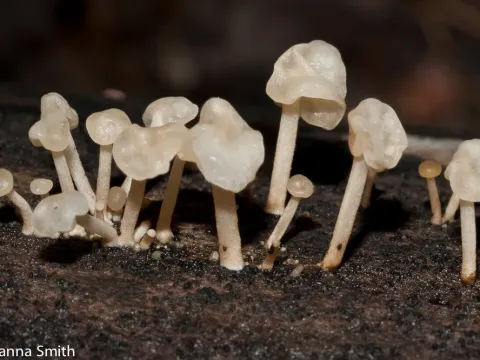
Physalacria inflata
Physalacria inflata
Physalacria inflata is a saprotrophic basidiomycete fungus belonging to the family Physalacriaceae. It is not considered a plant pathogen for agricultural crops but rather functions as a xylotroph that thrives on decaying organic matter.
What the section contains
Physalacria inflata
The fungus operates as a saprotroph, deriving its energy from dead wood. Within forest ecosystems, it plays a critical role as a decomposer, breaking down complex polymers such as lignin and cellulose.
Its mycelium penetrates deep into the substrate, facilitating the breakdown of woody materials at a cellular level. During its lifecycle, the fungus produces distinct fruiting bodies that serve as its primary identifier.
The biology of Physalacria inflata is strictly tied to the presence of moist, partially decomposed broadleaf wood. It is most active in temperate climates with regular rainfall periods.
This species is a typical component of forest microflora and rarely ventures outside natural woodland environments, posing no threat to industrial agricultural crops or orchards.
The primary external indicator of this fungus is the presence of small fruiting bodies, which resemble tiny clubs or inflated bubbles on slender stalks. These structures rarely exceed a few millimeters in height.
The fruiting bodies display a characteristic whitish, cream, or yellowish tint. They often grow in clusters on the surface of the affected substrate, making them visible upon close inspection.
The surface of the woody substrate may become covered in a thin, web-like mycelium. Wood colonized by this fungus exhibits signs of soft rot, gradually losing its structural integrity.
The color of the affected wood often lightens or develops ochre patches as the decomposition process progresses. The texture becomes porous and friable over time.
- Fruiting body shape: club-shaped, spherical, "inflated".
- Color: white to pale yellow.
- Localization: decaying branches and leaf litter of hardwood species.
For Physalacria inflata to thrive, a high level of humidity in both the substrate and the surrounding environment is required. Dry conditions severely limit mycelial growth and spore production.
The optimal temperature for its vegetation ranges from +15°C to +22°C. Growth slows significantly in lower temperatures, and the fungus enters a dormant state during freezing periods.
The type of substrate is a crucial factor: the fungus prefers moist hardwood, such as beech or hornbeam. It is extremely rare to find it on coniferous wood.
Stagnant moisture in the forest floor and an abundance of plant debris facilitate the rapid dispersal of fungal spores across forest landscapes.
The microclimate within forest debris piles, where ventilation is restricted, creates ideal conditions for maintaining the constant moisture necessary for the successful lifecycle of Physalacria inflata.
From an agronomic perspective, Physalacria inflata is not a pest of agricultural crops. It does not attack healthy plants, orchard trees, or cereal crops.
Its impact is purely ecological in the context of forestry, primarily concerning wood materials left in the forest without proper storage management.
In its natural habitat, this fungus provides a positive service by contributing to nutrient cycling. It converts dead organic matter into humus, which is then accessible to other forest flora.
Presence of the fungus on wood indicates that the decay process has already begun, rendering the timber unsuitable for construction or high-quality woodworking.
Damage occurs only indirectly, such as when firewood or logging residues are stored in high-humidity conditions, leading to the rapid degradation of the wood quality.
Protection measures against Physalacria inflata are not required in an agronomic sense, as it is not a pathogen of cultivated plants.
To prevent the deterioration of harvested timber, it is essential to ensure storage in dry, well-ventilated areas protected from moisture and precipitation.
Sanitary clearing of forest areas from rotting debris and deadfall helps manage the overall infection pressure, though complete eradication of this saprotroph is neither possible nor ecologically desirable.
Maintaining forest health through sustainable forestry practices naturally regulates the population of saprotrophic fungi, preventing their excessive accumulation.
Chemical control methods, such as fungicides, have not been developed for this species, as its biological role in the ecosystem is considered predominantly beneficial.