
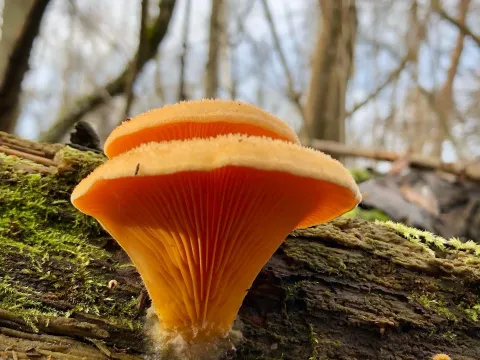
Phyllotopsis
Phyllotopsis
The primary symptom of a Phyllotopsis infection is the appearance of distinct, fan-shaped or shell-like fruiting bodies on the bark or wood surfaces.
What the section contains
Phyllotopsis
These fruiting bodies are characterized by their vibrant orange to yellowish-orange color, making them easily distinguishable from other wood-decaying fungi.
The caps are typically stemless, attached laterally to the wood, and feature a dense, soft, velvety, or woolly texture across the upper surface.
The underside of the cap displays radially arranged gills that match the cap's color, which are often crowded and extend from the point of attachment.
Internal wood tissue affected by the fungus exhibits signs of white rot, where the structure becomes bleached, soft, and brittle, eventually losing all mechanical integrity.
The pathogen involved is a basidiomycete fungus, most commonly Phyllotopsis nidulans, known for its role in the decomposition of woody biomass.
This fungus acts primarily as a saprotroph, though it can function as a facultative parasite that attacks weakened or damaged living trees.
It reproduces via airborne spores that land on tree wounds, cracks, or freshly exposed heartwood, where they germinate to form new fungal colonies.
The mycelium penetrates the xylem and phloem, secreting enzymes that break down lignin and cellulose, effectively digesting the tree's internal structure.
The lifecycle is completed when environmental conditions allow the mycelium to push through the bark, producing the diagnostic orange fruiting bodies to release more spores.
High relative humidity and moderate temperatures are the most critical factors favoring the active growth and sporulation of the fungus.
The fungus thrives in cool to mild climates, with optimal development occurring when temperatures range between 15°C and 22°C, coupled with persistent moisture.
Vulnerable hosts include trees already stressed by drought, poor soil quality, insect infestation, or physical injuries like frost cracks and pruning wounds.
Forest environments with thick canopy covers and poorly ventilated gardens provide the humid microclimates necessary for the fungus to persist and thrive.
Proximity to decaying woody debris or old stumps significantly increases the spore pressure in a given area, facilitating the infection of adjacent standing trees.
The core danger posed by Phyllotopsis is the degradation of structural wood, which can lead to the instability of affected trees or large branches.
As the white rot spreads throughout the woody tissue, the tree becomes increasingly susceptible to breaking under wind or snow loads, posing a risk to property and safety.
In forest management and landscaping, the presence of this fungus leads to significant economic loss as timber quality is permanently compromised.
The fungus weakens the overall physiological health of the tree, making it less capable of producing fruit or resilient against other secondary pathogens.
Once a tree is heavily colonized, the internal decay is usually irreversible, often necessitating the complete removal of the specimen to prevent further spread.
Sanitation is the most effective control strategy, involving the prompt removal and destruction of all fruiting bodies and heavily infested wood material.
All pruning cuts and accidental injuries to trees should be treated with appropriate wound dressings or sealants to prevent spore entry into the sapwood.
Promoting tree vigor through correct fertilization and watering schedules creates a robust defense mechanism against opportunistic fungal invaders.
Regular inspections of garden trees for early signs of fungal growth allow for localized treatment or removal before the rot penetrates deep into the heartwood.
Removing potential fungal reservoirs, such as old stumps and piles of wood debris, is essential for maintaining a clean environment and reducing infection risk.