
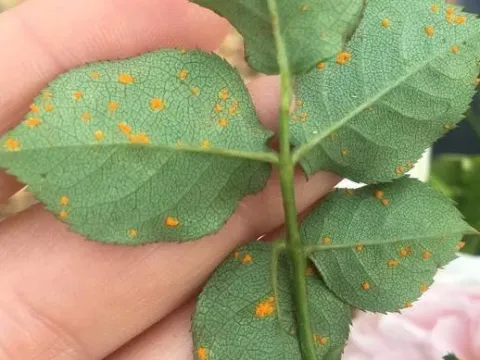
Rose rust
Phragmidium rosae-setigerae
Rose rust is caused by a specialized parasitic fungus from the genus Phragmidium, most notably Phragmidium rosae-setigerae.
What the section contains
Rose rust
This pathogen is an obligate parasite, meaning it requires living rose tissue to survive, grow, and complete its complex life cycle.
The fungus produces multiple types of spores throughout the season, allowing it to survive varying environmental conditions and re-infect plants effectively.
Mycelium of the fungus can overwinter in dormant buds, stems, or infected fallen foliage, acting as a constant source of primary inoculum.
The dissemination of spores occurs primarily through wind currents and splashing water, making it a highly contagious disease in close-knit garden settings.
The initial symptoms appear in spring as tiny, bright orange or yellow pustules found on the undersides of leaves.
As the infection progresses, chlorotic yellow or brown spots appear on the upper surfaces of the leaves, corresponding to the pustules below.
Later in the season, the fungus produces dark, almost black, pustules on the lower leaf surface, which contain the overwintering spores.
Severe infection leads to widespread leaf yellowing, curling, and premature defoliation, which can leave the plant completely bare by mid-summer.
Stem cankers may also form, resulting in distorted or cracked wood, which eventually causes dieback of the affected branches.
Rose rust thrives in cool, humid weather, with moisture on the leaf surface being the most critical factor for spore germination.
Temperatures between 18°C and 24°C are optimal for the fungus to spread rapidly and colonize the leaf tissues effectively.
Poor air circulation, often caused by overcrowding or dense planting, traps moisture around the foliage and encourages fungal growth.
Prolonged morning dew or rainy spells provide the necessary conditions for the spores to penetrate the plant's cuticle and establish infection.
Plants under stress, particularly those lacking proper nutrition or those situated in poorly drained soil, are significantly more susceptible to the fungus.
Rose rust severely diminishes the aesthetic value of the plant, ruining the appearance of the foliage and making the rose bush look sickly.
Because the fungus destroys leaf tissue, the plant's ability to photosynthesize is drastically reduced, leading to stunted growth and fewer blooms.
The loss of leaves causes the rose bush to exhaust its energy reserves, making it unable to store enough carbohydrates for the winter dormancy period.
Weakened plants are significantly more vulnerable to winter kill, pests, and other secondary fungal diseases such as black spot or powdery mildew.
In cases of chronic infection, the cumulative stress can eventually lead to the total collapse and death of the rose bush over several years.
The most important control measure is the immediate removal and destruction of all infected leaves and stems to reduce the spore load in the garden.
Apply preventative fungicide sprays during periods of high humidity, focusing on contact and systemic products containing sulfur or copper.
Practice thorough garden hygiene by clearing away all fallen foliage in the autumn, as this debris is a primary site for the fungus to overwinter.
Improve air circulation by pruning rose bushes properly and ensuring enough spacing between plants to keep the foliage as dry as possible.
- Water the base of the plant to avoid wetting the leaves.
- Select and plant rose varieties known for their resistance to rust.
- Sterilize pruning tools with alcohol after every cut on infected wood.