
Rosellinia root rot
Rosellinia quercina
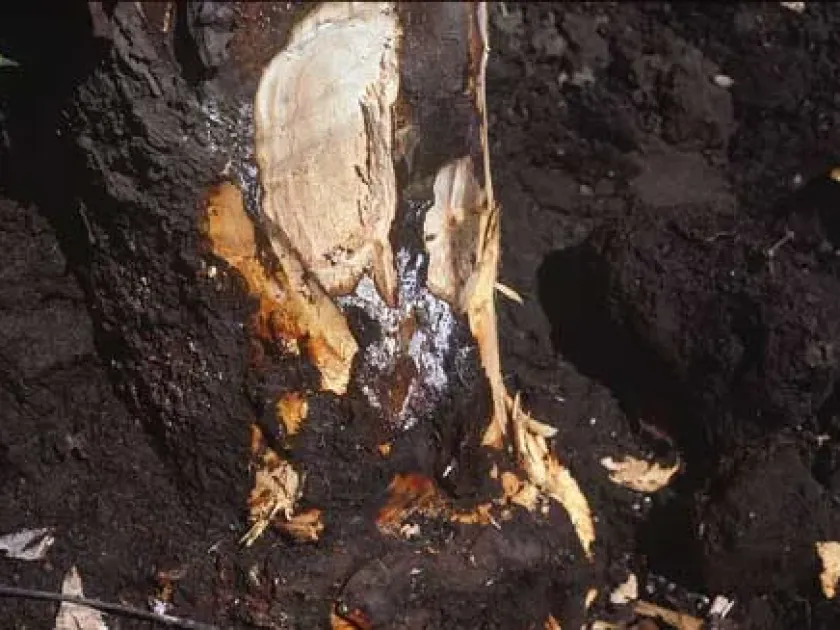
Description
Symptoms
The initial signs include chlorosis (yellowing) of the foliage, followed by premature leaf drop and a general loss of vigor in seedlings and young trees.
Root system examination reveals necrosis of the bark and cambium. The roots lose their structural integrity, become brittle, and show signs of rot, often with a white fungal mat visible on the surface.
A distinctive feature of the disease is the presence of black, thread-like rhizomorphs that wrap tightly around the root collar and primary root system.
During advanced stages of decay, small black bumps representing the reproductive structures of the fungus may appear on the bark surface near the soil line.
In nursery environments, the disease spreads in expanding circular patches, where young trees show progressive symptoms of wilting and death.
Pathogen
The causal agent is the ascomycete fungus Rosellinia quercina, belonging to the class Sordariomycetes. It is a specialized pathogen that primarily attacks the root systems of various woody species.
The fungus develops a network of mycelium that eventually organizes into black, cord-like structures known as rhizomorphs. These structures allow the fungus to traverse soil distances to find new hosts.
In moist conditions, small black fruit bodies called perithecia develop on the surface of infected roots, facilitating the production and dispersal of fungal spores.
The pathogen is highly resilient, capable of surviving as a saprophyte on decaying wood fragments and organic matter in the soil for extended periods of time.
Its biological cycle is designed to exhaust the energy reserves of the host root system, leading to systemic weakness and eventual death of the affected plant.
Conditions for development
The development of Rosellinia root rot is strongly favored by waterlogged, heavy soils with poor aeration. Excess moisture weakens root defenses.
Cool and humid weather conditions are optimal for the growth of the fungus and the production of its infective spores, often occurring in early spring.
The presence of abundant woody debris in the soil acts as a reservoir, providing the necessary substrate for the fungus to persist and initiate new infections.
Poor nursery management, such as overcrowding of seedlings, prevents proper airflow and increases humidity near the soil surface, facilitating infection spread.
Mechanical damage to the roots, caused by nursery operations or soil-dwelling pests, creates entry wounds that the fungal mycelium easily exploits.
Why it matters
Rosellinia quercina causes significant economic loss in forest nurseries and young plantations by killing seedlings and disrupting normal growth cycles.
The disease reduces the vigor of surviving trees, making them susceptible to secondary attacks by wood-boring insects and other opportunistic pathogens.
Infected sites remain hazardous for long periods due to the persistence of the pathogen in the soil, limiting the land's utility for replanting susceptible species.
The destruction of root tissue prevents the uptake of water and vital nutrients, leading to physiological drought and eventual tree death.
The disease is notoriously difficult to eradicate once established, making it a critical concern for sustainable forestry and reforestation projects.
Protection
Proper site selection for nurseries is the most effective preventative measure; avoid low-lying, poorly drained soils with high clay content.
Thorough site sanitation, including the complete removal of stumps, roots, and organic debris before planting, is essential to minimize inoculum levels.
Improving soil structure through the use of cover crops and proper drainage systems helps create an environment less conducive to fungal root infections.
Active monitoring and the immediate removal of symptomatic plants, along with the surrounding soil, can help isolate and manage disease hotspots.
The use of soil amendments and biological control agents that promote beneficial microbial communities can help suppress the growth of pathogenic fungi.
Discussion
No discussions yet — be the first.