
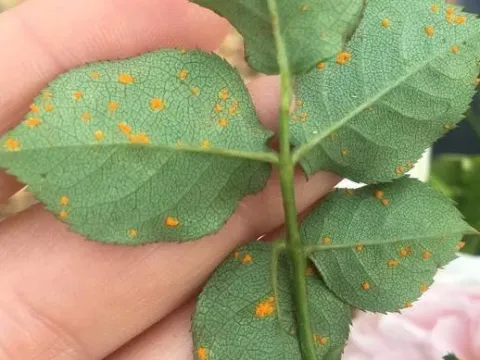
Rose rust
Phragmidium mucronatum
Early symptoms of rose rust appear in spring as small, bright orange or yellow pustules on the undersides of leaves and young green stems.
What the section contains
Rose rust
As the infection progresses, yellow or chlorotic spots develop on the upper leaf surface, which eventually turn brown as the tissue dies.
By late summer, the bright orange spores are replaced by dark brown or black pustules, which indicate the overwintering stage of the fungus.
Severe infestations often result in premature leaf yellowing and defoliation, leaving the rose bush weak and bare mid-season.
Young shoots can also show signs of distortion, cracking, and structural weakness due to the localized growth of the fungal mycelium.
The disease is caused by the fungus Phragmidium mucronatum, which belongs to the class of Basidiomycetes.
It is an obligate parasite specifically adapted to infect various species and cultivars within the Rosa genus.
The fungus has a complex life cycle that involves several types of spores, facilitating rapid spread during the growing season.
It survives the winter months primarily in fallen leaves and on infected canes, acting as a recurring source of inoculum.
The spores are easily dispersed by wind currents, splashing rain, or overhead irrigation, allowing the pathogen to travel throughout a garden.
Rose rust thrives in environments with high humidity and moderate temperatures, typically ranging between 18 and 22 degrees Celsius.
Poor air circulation within dense rose plantings creates a humid microclimate that is highly conducive to fungal spore germination.
Excessive nitrogen fertilizer promotes rapid growth of soft, succulent tissue, which is significantly more susceptible to rust penetration.
Wet weather patterns and prolonged periods of leaf wetness are critical factors that accelerate the epidemic spread of the disease.
Failure to implement basic hygiene practices, such as clearing debris from around the base of the bushes, sustains the local infection cycle.
Rust interferes with the plant's photosynthetic capacity by killing leaf tissue, leading to an overall reduction in plant vigor.
Plants severely weakened by rust often struggle to survive cold winters, as they enter dormancy with insufficient energy reserves.
The visual impact of the disease is devastating to the aesthetic value of rose gardens, rendering the plants unsuitable for displays.
Energy depletion leads to a significant decrease in bloom size and flower count in the subsequent growing season.
In nursery production, rust can lead to the widespread rejection of stock, causing considerable economic losses for growers.
The most effective strategy starts with meticulous sanitation, including the removal and disposal of all infected leaves and prunings.
Regular applications of appropriate fungicides, including copper-based products or systemic triazoles, are necessary to manage the spread.
Proper pruning techniques should be employed to improve airflow and reduce the amount of trapped moisture in the plant canopy.
Strengthening the plant's health through balanced fertilization and proper water management helps improve its natural resistance to infection.
- Sterilize pruning tools after use to prevent cross-contamination
- Apply mulch to bury fallen leaves and block spore release from the soil
- Select rose varieties that exhibit genetic resistance to rust and other pathogens