
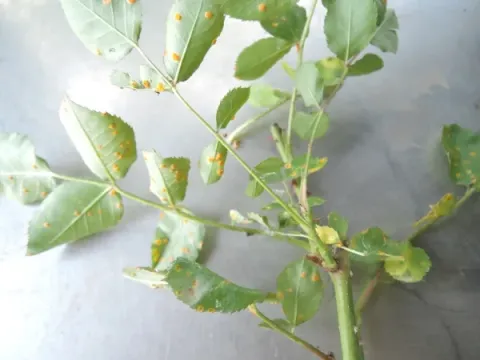
Rose rust
Phragmidium fusiforme
The disease is caused by the fungus Phragmidium fusiforme, a specialized pathogen belonging to the Basidiomycota phylum. It primarily affects wild rose species and various garden rose cultivars.
What the section contains
Rose rust
The fungus has a complex life cycle, featuring multiple spore stages that allow it to persist and spread efficiently throughout the growing season.
Overwintering occurs primarily as teliospores on fallen leaves or within the bark of infected stems, ensuring the pathogen survives until the following spring.
Once the environment warms up, the fungus releases spores that infect fresh plant tissue, initiating a new cycle of parasitic colonization.
The mycelium grows within the plant tissues, extracting essential nutrients and significantly weakening the host plant's physiological condition.
Early symptoms appear in late spring as small, pale yellow spots on the upper surfaces of young leaves, indicating initial infection points.
Bright orange powdery pustules, known as aecia, form on the undersides of the leaves. These are the most distinct diagnostic signs of rust infection.
Stems infected with the fungus often show characteristic swelling, twisting, and deformation, which can lead to cracks in the bark.
By late summer, the orange pustules transition to dark brown or black, signaling the production of overwintering teliospores.
Severe infections lead to rapid leaf yellowing, early defoliation, and a general decline in the plant's health and aesthetic appeal.
Rose rust thrives in environments characterized by high humidity, frequent rainfall, and persistent morning dew, which are essential for spore germination.
The ideal temperature range for the pathogen's development is between 15 and 22 degrees Celsius, accelerating the spread of the infection.
Poor ventilation within dense plantings creates a stagnant, humid microclimate that allows the fungus to propagate rapidly.
Inadequate pruning or site maintenance that leaves leaf litter under the bushes provides a reservoir for reinfection each year.
Excessive nitrogen application results in soft, succulent growth that is significantly more susceptible to penetration by fungal hyphae.
The fungus significantly reduces the plant's ability to photosynthesize due to extensive leaf damage and premature drop, leading to reduced vigor.
Deformations of the stems impair nutrient and water transport, causing dieback of individual branches and long-term structural damage.
Infected roses demonstrate decreased cold hardiness, making them more likely to suffer winter injury or mortality during freezing temperatures.
The disease drastically impacts the ornamental value of the plants and, in edible rose varieties, reduces the quality and yield of hips.
Left unchecked, the pathogen becomes established in the garden, necessitating more aggressive control measures in subsequent seasons.
The most important control measure is strict sanitation: clearing and destroying all fallen leaves to remove the primary inoculum source.
Regular pruning of infected branches is essential; removed material should be discarded safely and never added to a home compost pile.
Applying copper-based fungicides in early spring acts as a preventative measure to inhibit the germination of initial spores.
Systemic fungicides are recommended during the active growing season to treat existing infections and protect new plant growth.
- Spacing plants properly to encourage airflow and reduce humidity.
- Using balanced potassium-phosphorus fertilizers to boost plant immunity.
- Monitoring plants closely during wet spells for early symptoms.