
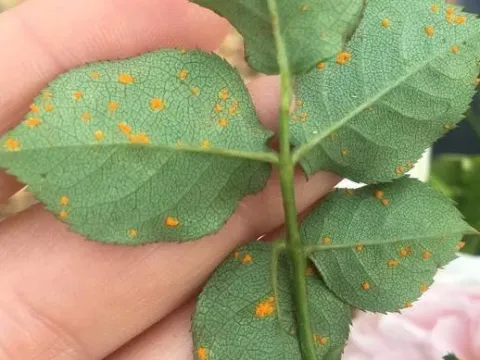
Rose rust
Phragmidium
Rose rust is caused by a group of parasitic fungi belonging to the genus Phragmidium, with Phragmidium disciflorum being the most common species affecting garden roses. It is an obligate parasite that requires living plant tissue to complete its life cycle.
What the section contains
Rose rust
The fungus is characterized by a complex life cycle involving up to five different spore stages. This complexity allows the pathogen to adapt to various environmental conditions and ensures its survival through the winter months.
Infection is primarily spread by wind-borne spores and water splashes. Once the spores land on a susceptible rose leaf or stem, they germinate and penetrate the plant's epidermis through the stomata, establishing a parasitic relationship.
The mycelium grows within the leaf tissue, drawing nutrients from the host cells and leading to localized destruction. As the infection progresses, it produces various types of spores that facilitate rapid secondary spread throughout the growing season.
Wild roses and briars often act as reservoir hosts, harboring the fungus and allowing it to spread to cultivated roses in nearby gardens, making total eradication in endemic areas difficult.
The first symptoms typically appear in early spring as small, bright yellow or orange pustules on the stems and the undersides of young leaves. These are the aecidia, marking the beginning of the seasonal infection.
During the summer, the most recognizable sign is the presence of powdery, bright orange or rust-colored pustules on the underside of the leaves. This massive production of urediniospores gives the leaves their characteristic rusty appearance.
By late summer and autumn, the pustules turn dark brown or black as the fungus shifts to producing teliospores. These spores are specialized for overwintering, allowing the fungus to survive on dead leaves and bark.
Affected leaves often develop chlorotic yellow spots on the upper surface, eventually turning brown, curling, and dropping prematurely. Defoliation typically starts from the bottom of the shrub and works its way up.
Stems can become deformed, develop deep cracks, or exhibit canker-like lesions where the fungus has disrupted the growth of the plant tissues. This structural damage can lead to the wilting and eventual death of individual branches.
Rose rust thrives in cool, moist environments. Optimal conditions for spore germination and infection are temperatures between 18°C and 22°C (64°F–72°F) coupled with high humidity or frequent rainfall.
Poor air circulation is a primary factor in the development of the disease. Dense, overcrowded plantings trap moisture on the foliage, creating the perfect damp environment necessary for the fungus to establish itself.
Excessive overhead watering, particularly in the evening, allows water to remain on the leaves throughout the night. This extended period of leaf wetness is a major driver for the proliferation of rust spores.
Nitrogen-rich fertilizers, while promoting lush growth, often produce succulent, thin-walled tissues that are significantly more susceptible to fungal penetration and colonization compared to tougher, balanced foliage.
Long periods of overcast, humid weather without direct sunlight significantly favor the spread of the pathogen, as UV light can inhibit spore germination and kill mycelia on the leaf surface.
The primary harm caused by rose rust is premature defoliation. Without leaves, the rose plant cannot photosynthesize effectively, leading to a drastic reduction in the energy stores required for blooming and winter survival.
Severe infestations weaken the entire plant, making it more susceptible to other stressors, such as frost damage, pests, and secondary opportunistic infections that can further degrade the shrub's health.
The bloom quality is severely compromised. Flowers on infected bushes are often fewer, smaller, deformed, and fail to reach their full potential color, rendering the roses useless for ornamental purposes.
Stem damage caused by the fungus can disrupt nutrient and water transport within the plant. Over several seasons, this damage accumulates, potentially leading to the death of the entire rose bush.
In a commercial or nursery setting, rose rust is a devastating disease that can lead to large-scale loss of stock, as the presence of the fungus makes plants unfit for sale and difficult to rehabilitate.
Sanitation is the cornerstone of control. All infected leaves and stems must be removed promptly upon detection. During the autumn, it is critical to rake and destroy all fallen debris to eliminate the primary inoculum source.
Cultural practices such as pruning to open up the center of the bush are essential to improve airflow. Proper spacing between plants prevents the creation of microclimates that encourage fungal growth.
Fungicide programs should be implemented proactively in high-risk areas. Treatments containing copper or systemic fungicides like triazoles or strobilurins are effective if applied before symptoms become widespread.
Applying balanced fertilizers, particularly those rich in potassium and phosphorus, helps thicken the plant's cell walls, increasing the physical and chemical defenses against fungal attack.
Monitor the garden closely during wet spring weather. Early intervention with protective sprays can prevent the establishment of the fungus, saving the rose bush from the severe damage associated with later stages of infection.