
Cheimonophyllum candidissimum
Cheimonophyllum candidissimum
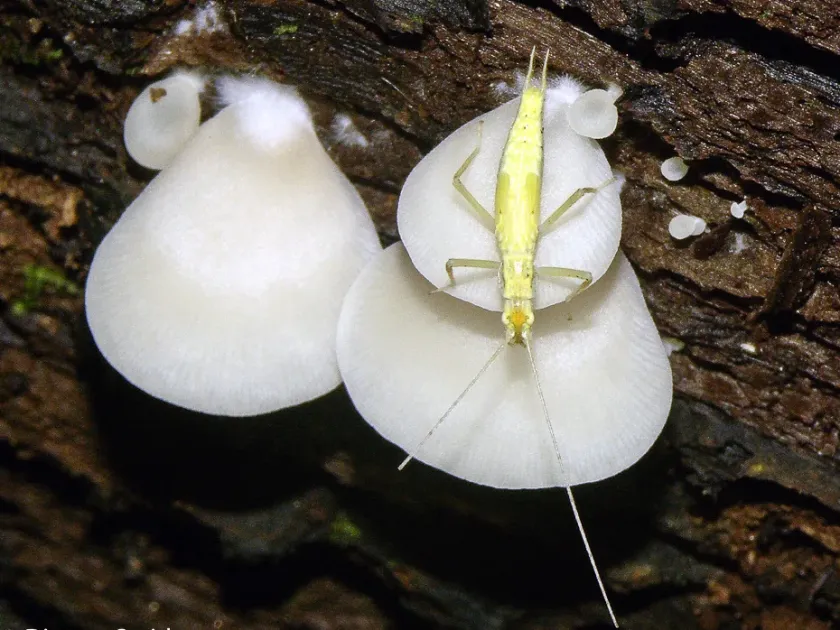
Description
Symptoms
The most distinctive signs are the presence of white, fan-shaped fruiting bodies protruding from the bark. These mushrooms often form overlapping layers on the surface of the trunk or branches.
The underlying wood exhibits signs of advanced white rot. It becomes soft, spongy, and significantly lighter in color as the lignin is consumed by the fungal mycelium.
Cracks and fissures often appear on the bark where the fungal mats develop. In some cases, white mycelial filaments can be observed within these cracks, particularly in high-humidity conditions.
Branch dieback is a common symptom in infected trees. Foliage may turn yellow or brown prematurely as the vascular system of the tree is compromised by the spreading rot.
A loss of structural integrity is a critical indicator. Heavily infected branches often snap unexpectedly, even under light wind or stress, posing a physical danger in the surrounding area.
Pathogen
Cheimonophyllum candidissimum is a basidiomycete fungus that functions primarily as a wood-decay organism. It belongs to the group of white-rot fungi capable of decomposing both cellulose and lignin.
The fungus develops an extensive mycelial network within the wooden host. Through the secretion of potent enzymes, it gradually breaks down the complex structure of wood fibers, leading to a loss of mechanical strength.
While often found on dead organic matter, the fungus can behave as an opportunistic pathogen. It exploits weak points in living trees to establish colonies and eventually compromise their structural stability.
The reproductive structures, or fruiting bodies, are small, white, and fragile. They typically appear in clusters on the surface of infected wood during periods of high ambient moisture.
The life cycle relies on the dispersal of spores via wind or water splashes. Once these spores land on a suitable damp wooden substrate, they germinate to start a new infection cycle.
Conditions for development
High humidity and moisture are the primary drivers of fungal growth. Areas with poor airflow, such as dense, unpruned tree canopies, create a perfect microclimate for the fungus to thrive.
The pathogen prefers stable, cool-to-moderate temperatures, which allow the mycelium to spread steadily throughout the season. It remains active as long as the wood moisture content stays within optimal levels.
Mechanical damage to trees is a major entry point for infection. Storm damage, pruning cuts, or insect galleries provide the necessary pathways for spores to reach the nutrient-rich inner wood.
Lack of direct sunlight helps maintain the surface moisture required for fungal reproduction. Trees in shaded or crowded locations are generally more susceptible to colonisation.
Sanitation plays a role in disease prevalence. Debris left near the base of trees acts as a reservoir for spores, increasing the chances of infection during periods of heavy precipitation.
Why it matters
The primary threat is the irreversible destruction of the woody tissue. This structural degradation leads to hazardous tree conditions, increasing the probability of branch or trunk failure.
Infected trees suffer from reduced vigor and vitality. The nutrient transport systems are disrupted by the spreading decay, leading to sparse foliage and stunted growth.
The infection creates an entry point for secondary invaders, including bark beetles and other wood-boring insects. This compounding damage often accelerates the death of the host tree.
Economic loss is significant in orchards and forest plantations. Infected specimens may need to be culled, leading to loss of productivity and substantial removal costs.
In urban landscapes, the aesthetic value of trees is severely diminished by the presence of decay and necrotic patches, ultimately requiring professional tree removal to ensure public safety.
Protection
Proactive maintenance is the best approach for managing the fungus. Keep trees healthy with appropriate fertilization and irrigation to strengthen their natural defense mechanisms.
Regular sanitation pruning is essential. Removing dead, diseased, or damaged branches immediately prevents the fungus from gaining a foothold and spreading to the main trunk.
All pruning wounds should be treated with protective sealants or fungicides to prevent spores from entering exposed tissues. Proper cut technique is crucial for quick recovery.
If fruiting bodies are spotted, they must be removed and destroyed immediately. Clean tools after contact with infected wood to avoid cross-contaminating other healthy trees.
Systemic fungicide treatments applied by professionals can help protect high-value trees in high-risk areas. These treatments should be part of a broader integrated pest management program.
Discussion
No discussions yet — be the first.