
Downy mildew of bittercress
Hyaloperonospora rorippae-islandicae
Description
Symptoms
The initial symptoms are characterized by chlorotic spots on the upper leaf surface, which are often bounded by small veins, giving them an angular appearance.
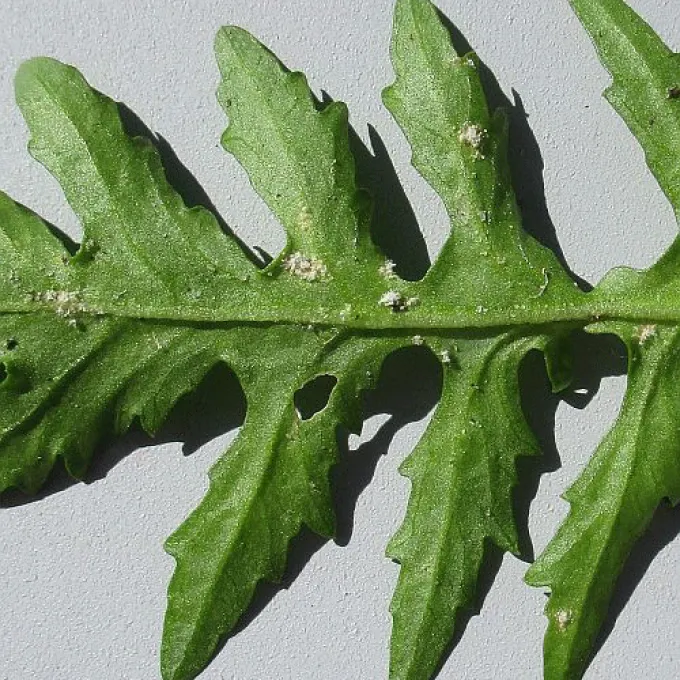
Under conditions of high humidity, a characteristic downy growth, which is grayish or white in color, appears on the underside of the leaves, corresponding to the sites of sporulation.
As the disease progresses, the leaves become yellow and may eventually wither or develop necrotic patches. Severe infections can lead to premature leaf drop and stunted plant growth.
In the case of significant disease pressure, the infection may spread to petioles and even the stems, severely compromising the plant's overall health and vitality.
Early identification is essential. Inspections should focus on the underside of the leaves, especially during cool, humid periods, as this is where the pathogen is most visible.
Pathogen
The causal agent of this disease is the oomycete Hyaloperonospora rorippae-islandicae, a member of the Peronosporaceae family. It is an obligate parasite, meaning it requires living host tissue to complete its life cycle.
The pathogen reproduces both asexually, through the production of sporangia, and sexually, through the formation of oospores. These oospores are survival structures that allow the pathogen to persist in the soil for several seasons.
Infection spreads mainly through airborne sporangia that can travel significant distances, especially during periods of wind and rain. This allows the disease to spread rapidly through crop fields.
The pathogen enters the plant through stomata and develops mycelium within the intercellular spaces, extracting nutrients from host cells using specialized structures called haustoria.
Because of its high host specificity, Hyaloperonospora rorippae-islandicae is particularly adapted to members of the Brassicaceae family, often persisting in wild relatives of cultivated crops.
Conditions for development
Moisture is the most critical environmental factor for the development of downy mildew. The presence of free water on leaf surfaces is necessary for the germination of sporangia.
The disease thrives in cool to moderate temperature regimes, specifically ranging between +12°C and +18°C, which accelerates the pathogen's metabolic processes.
High relative humidity, typically exceeding 85%, is required for the pathogen to produce large quantities of spores and to successfully infect new tissues.
Poor air circulation, often caused by high planting density, creates a humid microclimate that is extremely favorable for the rapid spread of the disease within the field.
Inadequate soil drainage or excessive overhead irrigation can also contribute to the local humidity levels, creating an ideal environment for the oomycete to proliferate.
Why it matters
Downy mildew causes a significant reduction in the photosynthetic efficiency of the plant, which leads to decreased yields and poorer quality of the harvested produce.
The cosmetic damage caused by yellowing, leaf spotting, and the presence of fungal growth makes the crop visually unappealing and often unsuitable for fresh market sales.
Infected plants are weakened and are more susceptible to secondary infections by bacterial and fungal pathogens, which can cause soft rots and complete tissue breakdown.
The disease causes substantial economic losses due to the necessity of applying chemical control measures and the potential for total crop failure under severe conditions.
Long-term contamination of the soil with oospores poses a persistent threat to future plantings on the same site, requiring careful management and crop rotation strategies.
Protection
Implementing a robust crop rotation plan, avoiding the cultivation of cruciferous crops in the same area for at least three to four years, is the most effective way to break the disease cycle.
Sanitation practices, such as the removal and destruction of crop residues and control of wild cruciferous weeds, are essential to reduce the inoculum levels in the field.
Proper plant spacing and weed control are vital for maintaining good air circulation, which helps keep the foliage dry and inhibits pathogen development.
When necessary, the application of systemic or contact fungicides during the early stages of the disease can effectively mitigate its spread and protect the crop.
Using certified disease-free seeds and selecting resistant or tolerant varieties can significantly reduce the risk and impact of downy mildew on your operation.
Discussion
No discussions yet — be the first.