
Downy mildew of Berteroa
Hyaloperonospora berteroae
Description
Symptoms
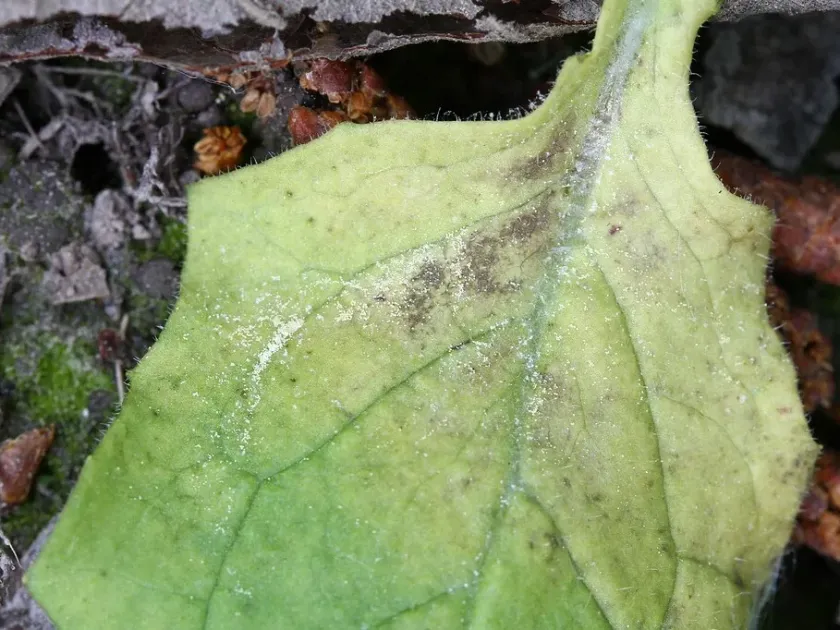
The initial signs of infection appear on the upper surface of leaves as chlorotic spots, which gradually yellow and become angular, delimited by leaf veins. These spots are the hallmark of early-stage infection.
On the underside of the leaves, corresponding to the chlorotic spots, a grayish or violet-gray fungal growth develops. This fuzz consists of sporangiophores and sporangia of the pathogen.
As the disease progresses, these spots may merge, leading to tissue necrosis. Severely affected leaves wither, curl, and may drop prematurely, significantly reducing the photosynthetic capacity of the plant.
Stems and inflorescences may exhibit stunted growth and abnormal curvature. In high humidity, these parts can also become covered with the characteristic fungal layer.
Overall symptoms include reduced plant vigor, delayed development of flowers and seeds, and a general decline in the plant's health status as it loses essential nutrients to the parasite.
Pathogen
The pathogen responsible for this disease is the obligate parasite Hyaloperonospora berteroae. It is a microscopic oomycete belonging to the Peronosporaceae family, specifically adapted to infect plants of the Brassicaceae family, particularly the genus Berteroa.
The life cycle involves asexual reproduction through zoosporangia and sexual reproduction via oospores. Oospores are robust structures that allow the pathogen to survive in soil and plant debris under unfavorable environmental conditions.
The fungus penetrates plant tissues through stomata or directly through the epidermis. Once inside, it spreads through the intercellular spaces, absorbing nutrients from host cells using specialized structures called haustoria.
This pathogen exhibits a high degree of host specificity. The spread of the infection between plants is primarily driven by air currents, which transport the zoosporangia over considerable distances.
The survival and spread of the pathogen are highly dependent on moisture levels. Without sufficient free water on the leaf surface, the germination of spores and subsequent infection cycles are significantly restricted.
Conditions for development
The disease thrives in conditions characterized by moderate temperatures and high humidity. Optimal conditions for infection involve temperatures between +15°C and +22°C paired with frequent rainfall or high humidity.
The presence of dew or fog on the foliage is essential for spore germination. Prolonged leaf wetness provides the perfect environment for the zoospores to move and infect healthy tissues.
Dense plant stands promote a microclimate with stagnant air and high moisture levels, which accelerates the spread of downy mildew. Lack of airflow prevents foliage from drying out quickly.
Oospores serving as the primary inoculum persist in the soil and plant residue. When warm and wet conditions return, these spores germinate to initiate the infection of the new crop or season's growth.
Extended dry spells effectively halt the epidemic. However, even short periods of rain after drought can trigger a sudden outbreak if viable inoculum is present in the environment.
Why it matters
The damage caused by this disease is primarily due to the destruction of leaf tissue, which impairs the plant's ability to perform photosynthesis. This results in a severe lack of energy for growth and development.
Premature leaf loss leads to a weakened plant state, making it susceptible to other environmental stresses. The plant may fail to produce viable seeds, reducing the success of natural regeneration or crop yield.
Affected plants often serve as reservoirs for the pathogen, ensuring the persistence of the disease in the local area. This creates a continuous threat to susceptible Brassicaceae species nearby.
The physiological stress caused by the infection makes the host more vulnerable to secondary bacterial and fungal pathogens, potentially leading to systemic decay of the plant.
Economic damage in agricultural contexts is associated with the loss of crop quality and the necessity of implementing costly disease management strategies to protect nearby healthy plantings.
Protection
Cultural practices are the first line of defense, including the thorough removal and destruction of crop residues that could harbor the pathogen. Practicing crop rotation is vital to break the soil-borne infection cycle.
Maintaining proper plant spacing ensures adequate airflow and quick drying of leaves, which significantly inhibits the establishment and spread of the pathogen.
When the disease is detected, fungicides (both systemic and contact-based) can be used for control. Copper-based compounds and specific systemic fungicides are effective in managing downy mildew outbreaks.
Regular monitoring of the field or garden is crucial for early detection. Spot-treating infected areas can prevent the spread of the disease to the rest of the plant population.
Utilizing resistant or less susceptible cultivars is a long-term management goal. Sourcing clean seed and ensuring optimal plant health are foundational elements of an integrated disease management system.
Discussion
No discussions yet — be the first.